
Facsimile – The Birth of the COVID-19 Crazies

maxresdefault (2)

The insanity that comes from the fear of death is a potent reminder of how fragile we are. 

That hysteria is understandably contagious. No-one can “train” themselves to handle the threat of death.

Unless of course, you are one of those survivalist-types who like to prepare for the absolute worst.

But the majority of people out there, handle “death” very poorly, especially in wealthy countries.

When death is the exception, not the norm, suddenly facing your mortality is psychologically scarring. You’ve lived your life, fearing the next paycheck, what will happen on your favourite Netflix show and what you are going to wear for your next Friday night out.

To have all of that rendered “unimportant” because of a deadly disease, is bizarre to say the least. To have your livelihood taken away, access to emotional support stolen (friends and family) and your faith in uncertain leadership destroyed is catastrophic.

How do you react to such an emotional shift?

(Be warned, this is a long post)

Well, you turn to your good friend, the computer and log on.

But before I address the social media aspect, I would like to touch on common behaviour seen during “near-death” mindsets: fiscal irresponsibility, procreation and substance abuse.

Fiscal Irresponsibility 

Recently, in Australia, I’ve read that thousands of people have withdrew their superannuation. This “retirement package” that they always dedicate a part of their salary to, with each paycheck, is now being kept somewhere else, or being spent.

This is interesting for a number of reasons. It indicates that there is a strong portion of the population that is either stricken by the huge shortfall of jobs, and thus need the capital quickly to continue surviving, and maybe even a small percentage of that group who decided enough is enough, now is the time to be irresponsible.

Of course, this is all speculation, but during crisis, it is not uncommon to see people act upon desires that they’ve had for a long time.

That huge LEGO set that you’ve always wanted? Now is the time (this one I am definitely guilty of).

How about that tempting 4K TV you’ve been putting off? Quarantine is the perfect excuse for such reckless spending.

I don’t any evidence to really support this of course, but from a purely anecdotal and “supply” point of view, I can see this trend spike, and strangely keep retail businesses alive.

My retail store is close to Rebel Sport, JB Hi-Fi, and I am on friendly terms with an EB Games manager. When the first lockdown occurred, Nintendo Switches and Playstation 4s came flying out of those stores. Fathers bought them for their children, and stupid boyfriends like me, grabbed Switches for their girlfriends along with copies of Animal Crossing: New Horizon.

I couldn’t get my hand on a Switch for 2 months, and had to preorder extremely early. When mine arrived at the EB Games, the manager said my order was 1 of 10. 10 for a console that was literally flying off the shelves. Nintendo couldn’t keep up with orders.

The number of TVs and gym equipment that also sauntered casually past me was high. Things that people normally would never invest in, suddenly came high on their radar and these extravagant purchases meant that people were keen on maintaining a high standard in their new quarantine lifestyle.

This also lead to what I call reactionary buys.

My own LEGO purchase, a highly expensive UCS Lego STAR WARS Star Destroyer, was made because people were snatching these rare models up left right and centre. Orders at places that usually had heaps of stocks, disappeared within weeks.

I couldn’t really afford the model, but it was a childhood dream of mine to collect every single Original Trilogy ship model, and when I saw my chance to get one was fading quickly, I went in and got it before I could regret it.

I ended up regretting the purchase slightly anyway. The expense could have been placed better elsewhere. There is a rueful feeling I experience when I look at the giant box.

I wonder who else has felt that, over their reckless purchase?

Procreation

Procreation is the next interesting reaction.

PornHub, the legendary host site, offered free premium membership for a whole month. Sex stores reported record sales, as people bought all types of toys and items for months of lockdown. Porn films even showed with how people could remotely pleasure one another via a good bluetooth/internet connection.

Impressive to say the least, how the sex industry is truly one of the most resilient and profitable trades ever designed.

Sex is such a common method to relieve stress and also provide a basic biological function, to please the ticking clock that everyone has in their head. Total strangers have had relations in the aftermath of a traumatic event (plane crash, bombing etc). It is normal to desire intimacy, as a way to carry on your lineage, when you feel death is or was close. This is well documented and obvious from a mental and physical standpoint.

However, what is interesting, is the sheer number of couples who have broken it off during lockdown. Not just because of dull sex, but also because they can’t stand one another. Working from home has created friction in the environment that is supposed to be comforting and relaxed. Wives have found their husband’s habits grotesque. Husbands have discovered wives’ complaints annoying.

Forced cohabitation is suddenly responsible for a jump in divorce rates.

It is extremely fascinating to see how shoddy and shabby a relationship can be, but is continued because both parties work far from each other. Now when forced to confront each other for the first time in ages, they hate each other.

Splitting apart, whilst in lock-down is amazingly difficult. With jobs, rent, mortgage, and a whole host of other issues that COVID-19 has bought about, it is not uncommon to see exes still reside in the same house, their toxicity, bitterness and anger unable to escape and find an outlet.

Hate-fucking might just be more prevalent than ever.

Speaking of toxicity, now is time to discuss substance abuse, and then social media.

Substance Abuse

Australia, is known for its’ heavy drinking. A pivotal part of our culture, alcoholism is highly prevalent at all ages and social strata. It doesn’t matter if you are a tradie enjoying a stubbie after work, or a socialite living for the champagne in a club, alcohol is a universal element in Australia.

Should it shouldn’t be a surprise that alcoholism spiked during COVID-19, with more people buying their own supply to keep their habit happy or deal with increased loneliness.

Loneliness … it is a rather unique feeling that everyone has had to grapple with since the outbreak of COVID-19. The irony of drinking alone to deal with such a complex emotion, is that the sheer act of doing something so social as drinking, is that it enhances the feeling of loneliness.

Drugs use also has spiked, with more and more people, spending time at home, smoking up and recreationally passing the time with hallucinogens and other substances. After all, it’s a lot harder to be caught, and if your supplier is well established, getting some isn’t difficult.

It’s one way to pass the time …. despite being utterly pointless and a waste of a day.

But such self-destructive isn’t just restricted to substance abuse.

No, because now it is time to address the proper crazies. The one that can’t be rationalised with.

People who are reliant on social media (the real issue I want to discuss).

The real reason why I wanted to write this ramble.

Social media is often parroted as a “good” thing. Faster communication, the ability to utilise and harness your network for business and more global outreach are some pretty common benefits touted.

My question to all of that is … why do you need it?

The most apparent danger of social media, is the sheer ego driven into developing your ideal echo chamber. Every day, you scroll past things that only you agree with, find content that only you find agreeable and lack the vision to see beyond your own bubble that you’ve created.

It is this psychological bubble that has given rise to a whole host of issues, that previously were much smaller and less unified across the globe. The concept of “cherry picking” content that only suits you, and is enhanced by algorithms is highly unhealthy.

A small example in my own small world, is Formula 1. I am a die-hard Ferrari fan. I tend to make excuses for my favourite team, and feel very low when things aren’t going well, and experience euphoria when the team is triumphing.

Going through my Youtube recommendations, I came across a video that discussed the recent crash between Charles Leclerc (my favourite driver) and Sebastian Vettel. It was a painful moment for me, and I wanted to avoid any further news about this incident.

It took me 3 days, to keep seeing that recommendation pop up, until I finally clicked on it and to my surprise, it was a good video, with excellent clarification of the incident and great analysis on why it happened.

I ended up subscribing to the Youtuber, because he developed good and clear, objective videos regarding Formula 1.

But the fact remains, that I avoided his channel. All because I thought it didn’t agree with my bubble and how I wanted to view things.

How often do we engage with topics that we disagree with?

Should we explore more about the side we dislike?

The answer to both, should ideally be “More often and absolutely yes”

Whereas before, people had to actively search and truly find those who have similar viewpoints, now there are forums and groups that allow easy access, as long as you have suitable credentials.

Now it is even easier to surround yourself with equally crazed nut-jobs with the same crippling ego and desire to prove themselves against something.

Regardless of whether you believe in the 5G conspiracy, the COVID-19 hoax, or whatever else theory that has been thrown around, there has been a worrying trend to find an echo chamber in a world that has IO (Information Overload).

I, myself, am of the belief that COVID-19 was manufactured in a lab although this is with a healthy amount of skepticism and desire to see evidence against or for such a claim. The symptoms, rapidity, strange death rate and bizarre 14 day incubation just seem too bizarre in relation to other viral behaviours.

But the key point here, is that social media, globalism and hyper-connectivity has created this situation, where the news is no longer trusted (rightly so), people have more fragile egos and global issues explode, without any proper context.

So I will break this down, in relation to social media and COVID-19. Social media itself, is not inherently “bad” just like a firearm is not either. They are tools. Highly effective and efficient. But when wielded destructively, it is potent and should be handled with more care, in the hands and minds of individuals.

3 issues – globalism, information overload, and algorithms.

Globalism

Globalism is an inherently noble ideal.

But like communism, it doesn’t work very well. The idea that entire countries will work with each other, without ulterior motives, towards a common good, is naive and oddly unrealistic. Look no further than the UN, a shadow of itself. China, Russia, US, UK are all at loggerheads with one another. To get them to agree on one thing, is to threaten them with alien invasion or complete annihilation.

Progress gets stalled at every level, whenever these governments fight one another. Whilst the world languishes behind.

Meanwhile, the tech and corporate sector become ever stronger, becoming these enormous mega-corporations that have the power to sway the political and ideological landscape with their products. More powerful than governments, with more resources than many countries, these global players have such incredible outreach to change and sway lives to their cause if they want to.

It is oddly better that countries stay more isolated and confined to the context of themselves. One such issue that has bothered me, is the Black Lives Matter movement. It is too catchy to be regarded as a proper movement, and I feel, it is a distinctly American issue. There was an attempt to start this movement here in Australia, but it fizzled out quickly.

The reason being, is that Australia is inherently a highly successful multicultural country. The idea that racism is a extremely awful issue here is marginal and much quicker to be resolved than what is being seen in the U.S. I am of an Asian background, working in a Asian retail store and never had a single racist remark thrown at me, throughout the entire COVID-19 pandemic.

Our Sudanese refugee intake is high, and have integrated really well into the Melbourne populace, as has the Syrian, Lebanese, Chinese, and dozens of other ethnicities.

The idea that racism needs to be debated to the point where “black lives” are being killed everyday, here in Australia is ludicrous. We pay respect to the original owners of the land, our Aborigines at every important function. We adore all types of cuisines, and loves to fuse them together.

The vast majority of Australians I’ve met, have been the most relaxed and casual people. This is in stark contrast to the Asian populace, which I will definitely proclaim is one of the most racist in the entire world. They just hide it better.

But because of globalism, the BLM movement came here and doubtlessly contributed in some form or another to a 2nd lockdown here in Melbourne.

Globalism is not working out very well. When a country as wealthy and affluent as mine, end up on its knees because we rely too much on a foreign country for …. basic production, I find it troublesome.

We should be able to be self-sufficient and self-reliant, before exporting our resources to others. There is nothing wrong with manufacturing as a job, and it is time we’ve had a hard look at ourselves and question why should we be held hostage to a country like China, when we should be able to stand up for ourselves.

Australia-made needs to be a thing again. It will help us forge an identity for ourselves, a curious issue that is only made worse by globalism. Being a young country, it is difficult to pinpoint, what makes Australia … well Australia.

In the recent years, I’ve seen a huge influx of American values, and media come our way, at the cost of our own. While our countries are alike in many ways, I can’t help but think that Australians should consider themselves as slightly better, not Americans 2.0.

But the more we hear about American politics, and be fed their content and values, the more Americanised we become.

This isn’t good. I firmly believe that every country should have its own unique identity and cling firmly onto that. It is this diversity that makes humanity as a whole stand out and be interesting. To have a strong national identity is inherently good. It can be wielded in the name of patriotism, and nationalism, but such matters can be tempered and pushed aside when needed.

People need to have a strong conceptual idea what are the core values that your country stands for.

I myself, think that we suck up to America and China too much. We are at the moment, wasting our potential, playing coy with the world powers. We keep being minnows in a pond, when we could be a much bigger fish.

That’s our core value. Being too lazy to be better.

It is why countries that have such proud identities and cultures flourish and can export themselves successfully. To look at an American, you can instantly say that they value “freedom.” Their symbology and media content expouse that value. The Constitution is clear and revolutionary in changing mindsets around how people should behave and express themselves.

To look at an Japanese, you identify that they are a “honourable” country. Their people are unfailingly polite and clean up after themselves to not be a burden to their society. Everything has that extra effort put in, that is unmistakably Japanese. They clean up after themselves at World Cup tournaments. Their products are beautifully understated and minimalist.

It is why people love to be a part of these cultures, because they have values that people look up to and why they are so marketable.

Countries need to be embrace their identity more, in lieu of something bland and generic, like being “pan-European.” I like to see English people getting alongside French people. Germans joking with Hungarians, Austrians playing music alongside Russians.

Each country should celebrate its differences. It’s not particularly nice when you group them all together as “Europeans” when there are such marked differences in language and culture between them all.

Not to mention how each country handle their own economy.

A less global approach to things allows better context and control of issues like something as fundamentally wrong as the BLM, which is extremely important for America to face, but not the entire world. A more individualist approach will also help curtail the effect of social media, which has a terrible habit of exploding things out of proportion and providing misguided solutions to a very clear answer.

I dislike social media immensely when it comes to important social issues. It is so easy to just change your profile picture or repost a hashtag and think you’ve done something to change the world, when really it has meant nothing at all, because your mindset and actions haven’t impacted anything.

Slacktivism is such an apt term. Too many people feel the need to engage in it, and call out strangers for no apparent reason than to stroke their ego. The irony of it all to me, is that the true activists out there, are some of the most quiet and humble people I’ve ever come across, volunteering their time and effort and energy into endeavours that genuinely change lives.

They will be the last to call out strangers for racism, doing too little or for more money. Simply because they are too busy genuinely working to do something.

Social media, in times of crises serve little to no real purpose, beyond adding stress and hope to your mental health in equal doses, making you more emotional.

It is also a terrible haven for some of the worst communication I’ve ever seen. But more on that at the end.

Information Overload 

Information Overload is such a unique 21st Century issue. It arrived with the onset of the internet and like a lot of things, the issue was never really addressed on how people should deal with this onslaught of information.

Suddenly, you could hear news about a new fancy restaurant in England, a bombing in Pakistan, a new disease in China and the latest UN resolution.

Whereas before you were happy just knowing that there was another One Day International Cricket match coming soon to the MCG and that Australia would triumph over South Africa again (my childhood coming through there).

With all this information, what do you actually do with it?

How do you interact with this information? Do you tell your friends about what you’ve learnt? Do you do something with it?

Or do you simply emotionally react to it, and then move on with your day, bringing it up only in a random conversation somewhere in the future?

Then there is the obvious question of, what is factual and what isn’t?

Add on top of that question, that few people seldom ask is …. are your facts outdated?

Your social media feed is packed with information. Much of it useless to your actual lives. You don’t need to know what Harry and Meghan are up to, the minutiae of COVID-19 viral genetic code or the plight of the film industry in a pandemic.

The cruel twist of it all, is that technically you chose to have these items populated on your feed, because this is the information you want to have. You plugged in your interests, you liked this post and you shared a video. Your friends like this and that, you felt compelled to comment on it.

Suddenly, what was once a calm, clean, slate becomes a personalised informative mess. It’s horrible. you are tugged this way and that on Facebook, desiring to see that little red 1 to boost your ego or worse give you more information about something.

What happens though, when you get the inverse of this problem? You get the older generation, whose ignorance is obvious and the sense of curiosity is sadly lacking. Not much of a compromise is it? You get grown men and women who can’t seem to grasp the present and keep up.

Blame cannot be put solely at their feet however, after all, their primary source of information were newspapers and television. The news.

Which, has rapidly found its relevance in today’s information-soaked world, diminished. In order to keep up with social media’s “clickbait style” they’ve turned political.

The guard that once guarded against biases and ideologies, turned into the very thing they sworn to defend against.

You get concepts that certain media is “left wing” and “right wing.” As a journalist student in university, the fact that these terms even entered the discussion when it came to news-reporting alarmed me. I didn’t even know what those wings meant.

Subconscious bias is something I have longed fought to control. I knew that my reporting had to be factual, which was amusingly aided by my science degree earlier. People didn’t really want to hear my opinions. They just wanted the evidence and be allowed to come to their own conclusions.

At its purest, that is what good journalism is, to me. Being able to distil a complex topic, normalise and make it understandable and report it without any spin.

But that doesn’t sell apparently. Even though there are thousands of people out there who want their news like that, and millions more recognise that, when they acknowledge what good journalism is.

Journalism should be scientific and evidence-based, just without the jargon that hold scientific writing down.

But how can you tell!?

The sad truth is, you can’t, not really anyway. There will always be this slight sense of skepticism to it all. Whatever you read in the news, you have to learn to filter out the bias and seek the facts. You have to be open to disagreeing with the news you read, and agreeing with it as well.

Not all of it are lies. Most, if not everything, has a kernel of truth.

You just have to seek it out. Unless of course you are searching for something that validates your world-view. Then please stop.

This leads to the crux of dealing with “information overload” and its sibling issue “disinformation.”

I wish it was taught in schools on how to interact with information. This is a crucial skill that so many people lack. I only learned how when I began to selectively filter and remove pages and people on my Facebook page and actively cut out a lot of fluff in my Youtube subscriptions.

On top of actively purging a lot of content out, I also have to be aware of my ego and bias constantly. Allowing your mind to reset and consider what is important and what is useless is an important exercise in allowing you to distil what is good information and what isn’t.

The sheer amount of information out there, has had people thinking COVID-19 is a hoax, finding flawed evidence for it and genuinely believing in it. Dangerous and ego-driven, this hearkens back to substance abuse, when you find yourself emotionally backed in a corner and unable find an outlet for all the stress you are experiencing.

Imagine if you’ve lost your job and support network. You are stuck at home, alone and stressed. Logging on, the closest comfort you’ll find is in a Facebook group that says that you lost everything because of a conspiracy theory, that directly targeted you.

This is of greater comfort, because it assuages your ego more, telling you directly that you are of importance, because you found the “truth” and that out of everyone who got hurt, you suffered more than everyone else.

Driven by fear and validation in this new-found “knowledge” and with a few algorithms’ help, suddenly your entire feed is inundated with this type of disinformation and your belief in it, is only stronger. Anyone who says otherwise is automatically wrong, because this is your mental defence kicking in. You were scared but now you are strong. You have purpose. Your mind cannot be torn down again.

This is in stark contrast to someone who, if taught properly about the consequences of their emotions and ego, would regularly jettison such vitriol and if they did buy into such disinformation, they would be more open to discussion about it, then automatically assuming everyone was wrong from the get-go.

Social media is just a tool. It has proven, alongside globalism, that if left unchecked and uneducated on its handling, it can bring about a lot of destructive qualities in us and really halt progress that is currently being made and advances that already benefit us.

Algorithms

Out of all the pretentious, revolutionary ad consumer unfriendly advances to come out of the tech sector, the worst one are algorithms that essentially predict us, as human beings.

Not only do I find it morally reprehensible, I also feel it is what has truly bred and garnered strength for a lot of these large movements, like incels, SJWs, etc.

With the power of social media, you can now have an Australian young male connect with a Russian male about how much they hate women and their shared experiences in rejection. But it is what the algorithm provides that makes it even worse, because the algorithm takes it a step further, and provides even more of a platform to supplant evidence in these misguided fools’ heads.

Recommendations should not come from a virtual program, but an actual person. Not only does an actual person have obvious validity, it also helps you from going down a rabbit hole you never wished you did.

It is always a bad thing to develop an echo chamber. Or at least, have one so strong that not even a single criticism can enter it.

There’s a genuine need to revitalise the sense of curiosity and breadth of interests and topics in people’s lives. You should never allow algorithms to dictate what is interesting, and close the app satisfied that you have seen all the content you want to see.

Curiosity should always drive you to explore more about topics you’ve never thought you would learn about. Say what you will about older generations and how they sourced information, but an old-fashioned newspaper, read end to end, has an incredible range of topics that could pique your interest and allow you to learn more.

Algorithms have us trapped in a cycle of narrow-minded focus. Once you’ve discovered all the content creators of a certain topic, you should start seeking another topic and devouring that avenue. A personal example for myself, are Youtube film analysts.

All the common ones, from Nando v Movies, Mauler, The Critical Drinker, Filmento, Captain Midnight, if they’ve made a video on Superhero films, I’ve probably seen it and rewatched them for entertainment value. This is what is good about the algorithm, allowing me to explore more and seeing who else has made videos about Batman v Superman, or The Last Jedi.

But I also became trapped in that cycle and never really got recommended anything else, until I found a new topic of interest. I would log onto Youtube, scroll endlessly for 5 minutes, before shutting it off and refreshing it, hoping something new would turn up. But I inevitably watched something I’ve already seen.

Recommendations should be a bit more outlier, a true breath of fresh air to keep your mind active and ticking.

Falling further down the rabbit hole, when all you wanted was to scratch the surface, is not a welcome feeling. It leaves you feeling listless, like there is nothing else out there for you to enjoy. How often do you genuinely scroll through Netflix, only to turn it off or rewatch something instead of actively trying out something new?

The death of curiosity, because of globalism, algorithms and information overload is a terrible fact for humanity.

Without curiosity, without new and diverse interests, you run the risk of becoming stale and stubborn. Reverting to nihilistic thinking and defensive mental behaviours.

This is why social media may not have created these crazy COVID-19 theories, but they definitely perpetuated them.

Curiosity and Communication … Conclusion

This is probably the longest ramble, because I’ve had a lot on my mind about this whole thing, and why we’ve come to this state. I will touch on the failure of our infrastructure both from a individual mental state and government’s set ups more in the next ramble, but for now this was me exploring why I think all these crazy theories appeared and the reason why they did.

At the heart of the social media issue, is the death of curiosity.

Globalism has made the world smaller, less interesting and more “terrible” when in reality, it has been this way for generations. But you don’t find yourself wanting to find out more. You already know what is going on in Europe in regards to its’ struggling finances. So you ignore it. I can’t be bothered to visit Greece right now, because its’ economy is in shambles you say to yourself.

But don’t you wish to visit and learn more about the Pantheon? Discover how the Greeks created and guided the development of philosophy and democracy?

You can’t dismiss an entire nation, because you’ve read some news about it, that was terrible. But we find ourselves doing just that because of the effects of globalism.

And no, wanting to travel is not a result of curiosity. True curiosity is exploring the unknown, the strange and the potentially dangerous. Wanting to visit a shrine where an Instagram model took a photo, isn’t curiosity, it’s a desire to be part of a trend.

It can inspire curiosity, but it isn’t the proper definition of the word. If you avoid all the tourist traps, then yes, the travel trip can be defined as such.

Algorithms stifles your curiosity and leads you down rabbit holes that can dangerously validate disinformation and justify extremist beliefs, that information overload can guide you to.

With curiosity in such short supply, is it really out of the realm of possibility that communication has become so terrible?

When you see the interaction on social media, it is undeniably toxic. Strangers can lambast and judge each other with impunity. Horrible comments can be viewed, whether they are honest or made to incense people, is unknown.

Even in our “messenger world” it takes a huge amount of skill and emotional restraint/clairvoyance to convey extremely complex emotions via a simple line of text and to not take things personally when our message is left on “read.”

(A topic I will discuss in infrastructure)

Communication without a voice, without a face, without proper context will always inevitably become terrible. Unless you are a savant when it comes to tone, or know the person receiving your messages extremely well, poor communication will only be exacerbated by a lack of curiosity.

It is so rare to see proper debate on the internet, because curiosity is so rare itself. To be curious, is to see the other point of view, and allow it to colour your own.

To be curious is to hear out the other side, allow them to defend themselves and be respectful.

COVID-19 has displayed to me, more than anything about all the crazy theories, and people, that we have a fundamental problem in how we communicate in the 21st Century.

People aren’t curious, the crazies out there don’t want to learn more about COVID-19. They are so wrapped up in their own ego, have such a detriment of curiosity in them, that they cannot see the disease as anything but an assault on their id.

That is what saddens me the most … knowing that the world is no longer properly curious about things anymore.

Without curiosity, how can there be progress?

~ Damocles

P.S. Thanks for somehow making it to the end of this ramble. It sits at 5452 words.

Fallen Dreams – How COVID-19 Changed the Future.

35165148690_1f60ae7262_k

Event Management was one of the very first casualties of the COVID-19 pandemic and thus my livelihood also went the way of the Dodo. 

I had very strong plans for 2020. With my limited resources and experiences, I had made a significant investment into my new business, Tofu Events.

I pulled off one event.

Then Tofu Events turned into a dream that will only have a chance at getting resurrected 2 years from now.

Even that event was a bust. It was a Lunar New Year festival.

Incredibly untimely, given the news that was coming from China at the time, and the recent bushfire catastrophe in Australia.

The number of attendees was depressingly low, but organisation, work and overall vibe was great. It probably did the best out of the myriad of LNY events in Melbourne at that time.

But my dream of using that festival to springboard forward and promote my talents in event management was to remain just that … a dream.

It’s only been recently, I’ve considered how much has gone to waste. The countless hours I spent slaving away at my website, designing everything from scratch. The networking I did to get my name known. The money that I spent on equipment, and gear, now just sitting forlornly in my garage.

All of it, squandered.

I was meant to quit my retail job around this time, mid July. To fully commit myself to marketing my company and skills. I was eager to make my first 20K in a year to prove that my dream was possible, that it had potential. That I wasn’t a fool to start my own company and branch out alone in the cold, unforgiving world.

Instead, here I stand, at a desolate shopping centre, behind a laggy computer, typing my thoughts and feelings whilst Carpenter Brut‘s Trilogy album blasts angry synth in my ears.

The world really is as cold and unforgiving as they say. I didn’t stand a damn chance.

I don’t think I’ve ever really reflected on how much wasted potential was gone in a matter of weeks, because of this virus. It was almost robotic, how I treated the destruction of Tofu Events.

I noted it, bottled up my disappointment and threw it in the Sea of Forsaken, where countless other strange emotions reside.

Sure, I invested nearly 7000 dollars into it, but none of it was perishable, none of it was a significant loss and at the end of the day, there weren’t any major costs I couldn’t control, without my salary in my retail work.

I can still pay the insurance, the costs of managing a website, and my equipment doesn’t have an expiry date.

So I suppose I can’t really get furious, when I escaped relatively unscathed.

Thousands more people in Melbourne’s event sector were devastated by COVID-19, far worse than I ever was.

I was just the little shrimp that was trying to get into the ocean, but retreated back into a comfortable little creek.

I truly feel for all of them. At any event, festival, concert or whatever I attend, I am always appreciative of the work that goes in, because I’ve been there and done that.

I may criticise, and wonder at some decisions, but I will never truly lambast an organiser who I see is out and about, fixing all the small fires that occur during an event. This shit is difficult, it is stressful, it is taxing and it is underappreciated.

Event management and production is a hugely sacrificial job. You don’t have regular hours, you pour heart and soul into everything from decorations to marketing and at the end of the day, it’s not even up to you, whether things go right or wrong.

Events are inherently risky.

Weather can literally destroy months of work in an instant. Contractors can randomly hike up prices year by year. Volunteers can be unreliable and cause undue stress on the big day. People may never hear of your event and will not turn up.

But it’s rewarding, when everything comes together. The pay-off is always huge. Smiles from happy stall-holders keep you going. Laughter from cute couples on a date at your event, encourage you. The wonder on people’s faces at your hard work, will never fade away in your heart.

Now, in 2020 … it will take years for event businesses to recover. In a town like Melbourne, where events happen almost every weekend, there are thousands of people out of a job and completely clueless, unsure of what to do, uncertain of their future. What the hell did these underappreciated souls do, to deserve this, is beyond me.

No one ever thanks the sound technician for amazing audio. No one ever acknowledges the volunteer who guided people around a confusing festival layout. No one ever sees the army of organisers who put everything together, who fixed the program, who tweaked the store layout, who spent countless hours labouring away at an competition description ….

It’s the talent behind the facade that brings an event together.

I got away amazingly lucky if I am honest. I was only just starting. I wasn’t established. So the loss incurred wasn’t great.

Better to be shot in the arm, than the head I suppose.

Cynical approach, I’m aware.

It’s difficult not to be, in these times. Positivity is a well that is fast drying up.

Another dream that failed to materialise, was the F1 2020 Australian Grand Prix, easily my favourite event of any year.

The use of money, organisation, layout, professionalism and atmosphere, rank amongst the very best in the world.

Whilst the racing may not always be exciting, it is genuinely thrilling to see Supercars, GT Supercars, Ferraris, Porsches, and F1 cars push speeds that I can only dream of achieving.

There was even the added bonus, that I was going to be a flag bearer volunteer at the Opening ceremony, so I got a ticket for Sunday race day for free.

Of course, the way how they handled the cancellation was messy. But was that any surprise? COVID-19 was unprecedented. Nearly a whole year of finances and planning was implemented for Albert Park Grand Prix.

Calling it off must have been an agonising decision for the stakeholders and organisers. The fans were disappointed. The drivers confused. The whole thing seemed like an epic mess.

I can’t fault their indecision. I would have stumbled too in such a pressure cooker environment. But at the end of the day, I thought it was handled well.

It also provided a precedent to the rest of the world.

COVID-19 is serious shit. It just canned a global event, at the beginning of its hype train season. Watch out, these disruptions are only just beginning.

Sports got wiped out the next day, bringing all event planners to our knees.

Then the lockdowns came and put us out of our misery.

So, what is next for me?

I’ve been extremely lucky to have access to a job, that is also supplemented by Jobkeeper payments, which ironically has boosted my salary by a significant margin.

So I doubt I will quit this job anytime soon. It’s keeping me afloat, and allowing me to pay off debts and bills quite easily.

I will also probably start looking for another job soon. What it will be, is definitely unknown to me at the moment, because I had planned so much of this year around the idea that I would be running events.

I don’t want to be stuck in this retail job for the foreseeable future though. It fails to scratch the defining purpose I want in my life. But with a true scarcity of jobs for the next few years, I don’t think there will be many options.

So that leaves me with trying to kick-start a career as a writer, which would be genuinely intriguing and nice for me, or seek employment with a profession that the entire world seem to hate at the moment; the police force.

Reflecting on the future, I’m reminded of this maxim I learned when I was much younger and impressionable …

You’re never too young to die. 

Edgy stuff from a YA novel about a teenage spy; Stormbreaker by Anthony Horowitz. But there is a kernel of truth in that.

Just because there is an average lifespan, that you are aware of, doesn’t protect you from reaching that ripe old age.

There’s a humility involved in that maxim. Youth is not an invincible shield, nor is the lack of acknowledgement that something might befall you any time.

I think being aware of how short life is and how quickly things can change, lends a certain clarity to a lot of decisions in life. It allows you to see past yourself and take terrible news like a 2nd lockdown with more ease.

Too often, we buy into a myth that we will reach an ripe old age.

I like to think that my day to day decisions, from what I eat to what I spend my time on, are conscious decisions that help me avoid the emotion of regret. I allow the future to dictate what I do now, but not to the point where I can’t enjoy the present.

Which I suppose is why I decided that instead of wasting my time constantly watching Youtube at work, I would apply my writing skills and get better, even if I don’t have an editor to sharpen things up for me.

Writing on here, is probably one of the best actions I’ve taken this whole pandemic, beyond watching my diet and taking on the B-30 challenge. I’ve really felt like my writing can be improved, that I’m taking my hobby a bit more seriously and that it give me a sense of purpose, something to work on.

Probably the most damaging thing that COVID-19 has done, is taken away people’s work.

Without work, what purpose do we have?

What occupies our idle thoughts?

What keeps us sharp?

~ Damocles. 


A COVID-19 Series.

3000 (1)

Melbourne – St Collin Lane – one of my favourite shopping strips in the CBD. Probably a ghost town now. It was already quiet before, now it’s probably desolate.  

14/07/2020

I know, I know, the date is probably already listed somewhere in this post. But adding a date to something, reminds me of an diary entry. 

It lends a certain … intimacy to reading this. Like you are peering deep into the recesses of my mind and thinking what is truly going on behind my sleep-deprived brown eyes.

I wanted to write this, because it is a novel time to do so, and it is also a unique period we are going through. Plenty of people will remember this year as being one of the worst in their lifetime and how fitting it is, that it heralded the start of a new decade.

I want to delve deeper into a lot of things revolving around the COVID-19 pandemic, so I might make this a brief series, touching on topics that have come up because of this illness.

Of the top of my head, there are a myriad of issues that I would like to discuss, from conspiracy theories, to my own personal interaction with this disease.

It will probably come full circle to the launch of this blog itself, as without COVID-19, I would not be writing as much or listening to a lot more music.

Here are the list of topics that I would like to cover:

Fallen Dreams – How COVID-19 changed the future.

Fail to Prepare, Prepare to Fail – COVID-19 Expose on Infrastructure.

Fantasies of Flight – The Reality of Bugging Out during the COVID-19 Apocalpyse.

Fulfilment – COVID-19 Personal Habits.

Facsimile – The Birth of COVID-19 Crazies.

Fantasia – Damocles’ Journal in context of COVID-19

I will update this post and link them all to the posts as I write them up.

There are probably a thousand more things that you can discuss about this defining pandemic, but those are the ones that come to my mind. I will do my best to summarise my thoughts at the beginning before rambling aimlessly on and on.

I haven’t written anything personal in a while, so this will help me shake off the 2 week funk that I’ve been experiencing, and get me back into a groove where words come easy and music is at the helm of it all.

Please keep in mind of course, this is all my opinion and is not a way to attack or defend anything.  All these “articles” are merely a repository of thoughts and conclusions that I have come to throughout this whole thing.

It is amazing to me how much change has happened because of this pandemic, and I merely want to record my ruminations and feelings about it all.

What is definitely clear to me, is that COVID-19 has created an endlessly interesting pause button on humanity’s proceedings. I would not use the word “progress” because to me, it sounds overly optimistic and dangerously naive.

Hence the more apt word is “proceedings.” There is a high chance, I will definitely go on some type of “old man” style rant about how the world is fucked, but I won’t let it control the discussion I want to have about COVID-19.

Keep an eye on this space!

~ Damocles. 

Gameplay … Ramble

Insurgency Sandstorm Screenshot 2020.03.18 - 20.10.19.07

Insurgency Sandstorm (2018) – One of the best gun-plays for a shooter ever designed (more on this in a future post). 

I want to talk about gameplay and why it is the most important thing for a game to get right. 

There are thousands of things a game has to get right, in order to be a polished product. Graphics, sound, foreground rendering, background textures, muzzle flashes, reload animations, AI mapping and movement, the list goes on and on.

So what makes gameplay so special? What even is gameplay?

Gameplay is about as subjective as humour. It all boils down to how you “feel” and “engage” with the game. It’s the cumulative whole experience you get when you play the game.

I like to define it as, “are you frustrated playing the game or are you smooth in the game?”

Call of Duty Modern Warfare 2 Screenshot 2019.07.05 - 23.30.26.91

Call of Duty: Modern Warfare 2 (2009) – That godly soundtrack hits me every time I play this level. 

Frustrated vs Smooth.

Everything else is secondary. You can have the most jaw-dropping graphics, but if your actions in-game are clunky and things aren’t reacting the way you want to, you’ll hit the refund button. You’ll start blaming the game for messy encounters. The gun doesn’t seem to hit the bad guys. The jump to a platform is inconsistent. The braking in a car seems 5 milliseconds off, causing you to crash into a wall.

The game is at fault.

However, if you find yourself performing smooth reloads, crisp transitions between enemies, and then get killed by a lucky RPG, then you are at fault.

That is what defines gameplay to me. Where you are to blame for your mistakes, not the game.

If you need good examples of excellent gameplay, look at Call of Duty Modern Warfare (2019), Titanfall 2, Cuphead, Gran Turismo Sport, all of them titans in their field because of extremely solid gameplay, that is backed up by incredible graphics, sound mixing and excellent level design.

Call of Duty excels at making guns feel violent, explosive and addicting. Shooting a gun in Call of Duty Modern Warfare (2019) is a stimulus to the reward part of your brain.

Titanfall 2 mastered movement as a concept, an incredibly difficult venture that not even Mirror’s Edge could completely nail, and it was designed around parkour. Titanfall conquered parkour, made it easy, made it fluid and added guns.

Cuphead allowed gamers to experience old-school run and gun arcade games, simple mechanics, made challenging by bosses and level design.

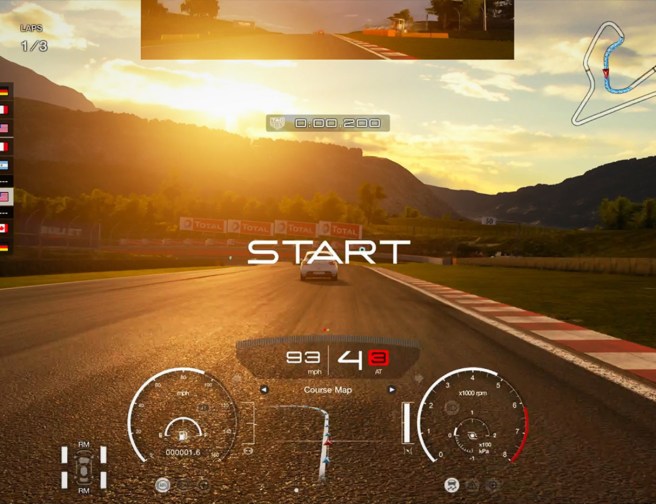
Grand Tursimo Sport, isn’t a simulator like Assetto Corsa, but it isn’t arcade-y like Need for Speed. It rides the line between the two, drawing in players from both realms and does so with class, elegance and reverence for motorsports. The driving is smooth, and engaging, really allowing you to feel the power of the car beneath you.

There are dozens more examples of good game-play across a myriad of genres. You would know, because those are the games you revisit the most.

3303528-gameplay_gtsportarcade_20171016site

Gran Turismo Sport (2017). As a casual racing fan, this hit the spot between simulator and arcade. Couple the racing experience with the ability to unlock cars in an organic way (and create some awesome wallpapers), truly elevates it above other fun racing games. 

How you interact with a game, is what allows you to revisit classics. You don’t mind the terrible graphics, the bizarre AI behaviour and the slightly outdated controls, because the gameplay experience is so fun.

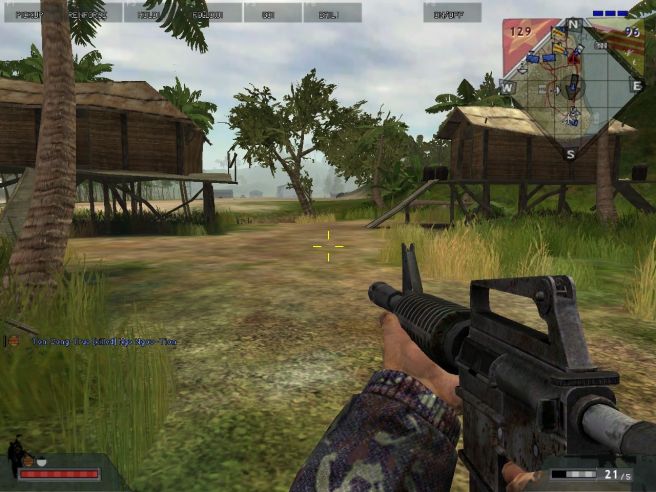
On a personal note, as a child, I grew up on Battlefield games. My very first experience was Battlefield Vietnam. I loved it, not withstanding I come from a refugee background directly impacted by that War, but because the game was so vast, so completely free, an incredible sandbox to play in.

I discovered hidden alleyways tucked away in thick jungle, how to collapse logs to destroy tanks, sniper spots atop ancient cities and how awesome it was to see my younger brother fly in with a Huey and annihilate the enemy I marked with yellow smoke.

I didn’t mind that the M16 took nearly 3 seconds to reload, the bizarre aimbots that the enemy AI had, the way how if you shot the driver in a BTR, the turret gunner would spin around and shoot and never move the vehicle. These were minor quibbles in a game-play experience worth revisiting over and over again.

372076-battlefield-vietnam-windows-screenshot-reaching-the-enemy

Battlefield Vietnam (2004) – The game is janky, lacks the polish of BF2 (the greatest) but it still holds up as a fun, silly, authentic Battlefield experience.

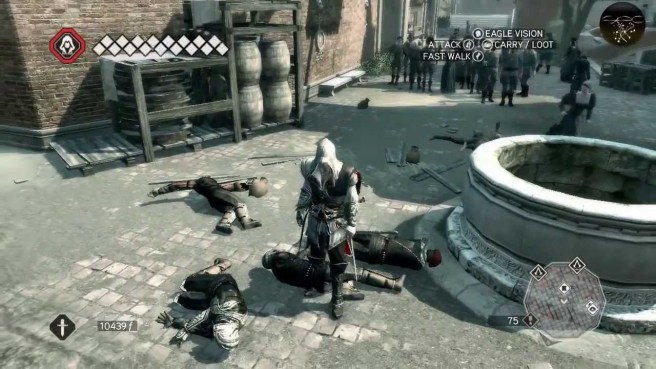
There is also a formula to good gameplay that I’ve noticed. Things should feel intuitive from a control perspective, but developed enough to make you test the game’s universe. An excellent example, is Assassin Creed II (2009) which expanded the controls in the first AC game, but didn’t rework the already intuitive controls.

The platforming in AC2 was surprisingly precise and how you controlled Ezio Auditore in combat and stealth felt incredible. Parkour was natural and believable, failed jumps more an issue of the player than the game logic. His arsenal was expansive, allowing players to really explore how they approached problems in the game.

Contrast that with later Assassin Creed games, where a lot of the platforming became oddly counter-intuitive and arsenals grew so large, that players ended up using a fraction of what was available, and you can see why AC2 is still regarded as the peak assassin experience.

ac2

Assassin Creed 2 (2009) – Collecting all the feathers in this game … irked me more than it should. Lucky Renaissance Italy is just gorgeous, and Ezio’s outfit isn’t bad either.

But what about when the game breaks? Does gameplay still reign king?

Of course this is where it gets a lot more subjective. You may be entirely turned off by bugs, lag, blue screens and a whole host more issues, but if there is something in there that keeps you rebooting the game, in spite of these issues, then I would say, yes, gameplay still rules supreme.

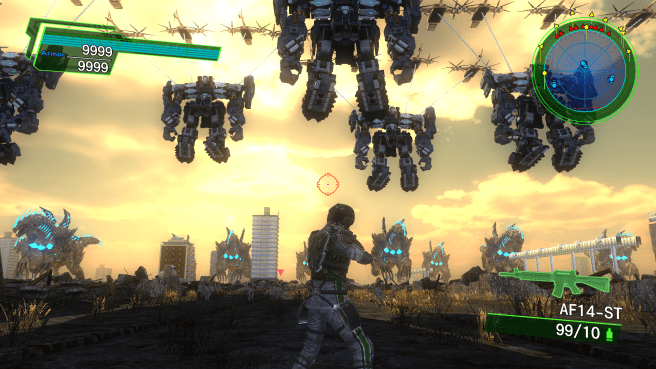
One such personal example for me, is the PC version of Earth Defence Force 4.1 – The Shadow of New Despair (2016). My version lags like crazy whenever there are too many bugs on-screen, and I’ve had a couple of crashes.

And then there’s the issue of missions being repetitive, the animations are wonky, the graphics are sub-par, the voice acting is atrocious and your mouse gets tired from clicking at everything on-screen so much ….

But the sheer gratuitousness of the game, the insanity of the gameplay and the ridiculousness of the situation keeps me rebooting that game for some giant bug killing action. The gameplay is just so good, I keep coming back for more.

Earth Defense Force 4.1 05.26.2017 - 10.53.27.04

Earth Defence Force 4.1 – Shadow of New Despair (2016 – PC) – is just about the most video game that ever video-gamed. 

In essence, what this article is all about, is an appreciation for the hard work that game developers put in, to make good games. Games that don’t make you work for it, to feel like a badass or a natural at something, because the game-play is intuitive to understand, easy to learn, and hard to master.

That, at its core, is what defines good gameplay. When you play something for the first time, and it feels smooth. This allows you to appreciate all the other elements of the game, like graphics, soundscapes, AI behaviour and map design, because at its’ core, the game is good.

Gameplay is the one thing that must be nailed correctly, because everything else will follow how much care you put into it.

~ Damocles 

Battlefield 1 11.15.2016 - 00.02.10.13

Battlefield 1 (2016) – An example of gameplay being good, but not good enough to overcome its’ predecessors brilliance, like Battlefield 2 or 3. Sure it’s pretty, but the customisation leaves a lot to be desired and there is something about the gun-play that is oddly dissatisfying. 


Noir Reflection (Fiction)

View_of_Auvers-sur-Oise_Paul_Cezanne

View of Auvers-sur-Oise by Paul Cezanne.

The Noir short story stands at 15714 words, without any major edits. 

(All parts here: 1 2 3 4 5 6 7)

It took me just over a week of dedicated writing, with an awful 3 day break just before the finale, that almost derailed the entire story.

The main reason why I wanted to write this short story is because I wanted to elevate my writing to a more useful and functional level. I wanted to treat writing as a job not a hobby that I indulge in.

This created a rather surprising mental shift in my attitude to the story, with certain plot elements worked on, thought on, and dismissed on before I put hands on a keyboard.

This is very bizarre for me, as I almost exclusively never plot out a story before I start writing. I tend to just let the story write itself out. I have a very empty mind when writing, only really engaging it to describe or look up a better word to describe what I want.

Thesaurus.com is easily my best friend when writing.

My biggest challenge though was actually learning to use “said Alex” at the end of each string of dialogue. It is one of my great weaknesses, to craft interesting and compelling dialogue and I found myself scratching my head often, how to end dialogue sentences with something other than “said Eveline”. It is definitely something I have to work on.

In a lot of ways, this was a return to my roots, when I used to compulsively write as a younger man, and my early obsession with film noir.

The whole endeavour was also made doubly difficult by my return to noir story telling.

I used to write heaps of noir style fiction in my earlier years, but for some odd reason, this time it was a lot more difficult. I know that traditionally, noir is set during a time period (the 1920s) but when the greats like Raymond Chandler or Dashiell Hammett started writing, for them it was relatively contemporary.

I adopted a similar attitude, preferring to set all my stories during the present time, of 2020s. It only seems quaint for us reading back, but for them that was the time they lived in and they reflected that.

I was pretty influenced by both those greats up there whilst writing the story, as well as the book The Midnight Promise: A Detective’s Story in Ten Cases. by Zane Lovitt.

It was that book in particular that drove me when I was younger, as Lovitt proved successfully that you can create a noir/hard-boiled story in Melbourne.

Speaking of Melbourne, I really did try my best to showcase my home town as best I could, from personal experience. All the black and white photography were taken off Google Images, and in some cases, I used a black & white converter online to transform the images into the moody ones you see on all my posts.

The locations that Alex Ryder visits are relatively varied and I definitely wanted to ensure all the places were described as accurately as possible (without the stolen art of course).

The 1st iteration is a simple image of a North Melbourne tram line, which I wanted to establish as the main mode of transport for a poor guy like Alex, as not only is it cheap, it is also slow, moody and easy to cheat the system and never pay for a fare.

The 2nd image features one of my favourite places in Victoria, St Kilda. It is a very strange place, with a lot bizarre architecture and an extremely unique beach culture. It is situated on a beach, that is more or less exclusively used a backdrop for more interesting things like fusion Japanese restaurants, or a gorgeous theatre that Dita Von Teese loves to perform in.

In other words, if you find someone trying to surf there, let me know … because that’s as rare as a comet flying past.

The 3rd post has a photo of the Melbourne Citylink Sound Tube, which is a fascinating piece of architecture for what is essentially a freeway. It’s very attractive at night, with its rainbow spectrum of colours, and is a great backdrop for Alex’s home, which is literally maybe a 5 minute walk away.

The 4th chapter features a legitimate interior shot of the now-closed Pink Palace, which was as I described, a 70s style brothel that closed around 2 years ago. I have long had an interest in the lives and workplaces of working girls, and while I didn’t tour this particular brothel, I was given a tour of a similar establishment nearby. It was as eye-opening and interesting as I hoped. Many brothels in Melbourne, especially the more expensive one, feature some truly incredible interior design.

The 5th section is all about Collins St “The Dome.” I don’t need to elaborate much further than the description I placed in the story other than it also features one of the most gorgeous alleyways I have ever walked down.

The 6th part is a rather sombre image of the Docklands’ Central Pier. It is actually currently closed, as the entire pier needs to undergo structural integrity work, as a lot of the wood has warped after years of neglect. At night it is probably as moody and quiet and desolate as the image presents.

For the 7th stage, it is actually one of my favourite places in Melbourne. Collins Place features one of my best rated Japanese restaurants, my absolute favourite cinema, and the perfect transit atmosphere in the city. It is always quiet, clean, comfortable and beautifully tranquil there, and the exclusive Sofitel Melbourne hotel only enhances that vibe.

This leads me onto what music I listened to whilst writing this. Music, obviously, plays a big part in any creative endeavour. For this story, I was almost exclusively listening to Dr. SaxLove’s excellent Jazz Noir – 1 Hour Jazz Noir Saxophone Music playlist on Youtube.

When I got bored of that, I would switch over to Blade Runner 2049 soundtrack by Hans Zimmer and Benjamin Wallfisch which I have adored since I watched the film in cinemas.

Additional crucial tracks also include Andrew Hale’s definitive L.A. Noire theme, which if I am honest, you cannot avoid if you are writing crime and Bye Bye Blackbird by Diana Krall which of course is referenced in the final words of the story.

Overall, I was pretty happy with how the characters turned out, especially Eveline who I hoped, I created right by other femme fatales. It was extremely difficult to create her, as a complex and layered character, capable of manipulation, vulnerability and desperation.

Alex, more or less, is a straight man to all the more interesting characters in the story. Much like Batman, he will always be overshadowed by the other people in his story.

Francois was a genuinely turn I didn’t anticipate. When I originally created the character “Joel McNamara” I was going to make him a thief on the run, after a robbery gone wrong. Eveline, his lover would request the services of Alex and that was where the story was going.

However when I described the interior of his house, Joel became Francois and I found myself shocked at where I conjured this twist up from. He was always a tragic figure in my mind, and a bit of a lost soul, a guy who had everything, but never appreciated it.

I was honestly surprised at how much life Liverpool and Flat Cap possessed when I wrote them. I didn’t think I would grow to like them as much as I did. The obvious inspiration for them came from the show Peaky Blinders and my love for memorable henchmen, which stemmed from watching too many Bond films as a younger man.

Speaking of Bond, the Jackal is a direct inspiration from Mr Big in the novel Live and Let Die by Ian Fleming. I have always admired Fleming’s ability to create memorable villains (even though other aspects of his writing are deeply flawed by today’s standards) and I sought to emulate that aspect in the description of The Jackal.

His name is also a reference to the brilliant film The Day of the Jackal which I loved, and of course the villain in the Bourne books (not the films).

Whilst I am on a roll explaining all my references and loves in this story, I might as well touch on the concept of Caesar’s cipher. I love encryption and the science and inherent secrecy of it. Fans of Dan Brown‘s Digital Fortress will obviously see the parallels I drew in my own story. However, I will also admit to being a huge history nerd, and that my all-time favourite ancient civilisation will always be Ancient Rome.

So I just had to include something Roman in the story. But it was definitely a late inclusion. I actually forgot about the encryption in the excel sheet, so it was a late scramble to come up with Caesar’s Cipher. 

Speaking of antiquities, I think it’s time I touched on Cezanne.

After burning through every single book written by Daniel Silva in his amazing Gabriel Allon series, I grew to appreciate art better and the skill on display that all the Old Masters generated in each of his paintings.

I genuinely despise contemporary art and their quasi-bullshit attitude in explaining literal heaps of junk and crap. If you look up the word “sanctimonious” in the dictionary, there should be a picture of some incredibly air-headed individual studying “modern” art.

But I digress … I used Paul Cezanne’s View of Auvers-sur-Oise because it was actually stolen in a similar way to how Francois described. Obviously I added some extra elements, but the smoke grenade, the timing of the heist are all factual.

I was very lucky to have found such a theft that matched perfectly to what I wanted in the story.

The Venus de Milo was actually placed in there, as an interesting interior design, that I ended up using more than I thought. It also helped tie in the idea that if Francois could source a replica of the Venus, he could also commission a fake Cezanne. This of course led to me referencing Twin Peaks and its’ infamous Red Room in the Pink Palace.

Another lucky coincidence if I am honest.

Anyway … Alex Ryder, is a sneaky reference to one of my favourite Young Adult series, Alex Rider by Anthony Horowitz, and Francois’ surname, Dujardin was directly stolen from Jean Dujardin, one of my favourite French actors, whose work in OSS 117 and The Artist still make me smile to this day.

(Also, the OSS 117 theme is also one of the best spy themes ever made.)

Overall, I was pretty happy with my first draft of this story. It was a struggle at times, but it wasn’t as horrible as I thought it was going to turn out.

I will probably keep at this, writing more and more, until hopefully I can turn out a proper novel. My retail job is now essentially paying me to write, since there are so little customers in my shop, so I might as well keep going.

I hope this was as fun for you to read, as it was hard for me to write!

~ Damocles.

URBEX

20200527_192755.jpg

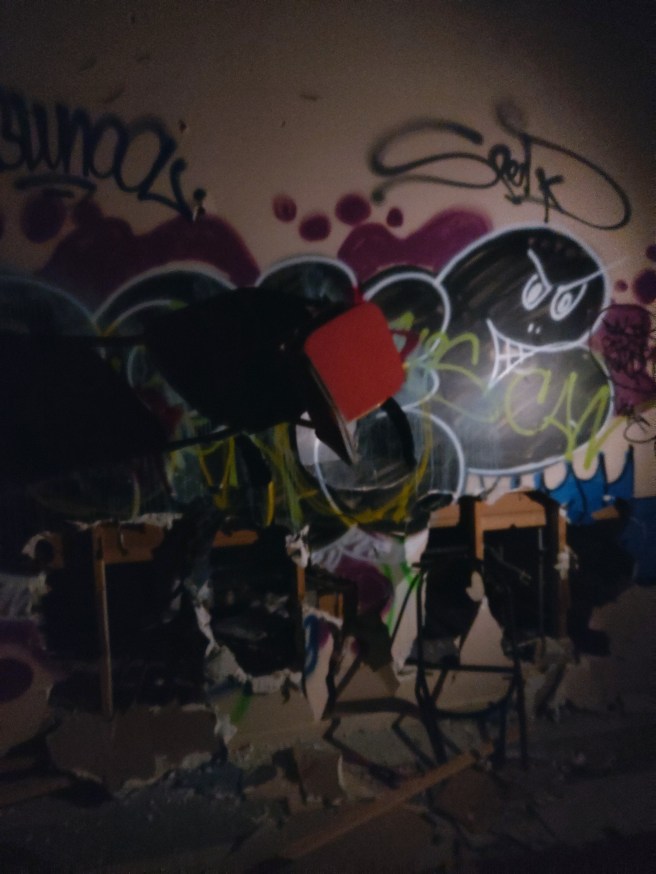
Contemporary Art? Chair in Wall. Photo taken from an abandoned reception hall, near my home.

Last night, got me indulging in URBEX (Urban Exploration). 

It’s been almost over a year since I last went on my last trip to do something similar, the previous one being an abandoned drainage tunnel far and away from my home.

This time, it was much closer, the first being literally 2 blocks away from my home, and a 10 minute drive in my car to the second location.

I’ve done enough of URBEX to be aware that if a place has been locked away for a good while (i.e. 3 months), people would have already gone and trashed the place.

Most importantly, they would have already created an entryway for people like me to get in.

The first location, which I will not reveal where it is exactly, for the sake of anonymity, was an abandoned Reception Hall, formerly owned by Chinese investors, who essentially used the place as a storage unit and then let it fall into disrepair and ruin.

Right in the middle of suburban Melbourne and an endless supply of curiosity for me.

I decided that enough was enough, with the COVID-19 restrictions lifting, and me being able to see my best mate again, we would celebrate us seeing each other by exploring the two spots I picked out.

So I got geared up. Heavy combat boots, dark navy cargo pants, a long sleeved Henley shirt and thick dark blue fleece. Beanie, and a neck gaiter to conceal my identity and help with any prevailing dust and particles in the air.

A small bag with all my EDC (Every Day Carry) needs, from tissues, to a multitool in case I need to free myself or cut something, and a tourniquet in case of any serious injuries. I packed my Pelican torches, two in case one went down (they are both very bright, at 500 lumens and 1000 lumens) and a monocular, so that I could scope out the place for cameras and security.

I packed my Ipod full of tense music, just to enhance the atmosphere of it all. Splinter Cell Blacklist, Blade Runner 2049, Deus Ex Human Revolution & Mankind Divided just to name a few.

Meeting my friend at night, we walked to the Reception Hall, and went round the back, where there was a well trodden pathway that the community used for bike riding.

Pushing our way through the bushes, we came across a hole in the fence, that led directly to the rear of the Reception Hall.

It had been temporary cyclone-fenced off, but I knew that there had to be a way in, because it had graffiti and mess everywhere. At the very edge, there wasn’t a block, so you could swing open the fence quiet easily.

Cautious about using our torches, because they were a dead giveaway and you could see them from the road, we stepped through the back door and entered the prep room, where there was broken glass and rubbish everywhere.

I honestly missed the crunch of broken glass beneath my boots.

It’s the sound of thrills, because you know what you are doing is illegal, but your curiosity and desire to explore trumps all of that.

It’s worth the risks, to finally quell the curiosity and to see parts of a building that were previously unknown.

To sum up, the place was a mess. There was a pile of shit close to the entryway we came in, graffiti was literally everywhere and broken glass from the window and ceiling was scattered everywhere.

The kitchen was an even bigger mess, with pipes and toilets and sinks smashed completely. Even more apparent was how cheap the whole place was. Lots of the walls were made of plaster and were smashed in, revealing hollow spaces and the ballroom floor, once made of beautiful wood panels, were now torn up to reveal concrete.

The stage was still intact however, and even featured a decrepit old, dusty lounge couch.

I didn’t sit on it.

For obvious reason.

Next to it, was the chair in the wall, and oddly, when we ventured closer to the entrance, we found a stack of chairs in a space that was oddly clean.

Even VIP cards from the place were placed atop the chairs.

My friend took one. As a memento.

Beyond the relatively small ballroom area, there wasn’t much to the place. As a reception hall, it was tiny by a lot of other standards, and didn’t have much to offer.

As a primer for our night though, it was good. Crawling out from the dense bushes and the small hole in the fence, we made our way back to my car and drove to another, much larger compound that was strangely next to a retirement village.

This place, looked a lot more formidable and was on a sizeable plot of land. It also had claims that it was protected by security, but the front fence had a gaping hole in it.

A former corporate headquarters, this compound had literally everything.

A basement that led to a giant maintenance area, with filing cabinets everywhere.

A ground floor that had a reception desk and a huge cafeteria.

An upper floor that led to another set of offices and staff conference rooms.

A laboratory with pneumatic machines and left over lab experiments.

A blueprint cabinet with all the floor plans to the entire compound, next to the abandoned generators.

Long strings of fire hoses, strewn everywhere.

A garage where deliveries were taken, where huge storage units had fallen over.

It had everything.

Graffiti was a lot more sparse too. Which meant this place hadn’t been taken over as much. But there were a lot more holes in the roof and the railings for a lot of the balconies had fallen away, leaving them bare and easy to fall off.

We spent over 2 hours there, treading on glass, envelopes, party decorations that were abandoned, manoeuvring our way past hundreds of desks, papers, CPUs, computers and filing cabinets.

It was eerie and incredible. I had never been through an office space like this before.

We both wondered about the people who worked there, who had spent time to decorate their office spaces. What sort of work went on in the labs, what use the machines were for.

There was ancient tech everywhere. Old fat PCs, floppy disks, CD-ROMs, even the decor felt old and 90s-esque.

Weirdly this was all right up till 2018, because we found 2018 newspapers left behind with a cup of old McDonalds coffee, in the basement.

Further research at home, meant that I discovered this place was shut down in 2017 and everyone had moved to a new location. The Chinese investors had done nothing with the place since.

A recurring tale.

Gotta thank the Chinese for these URBEX opportunities.

Throughout this whole compound, it was surrounded by people in their homes. We had to pause and freeze a few times, when we saw people on the couch, on their upper floor, watching TV.

We stayed low and moved quietly, staring through the monocular, hoping they didn’t spot us.

But we avoided torch light for a while, which made every step tense, careful not to slip and slam my hand on glass or trip on chairs or hoses.

We even got to access the roof, via a ladder.

Overall, it was amazing to fully explore this compound. It made the whole night experience utterly worth it. The moon was providing just enough light to see but was also dark enough to cast us into darkness without fearing visibility.

Afterwards, my friend and I discussed what we saw and we stood around our cars for hours on end, catching up.

I’m really glad I got to do this again. It’s a timely reminder that just because I feel a bit dull, a bit boring thanks to my work routine, it doesn’t take much for me to get that sense of fun, inspiration and thrills.

I just got to keep searching, keeping my eyes open and actually getting out there and doing it.

I’ll probably make a short story round this soon too.

~ Damocles.


COVID-19 Ways How I Learned to Stop being Bored and Love to Cook.

dr-strangelove-or--how-i-learned-to-stop-worrying-and-love-the-bomb-170-1200-1200-675-675-crop-000000

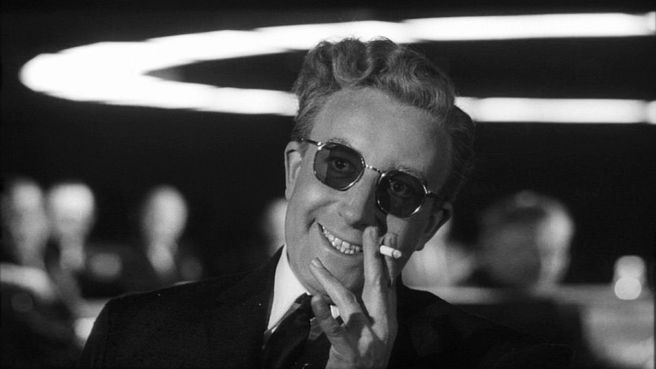
Dr Strangelove or How I Learned to Stop Worrying and Love the Bomb (1964).

If I had to pick the number one enemy, the bane of my existence, I would not hesitate to choose boredom. 

7 hours of dull, repetitive, gatekeeper work at retail.

5 days in a row.

10am to 5pm.

The first few days can be summed up like this:

Go on your phone, Damocles. 

Watch Youtube for hours, Damocles. 

Annoy your friends and chat to them incessantly on Facebook, Damocles. 

Eat McDonalds for the 5th straight lunch in a row. 

Serve customers and then go straight back to the incredibly urgent Office video I am watching for the 9th time. 

But … I soon got tired of myself and the routine that my week had turned into.

It started with food.

My favourite type of meat is the undeniably boring chicken.

McDonalds … has an extremely limited menu when it comes to poultry and when you’ve had the same McChicken or Nuggets combination for the 9th time in a row … you end up perceiving lunch the same way you would an unavoidable family gathering.

Why not eat beef? 

Just not a fan if I am honest. Something about the McDonalds beef patty puts me off eating altogether.

It was also around this time, that my girlfriend, equally bored at home and at work, began to crave certain dishes and meals. So whenever we got together on Fridays, we would try making something.

It took 4 or 5 middling successes to get the cooking crave.

Our dishes haven’t really been perfect, but they’ve been edible and far more enjoyable than a lukewarm chicken burger.

I started binging – Binging with Babish videos, eager to try and make recipes. Only last week, I made pasta Aglio e Olio for my girlfriend, to surprisingly OK results.

I say surprisingly, because usually whenever I am in the kitchen, things have a habit of going tits up.

But just like shooting, the more time and experience you gain, getting exposure to the gun, or in this case, chopping and gas burners, you start to get the knack of it.

So I’ve discovered cooking, because of how boring my lunch meals were becoming. I wanted tasty food. I craved something substantial that would help make my retail shifts a bit more palatable.

Which leads to my current obsession: sandwiches.

In particular, a cubano sandwich.

Because I started watching more Babish, I felt compelled to check John Favreau’s Chef (2014), a pleasing, fun, feel-good movie about a chef who turns his career around.

The cubano being the very bedrock in which he manages to transform himself, and me falling in love with the fun that John Leguizamo is clearly having on set.

movies-chef-05092014-superJumbo

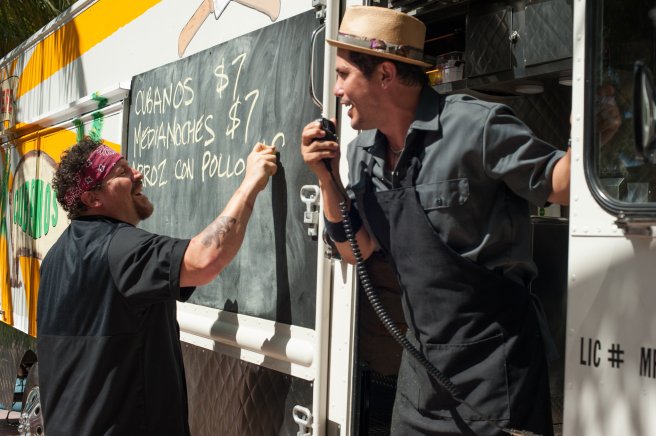
“Best Cuban food in all of South Beach. If you need it more authentic, you can swim 90 miles that way!” 

This obsession with a sandwich, ended up with me, trying something I have not done since high school.

Learn a language.

Spanish of course.

This was probably unhealthily reinforced by repeated viewings of Senor Chang on Community Season 1, completely massacring the Spanish language with his ridiculous pronunciation and unhinged racism.

Thus far, I’ve learned how to say ….

Hello, apples, goodbye, thank you, man, boy, woman, girl and water.

Hola, manzana, adios, gracias, hombre, nino, mujer, nina, and aqua.

I only started yesterday with the duolingo app.

But it’s fun. It’s also been interesting to see how much more prepared my mind is to learn a language, versus that of my juvenile state in high school.

I can see myself actively striving to remember words and phrases, instead of dismissing them.

Learning is always intriguing.

That motto, only came about because of my previous What If?, where I realised that to make my own life more interesting and genuine, I should be trying to learn more things, than just blindly follow the easy route.

Follow my interests and actually research topics instead of just dismissing names and ideas.

A key example of this was revealed to me, when I read a headline that said: Elon Musk hates Warren Buffet.

I was aware of Elon Musk (who isn’t) but was completely in the dark about Warren Buffet. I knew he had to be rich, of some importance, to warrant the ire of Musk, but beyond that, I had nothing.

So I did a little bit more digging on wikipedia.

I was astonished to learn about Forbes’ Billionaire list, which showcases the richest men in the world, and how much each is worth.

I couldn’t help but go through each of those names, their net worth and exactly what sort of empire they ran. My personal interest, dismissed a lot of those running computer systems, like Larry Ellison’s Oracle Corporation, or Bill Gates’ Microsoft and the more obvious contenders like Jeff Bezos’ Amazon, Mark Zuckerberg’s Facebook or the Walton’s Walmart. 

Instead, I looked into fashion industrialists, like Bernard Arnault’s LVMH (Louis Vuitton Moet Hennessy) and Amancio Ortega’s Zara. 

Why?

Because to get into fashion, you need to cultivate sophistication and oftentimes, I can sense that rich European types edge their American counterparts in terms of taste and how they spend their money.

And in Arnualt’s case, he chose to create a Museum.

The LVMH Museum, which showcases Arnualt’s personal collection of artwork, is a fascinating piece of French modern history and personally, in my opinion, an affront to common design tropes.

My revulsion to the design of the LVMH Museum led me down to my secret passion for architecture.

For the longest time, I’ve always entered and stared at buildings. They still retain some of that whimsical wonder than gripped me as a child, when I saw giant 747s at an airport take off.

How the fuck do they do that?

In particular, what I love about architecture is the blend of creativity, expressionism and science that goes into it. Everything about it, is exacting, unique and undeniably complex.

I cannot truly ever grasp architecture, because in my mind, it’s the same thing as wondering how we managed to light up a city grid with electricity and allow everyone to have 24/7 access.

Its amazing.

So instead, I just go off, an instinctual reaction to buildings.

Some are boring, some are interesting but stale, some reward you with study, and some repulse me.

The LVMH museum is one such Gehry design that I cannot say I am a fan of.

To say that Frank Gehry is a genius, is a fact.

But to say that I like everything of his?

It’s more like a love-hate relationship.

I love his work on the Guggenheim Museum – Bilbao in Spain, the Walt Disney Concert Hall in Los Angeles and New World Centre in Miami, but absolutely loathe his work on the Museum of Pop Culture in Seattle.

And the less said about the Dancing House in Prague, the better.

However, he is the product of our contemporary times. He serves as a reflection of modern taste, a master of shaping and bending metal, glass, plastic and glass, that we all love to use in our modern construction.

But I love the understated work of Rem Koolhass more. The sharp lines, the way how he manipulates angles and showcase windows, is a lot more definitive and interesting.

The beyond gorgeous Seattle Central Library is amazing, as is the China Central Television Headquarters in Beijing.

How he envisioned the CCTV Headquarters is nothing short of incredible in my opinion.

To me, architecture provides such an unique opportunity to showcase your city’s character and personality.

Melbourne’s architecture is rather plain, but I’ve walked the streets long enough to know about the hidden nuggets here and there. I love my town, but it isn’t flawless.

However look hard enough and you’ll find buildings of very interesting design

And I’m not referring to the hideously designed Federation Square either.

Instead, I direct you away from the dull, commanding, and dome-less Parliament House of Victoria, and towards more respectful and a homage to an Ancient Wonder, the Shrine of Remembrance in South Melbourne.

A national war memorial, it is a Mausoleum, made of granite, and can be seen directly down the centre of Melbourne’s CBD when standing at the proper angle. It is also a callback to Ancient Wonders, like the Mausoleum at Halicarnassus and the Parthenon in Athens.

Once you’ve admired and paid respect to the Museum, look across the street and stare at one of my favourite Melbourne apartment designs, the Melburnian, with its iconic and strange curved design.

Ignoring the Eureka Tower, and the Rialto, I advise you to observe the gargoyles on the Gothic Bank (ANZ) and the beautiful stained window designs.

Also nearby is the amazing 333 Collins St, a former banking chamber, with baroque overtones and an incredible roof and classic alleyway design. It was also featured prominently in the time travel thriller Predestination (2014), a surreal viewing experience for me, as I know that building so well.

Venturing further, one must always visit the skyway that link the Emporium and Melbourne Central and marvel at the traffic below.

But before doing so, you must treat yourself to an intriguing green lantern roof, in the St Collins Lane. Alas the intriguing green lounge rooms, with their grunge roofs and black wall decor, have disappeared, replaced by dull shops. I have many fond memories of the lounge area, and relaxing with my girlfriend there, after long trips around the CBD.

However, my favourite places to visit, will always be hotels.

There is something magical about visiting a luxury hotel. It’s a strange mixture of temporary and permanence, your home away from home, but it’s always perfect, still and dead, despite you living in it.

The couches aren’t quite as good as the one at your home, but the toilet and shower are better. The bed is perfect, soft, clean but never as warm as your own.

But beyond the rooms, I adore the lobbies. I love the perfect facade, and how people come in and out, stay and leave, resting or waiting. There’s a unique ambience in them that I love, and the architecture has to reflect that.

Books are placed in a certain place, windows are designed to showcase the world outside, elevators are hidden away, floors are marbled, convention rooms are subtly labelled and even the receptionist must blend with the surroundings.

I personally adore the Park Hyatt Melbourne lobby and design, with its magnificent staircase.

Equal contenders are the Westin Melbourne with its marbled, grey and white interior, the Grand Hyatt Melbourne with its beautifully dark, dimly lit atmosphere, where I’ve hung out for hours on their outdoor chairs, and eaten at its restaurant, and the antique Victorian styling of the Hotel Windsor that opposes the Parliament House for classicism.

Yet, the most hotel experience I’ve ever had, still remains the Sofitel Melbourne on Collins with its actual structure built into an office complex, complete with an incredible Japanese restaurant, Kenzan, and my favourite cinema theatre: Kino – Palace Cinema.

The valet and taxi rank area is circular, with the actual lobby overlooking it, and a beautifully calm, relaxed and comfortable lobby/cafe section that has the best couches to sink into.

I love the tall roof, the circular doors for the convention rooms and level 35, which boasts the best bathroom view in all of Melbourne and an incredible airy, Middle Eastern styling for the Atrium Bar.

It is arguably my favourite place in the city.

But I’ve digressed enough on my passion for architecture and hotels.

This is the week where I’m going to learn how to cook more, learn new things to say in Spanish (Hola, mucho gusto! Mi nombre es Damocles.), and keep on writing.

My next big style to perfect is actually a screenplay.

So look forwards to that. I’ll be using the Gone Girl (2014) screenplay by the author herself, Gillian Flynn, who I am a big fan of.

Until next time, when boredom strikes again.

~ Damocles.

Napoleonic Lessons

Bonaparte_ante_la_Esfinge,_por_Jean-Léon_Gérôme

Bonaparte Before the Sphinx – Jean-Leon Gerome

There is but a step from the sublime to the ridiculous – Napoleon Buonaparte

What have I really learnt from the book that I am currently reading?

Napoleon the Great – Andrew Roberts

It has taught me a lot about leadership. In fact, it might be said that Napoleon has become a mythical figure in my mind, thanks to this book.

Whereas before, he was always treated a bit like a villain. After all, I’ve rooted against him, for the British, in one of my favourite Napoleonic series, Matthew Hawkwood.

But what has stuck out to me, is his ability to properly encapsulate all the good elements of the French Revolution and combine them with his efficient and rational administration.

To read the Napoleonic Code is to see how much of an influence he has been on modern legality and law, how people are treated and what an incredible forward thinker he is.

These are all the tenets of leadership that I wish to emulate.

I wish to be rational, smart and efficient in all the decisions I make, without compromising my creativity or my ability to dissect, interpret and analyse a situation clearly and objectively.

What really stunned me though, was his ability to flit between a myriad of subjects and topics and issues without losing track of them all. To move troops in the heat of battle is already an extremely daunting task, to control and co-ordinate the logistics, the supplies, the communication and grand strategy of the Grande Armee; an even more challenging effort.

But he was reported to even give instructions on Parisian opera whilst as far away as Austria, to be judge and jury on local police cases and install local governments loyal to him, whilst fighting Austrian forces and on 3 or 4 hours of sleep. He could remember individual soldiers, their families, their unique traits and thank them personally for their efforts.

Such an incredible memory and ability to track thousands of items at once, is such an incredible gift, and an ability I am trying to hone myself.

However, my mind is a mere scatterbrain in comparison to his. His genius was only matched by his ego and favouritism.

I, myself have an extremely large ego, for one with so many flaws, (not particularly handsome, slightly overweight, and the aforementioned ego), but such confidence in myself is only matched by the charisma I wield.

I am quite sure though, I lack a lot of his heart. As a leader, I think I’ve shown a fair amount of ruthlessness and displeasure when treating a lot of my subordinates. Compliments are exceedingly rare, with an emphasis on negative feedback and dispassionate analysis of people’s performance.

I don’t particularly favour anyone. I use them to the hilt and almost abandon them if they start to show cases of inefficiency or cannot get “simple” tasks done in my head.

In that sense, I feel I am a better leader in that sense than Napoleon …. but this will mean I will never be great. His mere presence could inspire troops to work, fight and die for him. He trusted a lot of people around him, even though he shouldn’t have. This was his downfall. His nepotism, favouritism, blindness to obvious traitorous people in his court was the ruin of his empire.

I almost trust no-one to fully fulfil their tasks, and end up doing a lot of the work myself.

But then I work in a volunteer environment. Commitment, discipline and order are not common words associated with them. A lot of volunteers slack off, because they aren’t getting paid. They consider me as their friend, not their boss. They believe themselves exempt from my criticisms and pressure.

The most telling sign, is their lack of communication and failure to properly help me.

And that is partly my fault. If I inspired a sense of duty in them, they would work a lot harder. If I didn’t treat them so coldly and dispassionately, they would be more inclined to communicate with me more.

But that is something to work on for the future. Currently, all I can do is continue to shoulder the brunt of the work and heave this ridiculous behemoth of an event across the finish line.

Another similarity in leadership I’ve discovered, is what being a linchpin or a keystone is. I absolutely hate being the person who, if removed, injured or out of the picture, the entire endeavour collapses.

It’s not the pressure, the workload, the concept that irritates me. It’s the lack of creativity and ability in the people I lead that annoys the shit out of me. I dislike being so valuable, that if I was gone, all the work I’ve done, all the effort I’ve put in and the legacy that could have been, is instantly gone.

Napoleon suffered from a similar predicament. None of his generals and marshals could fight properly without his guidance. Legislature and governance could not function at its peak efficiency and fairness if he was entirely absent from the system.

I can’t help but think what would happen if I had someone who, in their brilliance and discipline, could surpass me.

Finally, I would think to myself …. an worthy heir of the empire that I have built.

Would I hate them?

Of course. They are better than me. But at the end, I would respect their genius and move aside. For I am now obsolete.

That is the ending of all leaders. To be surpassed. But whether you are overtaken by someone better is the dream.

Am I getting tired of all of this? How am I not buckling and collapsing under all the pressure? Am I starting to buy into my own bullshit about being a capable leader?

I don’t know.

That is the answer to all three of those questions.

Am I good at my job? Maybe. Just once, though, I would like someone to properly critique me and do a proper dispassionate analysis. It’s always me analysing me.

I want to be picked apart.

Because I want to rejoin the puzzle pieces of me together, the right way.

It’s like doing a Lego set, but by the time you finish, you realise there are 5 extra pieces that should belong on the set.

So you have to pull it apart, find spot where you messed up and put it together again.

But I’m the leader. No one is meant to pick apart the leader. Without the leader, the whole system collapses.

So just how the fuck am I suppose to get better?

There’s only so much analysis I can do on myself and my performance. I need fresh eyes, and they have to be cold, objective and rational.

Anything else just wouldn’t resonate with me. Because I’ve done the emotional thing …. and it doesn’t work on me.

I adore my team. I’m grateful for all they’ve done for me.

It just feels like I’ve done too much at the moment. Like they’ve taken more from me, than I from them.

Strange isn’t it.

As leader, you’re the foundation. You’re meant to hold everything up. You’re Atlas and the entire world is on your shoulders.

Can I keep this up? Probably. But its wise to look for a protege.

Or maybe I shouldn’t. Empires rise and fall. I should let mine, if I ever have one, fall with grace.

Why should I leave behind a legacy? Why should it be squandered by someone else?

Now I just sound like an egomaniac.

But aren’t all leaders just a little bit like that?

~ Damocles

The Nature of Suicide

nw1

Still from Norwegian Wood (2010)

Recently, I’ve had to spent a lot of time, waiting in my car.

By “a lot of time”, I mean stretches of 3 hours or more.

I could have done a lot of things. Walked for a bit. Think about new marketing strategies for my festival. Wrote a song. Write a short novel.

But I did none of those things, because there was a strange tranquillity to seeing life go by … and simply letting it go past you.

I reclined my car, put my feet outside the window and read my book, while occasionally keeping an eye on cars go past.

Sitting there though, through 2 dawns, on separate days, it reminded me of a scene that weirdly haunted me when I first started delving into Haruki Murkami’s literature.

He died that night in his garage. He led a rubber hose from the exhaust pipe of his N-360 to a window, taped over the gap in the window, and revved the engine. I have no idea how long it took him to die. His parents had been out visiting a sick relative, and when they opened the garage to put their car away, he was already dead. His radio was going, and a petrol station receipt was tucked under the windscreen wiper.

Kizuki had left no suicide note, and had no motive that anyone could think of. Because I had been the last one to see him, I was called in for questioning by the police. I told the investigating officer that Kizuki had given no indication of what he was about to do, that he had been exactly the same as always. The policeman had obviously formed a poor impression of both Kizuki and me, as if it was perfectly natural for the kind of person who would skip classes and play pool to commit suicide. A small article in the paper brought the affair to a close. Kizuki’s parents got rid of his red N-360. For a time, a white flower marked his school desk.

Extract taken from Norwegian Wood, by Haruki Murakami

I guess, as a quick aside, I’ve always loved how, even when its been put through a English translated wringer, Murakami’s dream-like style still comes through and shines as bright as ever.

But back to my original point, the way of committing suicide by car always stuck with me.

I love cars, and their ability to allow me to push the limits of speed and technology. But they can also be death traps. After all, a harsh lesson I learned in my limited time racing, is that accidents are a matter of time for racers, not something that can be avoided.

However to slowly wait for your death by asphyxiation?

How terribly sad, lonely and painful. To let the fumes choke you to death, whilst you rev the engine and let the car become your coffin.

I’m not a person who lightly considers suicide. I got too much to live for. Heaven or Hell, whichever one I am destined for, I’ll go kicking and screaming and resisting the whole way. 1 life is all I got. I plan on drinking from the cup of life, until I hit 80 and my body can’t keep up any more.

Then, and only then, I’ll consider suicide. Because if your body can’t move, can’t function right without another person helping you, what is the point?

Suicide … its a strange concept. Reckless, and weirdly selfish. You choose the way how you die. Not someone else.

It’s the final choice and the one you bizarrely have the most control of.

You don’t go into the choice blind. You know the options. Yet you choose death.

There’s a strange power and logic to that.

Once you’ve given up everything, almost nothing will ever affect you again. Not love, nor hate. You’re ideologically bulletproof.

Imagine that, you come from the lowest point to the highest. You were once sad, anxious and helpless by the choices placed upon you, but with the embrace of suicide, you’re stronger, purposeful and emboldened by the choice you’ve made.

Once you lose the fear of death, life becomes either inconsequential or consequential.

I wonder whether this is why I am so drawn to risky jobs.

Soldier, Racer, Astronaut, Traceur, War Journalist, Fire-fighter …. do I have a death wish?

Or do I just wish my death has meaning, because I want my end to be in service of something better?

Maybe I can provide that answer for solider, fire-fighter, journalist or astronaut. But I can’t exactly say the same for racer or a traceur. But then admittedly, a traceur is more or less a hobby not a job.

And with racer, I could argue my death was in pursuit of speed and for the entertainment of others.

Maybe I am a little suicidal. I want to lose my fear of death. I want to stare it down and say “Not today.” I like that tightrope, the foot half in death’s doorway, but never quite committing the full step.

Is that flirting?

No, maybe not.

Or maybe it is.

I did say up there, that I wasn’t really keen on living past 80. So maybe my mind is a bit loose.

But they all say that you have to be a bit strange to consider suicide.

No one willingly wants to die.

But what does that say about jobs that are inherently risky?

Then there is also the strange element of preparing for death.

With soldiers, you take all the precautions you can. You wear armour. You carry a rifle to defend yourself. You stay physically fit. You do your hardest to keep your sanity from slipping.

And yet, you go out there, knowing you’re only a bullet, a explosion, an infection away from death.

Its impossible not to reflect on your own mortality sometimes.

But what about actual suicidal people? How do you research your death? What makes you choose the right method of death?

There’s the famous forest in Japan, Aokigahara, where people go to die, and find themselves lost in the sea of trees. Sometimes I wonder what is the logic behind such a method. What is the appeal?

I would have thought a simple bullet to the side of the temple be sufficient. Why wander through a forest, lost, starving, cold and in agony until finally you die?

What purpose does that extra agony to your death serve?

Then there are the numerous reports that state; hanging is the most popular method of dying. Which makes sense to me, in a strange way. You tie a noose around your neck, kick the chair underneath you, and struggle for a minute before deoxygenation takes over and cut all circulation to your heart and brain.

I guess, even in death, I would favour efficiency over any other method.

Rest assured though, I am not a suicide risk. I don’t harbour thoughts like this very often, but it comes up every so often, because I don’t believe in straying away from darker thoughts. I give them my full attention, let them wander, let them exhaust themselves, and then move on.

Its healthier. Plus the amount of stuff I love to read, and topics I’ve discussed mentally, span everything. Nothing is too sacred and nothing is taboo.

It just haunted me, as I was waiting alone in the car, relaxed, calm and reflective, on how sad the sight would be.

The vision of a young man, in his prime, at the peak of his health, but at the nadir of his mental, his head propped against a slightly reclined chair, discovered in a garage, and smelling of petrol fumes.

How mundane everything seemed before, his humour dark but confident, because he knew, that, that night, all his struggles would cease. So he really could just enjoy the day to its fullest, from the tiniest interactions with a friend, to feeling so good about himself, that he had to prove he could win at pool.

mors certa, hora incerta.

Death is certain, its hour, uncertain.

~Damocles

I Hope You Burn in Hell, Scott Morrison.

3000

Source: The Guardian

I don’t think I have ever been so angry at a complete stranger before.

Scott Morrison, the illustrious Prime Minister of Australia has shown absolutely zero leadership and empathy for the incredible natural disaster that is currently burning its way across New South Wales.

As of me writing this, 12/12/19, 1.50am, there are 118 bush and grass fires burning, with more than 70 of them yet to be contained.

That is a whopping 60% of uncontrolled, wild fire that is scorching everything in its path, and turning the entire state into a nightmare.

Whether it has to do with climate change, is neither here nor there, even though its blatantly obvious that it is.

What is of great concern to me, and what infuriates me beyond all measure is the clear failure of governance.

If we can’t rely on the government, what else is there?

I simply refuse to believe that any sane, rational being with a single iota of humanity in them, would allow this problem to go unabated and not work around the clock, 24/7 to fix it.

If I was the Prime Minister, there simply would not be any cause for smiles or parties or any other concern. I would devote every single waking moment to addressing this issue. I would lose sleep, I would break down every solution I find and apply them straight away, I would struggle and refuse to give up, until every single fire has been extinguished.

And yet, this muppet has the gall to attend a party, while an entire state that he is meant to be governing, burns to ash.

Smoke has gotten so bad, so thick, so noxious, it restricts vision and contaminate everything. It has even travelled to New Zealand for fucks sake.

You can’t see the Sydney Opera House. You choke on fumes that are 11x the level of hazardous. You drink black water that has been contaminated by ash.

Where are these leaders?

The Premier of Sydney …. opened a fucking zoo.

Scot Morrison told people to download an app to address their troubles about the smoke.

Then he had the incredible input of saying that volunteer firefighers, who have been fighting the fire for weeks now without pay, want to be there.

FUCK YOU, YOU UNBELIEVABLE LITTLE SHIT. 

No one wants to be actively risking their life for weeks and weeks, in searing conditions, without pay.

The fact that he didn’t even consider compensating these brave men and women for all their sacrifices is beyond belief.

Its like I said, I don’t think I have ever been so irrationally angry at a stranger before.

I don’t know the Prime minister. I, for all reasons, should not have any issues with the man.

But by god, he has made me furious. All his insensitivity. All his callousness. His clear lack of empathy for those who have died, who are suffering and who are fighting for those who have lost everything.

God I hate him so much. Why the hell did he become our Prime Minister? This is such poor leadership, such reckless abandonment of responsibility that I refuse to accept the idea that we somehow deserve this.

No. We don’t deserve this. We need someone better.

And the worst part is that there is nothing I can do to install in a new person.

I want to burn his house down, just to see if he will feel anything. If I knew his address, by God, I would bring a match to it.

Its sickening, the lack of inaction. Its depressing, just thinking about how pathetic his leadership is.

He went to a fucking party during the biggest crisis to hit Australia in a very long time.

God-Fucking-Damn-It.

His inaction want me to take action. But I can’t. I can’t attack the man himself.

So all I can is attack the problem of the bushfire.

But man, if I could, I would tear him from limb to limb for his failures.

I can’t believe people died, because of his terminal stupidity.

Can you imagine that? Burning or choking to death, because of a man who refused to engage with fire-fighting services, despite all their warnings about how bad this year was going to be?

His failure to prepare meant that you lost everything. What a utter shambles.

Its disgusting to think about that.

I really want to do something. Something like this can’t happen again. We the people need to kick that stupid moron out of here. He has proven his failure to govern, has resulted in the death of people.

Anyone, and I mean anyone whose indecisiveness or inaction result in death, should be rid of.

I feel so frustrated. I want to do something to help. But what can I do?

I can’t believe that 60% of the fires that are burning right now, are uncontrollable. We have the largest professional volunteer fire-fighting service in the world.

Our fire-fighters are the stuff made of legends.

And yet even this is beyond them.

Jesus Christ.

I feel so passionately about this, because I think its sickening that Scott Morrison is still breathing, despite his failures. The guy need to be exiled and never see Australia again for his failures.

On a more personal level though, I think I need to volunteer.

I love Victoria. I love Melbourne.

I don’t want the fiery apocalypse that NSW is going through right now, happening here in Melbourne. I couldn’t stand the thought.

I can’t bear the idea of not being able to see Melbourne, to see her covered in smoke and ash. I don’t want to wear a mask everywhere I go. I don’t want to see people coughing, nor having to boil the water every time just to have a drink.

This summer, I’m going to make enquiries on how to be a volunteer fire-fighter. I need to do my part, and I’d rather be on the front-lines than sitting back and listening to any more news about how much of a shit-head our prime minister is.

I’ll choose my own hell, thanks very much.

I just hope Scott Morrison doesn’t get to pick his, and he get sent to the ninth circle of Hell, where all the bastards who fail people reside.

Scott “Fucked Up” Morrison.

Eat a bag of ash.

~ Damocles.