Charon carries souls across the river Styx by Alexander Dmitrievich Litovchenko
A week ago, I learned that my grandfather passed away
As per tradition with my culture, I was told that as the eldest male amongst the grandchildren there, I had to write a speech about him.
This was a struggle.
Because every single minute I’ve ever spent with the man, was difficult.
We didn’t speak the same language, barely interacted beyond translations from my mother and a strong handshake that gradually got weaker with his age.
He seemed fond of my brother and I, that we had grown up quite tall and strong for boys our size.
But beyond his grateful smile, I don’t really know the man. I didn’t even really know his full name, let alone what he did in the past for a job or his history.
In truth, he was very much a stranger to me, with the sketch outline of a grumpy personality.
The speech I wrote wasn’t very long. If there was a sketch outline of the man, I didn’t exactly fill it in. All I did was just bold the outline itself with a thicker marker.
A letter to my Grandfather ….
When I think about my grandfather, I think about how happy he always looked when he saw any of his grandchildren come up to greet him. Our family has always been big, but there seems to be a light in his eyes that glowed when he saw his grandkids around him.
There’s a quote that I think is so true of so many grandparents, that I think about often … “That’s the thing about being a grandfather. I get to do all the things I wished I’d done with my children, and the things I regret, I get to do different.” Grandfather was always so gentle with all of us, from me all the way down to Isaac.
I like to think that he loved being a grandfather, because when we all came around, he seemed happy, content that there are kids running around, adults talking and making a fuss over him and grandma. There was a peace on his face that could only come from having family over.
I really appreciated his quiet company. I and all the grandkids may not have been able to speak with him all the time, but we knew that he was proud of us, happy to see us and always glad when we could spare some time to visit him. It showed in the smile he greeted us with, the hug he would give us and the handshake he would offer.
That quiet pride and love he had for all of us was special and we’re all going to miss that in our lives moving forwards.
So thank you Grandfather for always being happy to see us, for allowing us to make you smile and for being a grandfather that we could always make time for.
We’re all going to miss you and we hope that you can rest peacefully, knowing that we’re all going to make you proud.
We’ll look after your children now.
As you can see, it’s not exactly a illuminating biography of the man. In fact, I was so stuck on what to say for his small obituary, that I had to borrow a line from one of the greatest fictional grandfathers in film history, Kevin Costner’s John Dutton of Yellowstone fame.
I suppose the best line I wrote was “looking after your children”, which served as a rather poignant reminder of our duties to look after the elderly.
Ultimately, I felt more sorry for my mother, who was there when he passed, looking after him in the retirement home. What a traumatic experience. I can’t imagine the grief, loss and anguish she felt, when she realised that he died right in front of her.
My grandfather’s death got me thinking though. Pondering about my own mortality and how I view the world.
I suppose it’s time that I start viewing the world more like an adult. Fearful of the smallest thing that could end you.
After all, the next day I could suffer a heart attack, or get into a car crash. I could slip on something and hit my head on something as it travels down. I could get bit by a venomous animal, crushed by construction work or be unfortunate enough to be on a beach, in the middle of a mass shooting.
But if I’m truly honest, what haunted me throughout the entire funeral, was this one question: How am I going to be remembered?
Seeing the number of people that turned up to the funeral, I was struck by how little friends he had. It was mostly extended family and beyond that turned up. I didn’t see any or many drinking buddies or fellow church-goers, it was just a very solemn affair amongst family.
I didn’t hear any fun anecdotes, or wistful nostalgic trips down memory lane. Instead it was just a few photos of him back in his home country and more recent selfies that had been taken by his daughters.
Will I be remembered this way? Summed up in a collage of 15 photos? Will there be anyone left to actually tell my story? Will they capture me in the way I want to be captured?
Those questions haunted me the entire funeral weekend.
So I suppose the question I want to answer here in a written format, if I was to die tomorrow, what would I want to be remembered for?
I’m struck by a certain film that I loved as a child, Troy (2004) starring Brad Pitt as the imperious Achilles. In that film, there is a recurring theme about kleos, the ancient Greek term for “glory” or “renown.” Achilles, goes to Tory, because he wants to be remembered. It is not enough that a potential wife and child will remember his name. Instead, he wants it etched into the fabric of human history.
If you stay in Larissa, you will find peace. You will find a wonderful woman, and you will have sons and daughters, who will have children. And they’ll all love you and remember your name. But when your children are dead, and their children after them, your name will be forgotten… If you go to Troy, glory will be yours. They will write stories about your victories in thousands of years! And the world will remember your name. But if you go to Troy, you will never come back… for your glory walks hand-in-hand with your doom. And I shall never see you again.
When I was younger, my desire to earn kleos was all-consuming. I wanted to be different. I wanted to be unique and achieve something that very few have. I would lash out at anything that would pin me in a box, that I was a simple puzzle that could be solved.
This made me learn and be fascinated by a lot of things. Fencing. Skateboarding. Alternate music. Napoleonic History. Roman History. Military tactics. NASA. Formula 1. Classical Music. Krav Maga.
I wanted to be good at everything, so that people could look at me in awe.
My arrogance knew no limits, because deep down, I truly believed I was better than the faceless, nameless “masses” out there.
Nowadays, all the kleos I crave, is in the sport I am mediocre at: tennis.
I’m addicted to winning. It’s my inner crave for glory, ignited again.
But I don’t want people at my funeral talking about what a great tennis player I was. Because I never competed on a professional level, I don’t have the capacity to brag about my skills on court.
At the risk of stroking my ego to obscene levels, I hope that people will talk about me as interesting.
I would like to hear the question: “Did you know Damocles did this?” or “Did you know that Damocles was passionate about this?”
That to me, is the best compliment of all, because it shows that not everyone knew all my interests and that I did have a lot of interests, hobbies and passions.
If I can get those questions and discussion going at my funeral, then I know that I really did do my best to explore as much of life as I could. I didn’t limit myself to just my job and one hobby.
I was a curious individual and that showed. I also hope that I am remembered as a moral man, a guy who tried to make the right and best decisions constantly for his family, friends and partner.
I have so much that I am interested in, on a daily basis.
From a sports perspective, I’m passionate about Baseball, Tennis, Formula 1, Fencing and Cricket.
I’m also intrigued by SailGP, MotoGP, English Premier League, Boxing and Free-Running.
I like to think that I am decent at: Writing, Self-Reflection, Emotional Control, Critical Thinking, Simplification of Complex Concepts, overall Athletics, Cooking, Event Management and Film Criticism.
Things that I’ve had a phase in are: Parkour, Skate-boarding, Piano Playing, Journalism, Marine Biology, Paintball and Krav Maga
What are some of my passionate topics that I love to talk about? Napoleonic History, Roman History, Mythology (Norse, Greek or Egyptian), Geopolitics, Military History, Modern Military Tactics and Equipment, Science-Fiction Novels, Film, Lego, Watches, Metal Music, James Bond … etc. etc.
As I am listing all these things I am interested in, I’ve realised that I can’t really sum up who I am, everything I’ve liked and been dabbling in, in a single blog post.
Not only that, I’m also somewhat afraid that if I can sum up who I am in a blog, then that somehow suggests that I can stop being interesting.
An existential crisis indeed.
To sum up what has been a long ramble about death, and my own legacy in a few succinct words:
I’m afraid that when I die, people won’t remember me as interesting.
And to me, that is the worst type of legacy I could leave behind.
So thank you, Grandfather, for the reminder that I need to stay humble, be willing to learn and remain forever curious about the world around me.
Challengers (2024) remains one of my favourite films about tennis from an avant garde director …. it also has one of the best NIN scores ever made.
Today, I won my first ever proper tennis match.
The score line? 6-4 6-2
But let’s take a step back here.
It was against a high school friend of mine, a life-long friend that agreed to be my tennis partner in 2026 and who has taken significant steps to improve his game.
It wasn’t an official match. No officials refereed this little match between us.
But …. It wasn’t an easy game either.
For months now, we’ve been relatively equal.
We were both rusty from years away from the court.
We were relatively similar in height, but he was a mite bit taller.
We both liked Wilson racquets, however I splurged early in my tennis journey and used a much more expensive Blade model that I now felt ashamed to use with my inferior skills.
We both couldn’t hold our serves. He was more consistent, but with anemic power on both his first and second serve. Mine were powerful, but uncontrollable. They would slam into the net or blast wildly outside the service box.
At first we couldn’t last longer than a set. He would normally win, as his serves wouldn’t let him down, but mine did with alarming regularity.
We played once a week, but I had a slight advantage as my partner/girlfriend actually wanted to learn how to play, so I had my hand on my racquet more often, coaching her.
This led to me developing a lot of defensive capabilities because I often had to chase the ball more and lob them back into the court. This particular shot would serve me well in this match.
Today, as I gripped my racquet, I felt a bit more confident.
I had been playing with my partner’s friends and my serve was holding OK. I had been practising for weeks, constantly trying to get “on-top” of the ball and make sure it would clear the net and land in.
The serves were now getting more consistent and starting to dart away from my opponents or force an error out of them.
It was becoming a weapon.
A weapon that I didn’t use very well in the first game, because I lost it.
0-1
Not a good start.
But the crack in the armour showed. My tennis buddy didn’t hold serve either.
1-1
Time to reset. Time to get my head out of the funk and focus on the toss.
Up the ball goes, down goes the racquet and crack goes the ball as it ricochets off the ground and surprise my friend with its bounce. He hits it back awkwardly, and I gently slice the ball close to the net.
He runs in, and softly hits it back …. whereupon I lob the damn thing over his head. He tries to jump, but as he lands, all he can do is laugh in appreciation as my lob land inside the court and away from him.
This is now a recurring tactic. I open him up with a big serve, then bait him to come in, before lobbing it over him. Most of the time, it works, but when it does, we get a good rally going where I’m testing my speed and athleticism in trying to reach the ball to return it.
When we get into a rally, it’s he who dictates the game with his volleys, height and reach.
The game goes on and on, neither of us holding serve.
Until suddenly, I try something different at 30-40, 4-4.
I slice the serve.
It catches him completely by surprise and he is unable to do anything as the ball arcs away from his racquet for an ace.
This tiny ace, changes everything. Suddenly, I feel like I’ve wrestled momentum back onto my side. It’s an opportunity and I need to break ahead.
I win the next two games with ease.
6-4
Then its onto the second set, where I’m able to break his serve, hold my own to a dominant win.
I’m tired yes, but I can also tell I got a bit more in the tank than my buddy. He might run marathons, but I got the stronger will to win in tennis.
When the dust settles, it’s a pretty dominant performance. In the second set, I can feel myself being more aggressive, attacking the baseline and going “rip city” on easy balls. I’m not double-faulting as much and my serves have a nasty bounce to them.
Meanwhile, my buddy is starting to throw in the towel. He knows I got the momentum and his very flat serves aren’t really deterring me.
I am also starting to experiment. A little jump before hitting my forehand. Sprinting faster to the ball so that I can try and make a desperate shot to recover.
I’m now starting to loosen up, playing a more experimental game where I want to practice certain shots.
All in all, it was a really good game and a testament to me slowly improving.
I’m also really proud of the way how I handled my occasional double-fault. I don’t let it get to me as much. I have a more reliable second serve that I know I can use to at least fight out the point.
Before in the past, I used to mentally fold. I couldn’t analyse my serve and figure out what went wrong. I would just collapse and try to focus on returning only.
In this game, my serve just felt better. Granted, it’s still not quite where I want it yet, lacking a bit of power, a bit of spin and a bit of control, but it’s a lot better.
Tennis is really becoming my sport. It’s the game I want to go all in on and start playing more competitively. This win, in around 1 hour and 40 minutes, has fuelled my desire to keep upping my game.
I’m now seriously thinking about getting a coach and playing even more regularly than my usual 2-3x a week. I want to meet a player so good, that he makes me want to almost quit, so that I can be humbled.
It feels good to know that I got the beginning of the mental acumen, physicality and skill to try and win a proper match. I might be able to call myself an amateur tennis player now. But that title will only feel right after I’ve won a few more and I’m certain those wins are going to be rare.
Now it’s time to see if I can lose a set and try to come back in a best of 3.
When I think about movie stars, I always think about the movie Ocean’s 11.
It’s one of the coolest, the slickest and effortless remakes ever made. Starring George Clooney and Brad Pitt at the height of their power, and career, this was a movie that my mother introduced me to when I was young.
The duality of Brad and George … one flashy, the other demure, was impeccable, yet like the concept of ying and yang, they completed each other. The suits, the setting, the heist crew around them …. even the dialogue was all effortlessly cool. They finished each other sentences like a married couple, knew what to say, when to say it and had a rapport that could only be established by years of friendship and challenging circumstances.
Now, it’s only Brad Pitt who continues to ooze on-screen charisma. George Clooney has faded away into happy marital bliss that can only be accompanied by a villa on Lake Como.
It only occurred to me recently, when I was watching the latest F1 movie trailer, that in my eyes, Brad Pitt was still cool.
At the advanced age of 61, he is still oozing charisma. So much so that despite having a younger co-star in Damson Idris, I felt Pitt’s screen presence far more than anyone else in that trailer.
Which led me to the question about what is charisma and how does a man maintain it?
I mentioned martial bliss earlier because ever since Clooney got married, he has slowly receded away from the film world. He is busy being a humanitarian, a father and a husband.
Pitt though, after his very messy split with Angelina Jolie, has found a resurgence in his career. Once Upon a Time in Hollywood, Bullet Train, and now F1, are all very successful movies that seems to tap into this never-ending appeal behind the man.
As controversial as this sounds, I sometimes wonder if having a partner is what causes men to lose their charisma.
The age-old adage about athletes losing performance once they get married or have children seems to be vaguely true. I think about one of my tennis idols, Rafael Nadal, who only recently had a child with his wife, after he was on the verge of quitting the sport. Did he put things off, to avoid this myth?
I look at a similar movie star, arguably the last of his kind, Tom Cruise. He has never married since his divorce with Katie Holmes, and has had an incredible run of movies since then. Edge of Tomorrow, Mission: Impossible – Rogue Nation, Fallout, Top Gun Maverick … these are all blockbusters that speak to Cruise’s screen presence. You only had to watch Top Gun Maverick once, to still think that Cruise rocking a jumpsuit and Ray Bans Aviators was cool.
Much cooler than all the young stars in that film, who despite having better bodies, flashier looks, pale in comparison to the ethereal aura around Cruise.
To add onto my argument, there is always that old saying that the partners themselves say wistfully: You’re not the same guy that I fell in love with.
I’ve heard that recently and I also wondered what happened. My life before my girlfriend was one of endless pursuits. I was buying new clothes with reckless abandon. I was rigorous in my exercise, constantly playing tennis no matter the circumstances. My diet was strict, and I was writing with crazy zeal, trying to stave away my boredom in my retail job with wild stories and personal reflection.
In other words, I could just focus on myself and work constantly at improving every single bit of my life.
I felt like my charisma was at its peak back then. It had to be, otherwise there was no way in hell I was going to impress my girlfriend.
So, what is it then that caused me to lose some of my charisma?
I definitely don’t blame my girlfriend. What I do blame is the poor time management.
Because for every example I put up there, about these “single” men living their best lives, there are also extremely magnetic male examples who are happily married. I think about someone like Samuel L Jackson, Denzel Washington and to offer up a tennis example, Roger Federer.
These men have been married longer than I’ve been in my relationship and are highly successful and possess just as much aura.
This is why I look at my time management as the real problem. My girlfriend isn’t controlling me, she isn’t hanging onto everything I do, every hour of the day. It’s what I choose to do with my time that is the problem.
I can still restrict my diet. I can still look at new clothes, enjoy tennis and be as interesting as I was, before I met her.
I just got lazy.
That’s the real problem. Complacency.
It’s a common issue amongst all couples. You stop trying. You stop trying to be their best friend, the best version of you because you think that just because you got a life together, it means that you can just sit back on your laurels and relax.
And by the time you realise that you’ve been lazy …. either you’ve lost interest in keeping the relationship alive, or the other side has.
This is why lately, I’ve been trying to carve more time for myself. I need a day where I can just focus on myself without any distractions. This allows me to plan forwards, get ahead of whatever life has in store and beat it to the punch before it hits me.
And it seems to be working.
I got more energy to write. I’m more focused on exercising. I feel more in control of what my life is about.
All of this is feeding my confidence and thus making me more charismatic.
At the end of the day, charisma I think comes in many different shapes and forms, depending on the person you are. When your needs are met, when you feel like you are in control of all the variables …. your confidence will soar and thus your aura.
I believe that deep down, charisma is derived from confidence and your interests. If you are good at what you do and aren’t afraid of what life can throw at you, that you can take a punch and keep moving, that you can laugh at yourself … you’re going to be the most charismatic person in your circle.
And that is what you’ll be attractive, no matter what you look like.
2024 is on my personal record as the most difficult and maturing 365 days I have ever experienced.
When I look back at the year, it’s hard to see past the 6 months of unemployment that dominated the landscape of my life. For months, I was stuck in this hellhole that I couldn’t climb out.
And no matter how many life-lines my partner threw at me, how many ropes that dangled just out of reach, I couldn’t seem to grasp it and pull myself out.
It all started when I realised that the new job I found in late-2023 wasn’t going anywhere. Events Team Leader at a Gelato store. The title spoke for itself. I wasn’t even deemed “manager” material. I thought that it was going to be exciting, fun and the ideal job for me.
My fantasy was that I was going to run big activations, work on exciting events and plan ahead for attending the Australian Open or Formula 1 with my well-known ice-cream brand.
Instead, I was hit with drudgery. Endless late-night finishes, that took me all around Victoria, attending weddings, conferences and random activations in office buildings. Always reacting and never getting a moment to plan ahead. But when there was a moment to plan ahead, the head office didn’t want me to do anything.
This resulted in a lot of free time and my age-old problem with my working career reared itself up again.
I felt like a sword slowly rusting away in a dirty scabbard. While yes, when I was juggling two casual jobs at once, I felt a sword being used by an amateur, at least I was pulled out of the scabbard.
But at this ice-cream store, there was literally nothing to do. Head office wasn’t going to promote me anytime soon, nor did they want to expand the scope and operations in Melbourne, especially when they were juggling expansion ideas in Sydney and other states. So, there was nothing for me to do at the warehouse, except sit there, waiting for events to come to me, where I would finish the admin aspect literally in 20 minutes.
With that lack of work to do, I started to slip. I started working from home against their wishes, even though there was nothing for me to do at the warehouse, except random odd jobs here and there. Then when they reprimanded me for this, I would turn up to work late, unmotivated and bored out of my mind. I was being given full-time hours, with nothing to do.
I started rebelling even more, clocking in at work, but immediately leaving to work my casual job at Fed Square instead. I nicknamed it the double shift, because whilst I was meant to be at the Gelato store, I instead was working elsewhere.
When I complained to my girlfriend about the situation, she and I agreed that it was time to leave. I was determined to finish my Project Management course that I had started during this dull stint at the ice-cream store, but it was now time to get the hell of here.
So, I started job-hunting. From March 2024, my life became all about the exit strategy. I was determined to get out, whilst finishing my Project Management course, because I knew that there were serious gaps in my resume.
Every week, I applied for job after job with the help of my girlfriend. Our chats, once filled with banter, now became inundated with job applications. I wasn’t taking too seriously at first, but when the rejections began to pile up, I started to wise up fast. Nothing was biting.
Then during winter, work dried up even more at Messina. I could see the writing on the wall. I was being used in store as a extra pair of hands, and the new operations manager had it in for me. Apparently I complained too much about not having enough to do, that I was unwilling to travel to Sydney frequently and my random absences were not appreciated.
The hammer landed on me in July. In total, I worked there for 10 months before they decided to make me redundant. I was cut off in less than 3 days. No real warning, just an intimidating phone call from one of the 4 partners and the refusal to let me continue to work, despite me cleaning up my act for the past 4 weeks learning at a store.
They cast me aside as quickly as they hired me.
From making a decent, but small sum every week, to now living off my casual job at Fed Square, where I truly did not get that many shifts.
The job hunt became an obsession. Every week, I applied for 20+ jobs, constantly changing my CV to make it better, tweaking my cover letters, filling out form after form of the same questions.
In total, I applied for 397 jobs over the course of 6 months.
I got 8 job interviews.
That is a 2% chance.
Then you need to factor in the fact that I may have landed the interview, but I was now competing with a dozen more candidates, who all did better than me and landed the job I wanted.
I came runner-up twice.
I would bitterly label those occasions the age-old racing adage …. coming second is the first loser across the line.
And I truly did feel like a loser. My relationship was now extremely rocky. We kept fighting each other, snapping at random moments and there was this awful tension on our minds that refused to go away. For my poor girlfriend, her anxiety shot through the roof. The stress was at an all time high for her. She was stuck in a position where her life dream of owning a property was in serious jeopardy because of my unemployment.
I couldn’t afford to look at the big picture like that. Instead, all I could do, was focus on the next job application at hand. Every week, I checked Seek, LinkedIn, Victorian Government job ads for something new. Something full-time and permanent.
I pored over my resume, inspecting every word, twisting sentences so that they sounded more grander and impressive. The cover letter must have gone through 19 different versions and soon I was able to tailor them for specific roles by having so many templates available, that I could transform at a moment’s notice.
I kept my focus on the granular, because I knew that there was only one path out of this hellhole I found myself in.
My girlfriend though, couldn’t stop stressing about the larger picture. So we kept on fighting, making up, and then running through the cycle again.
But this cycle was soon broken. Not by me landing a job, but by me really analysing why she was so worried, and what I could do to help.
In all honesty, there was nothing I could do truly relieve the stress until I landed the job.
She knew that.
I knew that.
But my conflict resolution skills with her grew exponentially. I learned to control my temper, to stay focused on the topic at hand and really take the emotional hits when she lashed out. Never once, did I get so angry that I lost control of my temper nor voice.
Instead, I would fall silent, and focus on my breathing as I sorted through all my feelings. My girlfriend could really see through me and knew what to say, even though it hurt like hell.
However, I knew all of this was coming from a good place. She cared about me so much, that she wanted me to be the man I always wanted to be. Our vision for who I should be was a shared one and she was determined to help me there, whether it was with a carrot or a stick.
My stubbornness and difficult attitude meant that she had to wield the stick more often than not.
But finally, in December, I beat the shitty odds.
I survived three rounds of interviews to finally land a job at Guide Dogs Victoria, as their event manager.
The elation I felt was soon tempered by the fact that I made the mistake of taking on a full-time role at Fed Square when the job opened up.
But both managers were understanding. I was able to leave the Fed Square role and drop back to being a casual within two weeks.
So that meant that for a week … for five days in a row, I worked double. I did my 9-5 stint at Guide Dogs, learning and getting inducted, then headed straight over to Fed Square where I would work from 5-2am.
That week, where I was worked to the bone … summed up 2024 to me. Yes I had some good fortune in landing the job, but my personal concept of “life equilibrium” soon kicked in and made sure I got an ass-kicking before I could enjoy the new job.
For every single positive moment I had in 2024, it was automatically balanced with a negative one.
Equilibrium.
Gone are the days where my luck would hold out and I could coast along in life without a care in world.
Now, I’m subjected to the same rules of this world as everyone else is.
But this is a blessing not a curse. I feel more confident in my abilities to handle shit situations, more in control of my emotions and less ruled by the whims of Lady Luck. Now my hard work creates all the luck I need.
Looking back at all the photos I took this year ….I’m glad to say that I did a lot more than I expected.
Together, my girl and I:
Travelled to Sydney together for the first time and did all the normal tourist stuff that people should do more often
Explored regional Victoria a lot more than I thought, Daylesford, Mornington, Sorrento and Lorne.
Went to our first Australian Open Charity match and saw Carlos Alcaraz in action.
Celebrated a memorable Scuderia Ferrari 1-2 win at the Australian Formula 1 Grand Prix
Attended our first friend’s wedding together
Heralded in a Lunar New Year at a Buddhist temple for the first time
Caught a Taylor Swift concert when she came here to Melbourne
Experienced a Tosca opera for the first time
Tried a ice-skating date for what is sure to be the first and last time
Went on multiple double dates, including seeing an Ancient Egyptian exhibit
Climbed a mountain together on a small hike
Saw Coldplay
Was captivated by the Beauty and the Beast musical
Learned a lot more about each other and how we think
Knowing how to resolve conflicts between us
As for myself ….
I prioritised seeing my friends more, hosting BBQs more frequently so that all my boys can catch up more regularly
This includes more frequent games of cricket and physical activity to ensure we all stay sharp and fit
I managed to complete my project management course
I had the pleasure of seeing my favourite driver, Charles Leclerc win multiple iconic races at Monza and Monaco
I have found a new passion for the sport of baseball, thanks to watching highlights of Shohei Ohtani go on his record breaking season
Seeing the LA Dodgers win the World Series and especially seeing the moment when Freddie Freeman smashed a Walk-off Grand Slam in Game 1 of the World Series against the New York Yankees
Realising that working at Guide Dogs helps me appreciate the luck I had, being born with good vision
Going into work every day knowing that I’m working for a place that makes a difference
Getting used to seeing Labradors in the office regularly and enjoying their company
Getting proficient at using Excel to plan itineraries and starting my new financial journey
2024 had it’s moments, despite the awfulness that dominated the landscape. Overall, it was a difficult and challenging year, it’s overall negative vibe overshadowing a lot of shallow fun moments.
The main thing I learned last year was control. That was the main theme. 2024 was all about control. Knowing what I can change, adjust and work on, and what I can’t.
Even if things were out of control, make small steps so that I can begin to affect the outcome in a more positive manner.
It’s about seeing the big picture, then isolating a corner and starting small, so that eventually the entire painting is complete.
I know that I’ve gotten really good at breaking everything down into granular steps, into tangible motions that will let me steer the big ship. I can zoom in, whilst still seeing the bigger picture.
It’s why nowadays, I can finance better. I’ve taken control of my spending habits and religiously track every dollar that comes out. I’ve wrestled control of an direction-less project at my new job. I’ve begun to regularly exercise and settle into a routine.
Life is better when I got my hands on the steering wheel and I’m exercising restraint.
Without the chaos of 2024, I doubt I would have the mentality that I do now, nor would I have the closeness with my beautiful girlfriend.
The past year tested me, challenged me and grew me into a better man.
I don’t know what 2025 has in store for me, but I know that I got to be in control and appreciate the small things. Life has always been a marathon, and I need to embrace that.
To end this reflection, I would like to reference a movie.
What we do in life, echoes in eternity.
In my case however, it’s very much
What you do now, will help in the future
This is why I keep a frame copy of the horrible excel sheet that has 397 job applications nearby.
It’s a sobering reminder than no matter how good, how valuable and how talented you think you are … no-one cares, unless you can transform yourself to meet the standards today.
That is the only way I ended up beating the 2% odds.
A Ferrari 1-2 at home, for my partner and I’s first grand prix together …. what a perfect weekend.
2024 will always be remembered as the year I took a break from my marshal duties to stop and smell the fumes of high octane racing petrol.
Whilst last year, my partner was unwittingly roped into the world of Formula 1 by her fanatic boyfriend via a free general pass, this year I wanted to focus on enjoying the actual race weekend by her side.
And what a difference it made, being an attendee instead of staff.
Gone were my 5am starts that required me to don athleisure underneath orange jumpsuits. Gone were the stale lunches that were all I ate to last 12 hour days. Gone are the struggles of getting back to my car, fighting patrons who didn’t understand how tired I was.
Gone too were the best views on the track, the whip of air that would ruffle my hair every time a race-car blast past me at 150km/h and the heady rush of staring at million dollar cars only metres away from me.
But it was worth it, to actually take a break, dress how I want, arrive when I want and be with a person I love.
Because there is no point in me being excited and invested in the world of Formula 1, if I can’t share that passion with my girlfriend.
It was also extra fun because we could both wear the same team colours and really coordinate our looks throughout the weekend. Look back on the photos we took still make me smile, because we really do pull off the Ferrari’s Rosso Corsa well and I felt so much tifosi pride as we walked around.
Add on top of that, I actually allowed to really help her dive in the world of motorsport better. As cars zipped around the track, I was able to point out finer details and watch as she got more and more invested, as she understood more. It also helped massively that the Australian crowd were excellent hype intensifiers, which meant that my girlfriend was riveted by what was happening on track. Questions after questions followed every mood of the crowd and I loved seeing how much she was enjoying herself and how fast she was acquiring knowledge so rapidly.
It was also a joy to reconnect with an old friend for his first Grand Prix. Waking up at an obscene hour, hauling camping chairs & snacks over my shoulder, whilst kissing my sleeping partner goodbye so that I could secure her seat early on race day, was just the cherry on top.
Even though I woke up incredibly early and met my friend at the tram stop, we were still the 600th group to arrive at Gate 8 by the time 0700 rolled around. Still, it did nothing to dampen our spirits and we caught up as we shivered in the early morning cold.
But that chill dissipated pretty damn fast the moment the gates opened and suddenly we saw a surge in the line and people were absolutely hauling ass across the green grass of Albert Park to secure the best spot. The moment we got our ticket scanned, I immediately took off, grateful that I had been training with my plate carrier for the past month, so the additional weight did nothing to slow me down.
To our delight, we actually secured a good spot atop the small hill that overlooks Turn 9, facing the huge TV screen opposite us. Campers chairs were deployed and we immediately got comfortable, two breathless, excited 30 yos grinning like schoolboys at our antics. Then it was time to settle in for the wait and entertain ourselves until some track action started.
Seeing the huge grin across my friend’s face as the cars roared around the track for the first time just made me nostalgic for the first time I went to F1 and got entranced by the speed, smell and atmosphere of motorsport events. In a way, seeing it live just does the concept of “speed” justice. On TV, everything looks slow, it’s obvious that the ability of the camera operators allows you to appreciate the cars more, but it looks too smooth, too slow even.
But in person, they are an actual blur. They whip past you in a blink of an eye, able to change directions faster than you can anticipate and disappear beyond the next corner before you can even register them.
And it’s also far more obvious the speed difference between the classes of cars. From the Porsches to the Supercars, to the F2 and F1, it’s abundantly clear just how fast Formula 1 cars are and how difficult they are to control.
That acknowledgment of difficulty then, made us all more appreciative of the moment when Carlos Sainz, number 55 of Scuderia Ferrari, overtook Max Verstappen for the lead of the race.
Seeing it live was exhilarating. The crowd went ballistic, their excitement at seeing the World Champion struggling and the chance to see a new race winner.
My partner and I hopped for joy, overjoyed to see a RED car in front for once, where she truly belongs.
For the rest of the race, we held hands, praying that nothing would throw a curveball in Sainz’s path to victory. Which in typical F1 fashion, there was nearly an incident, but thankfully we saw the first Ferrari 1-2 cross the line in a very long time together.
Seeing the beautiful red cars cross the line in the best two positions was just a euphoric feeling.
Add on top of that, I managed to find time to catch up with my cousin, who was a spectator marshal this year, but unfortunately at an awful corner with zero context to the rest of the race. That being said, Albon chose his corner to crash at, and my illustrious cousin definitely took home some Williams carbon fibre as a trophy for all his boredom at Albert Park. It was also lovely to have a double date with his partner too, who had flown down in support.
So all in all, this was a weekend to remember. I strengthened the ties between my friends and I at Albert Park, took a lot of amazing photos that focused more on the atmosphere than the cars this time, and overall, just had an amazing weekend where I spent more time with my girlfriend, saw our team win decisively and just soaked up a whole lot of sun.
2024 may still end with Max Verstappen winning the World Championship, such is his incredible form and synergy with the RB20, but it was nice to have a bit of hope for once, in an upset caused by Scuderia Ferrari.
I just pray next year when the boys in red come by again, they are dominating the timesheets and the leaderboard.
Lately, my motivation for fitness has become solely revolved around combat readiness.
Perhaps it’s the constant geopolitical and “gun-tuber” content that constantly updates itself on my social media feed, but there is a niggling concern in the back of my mind about the state of the world.
As a child of refugees, there is always this small anxiety that lives in the lizard part of my brain. It’s the fear of losing everything due to human conflict.
It happened once to my parents. Why can’t it happen to me too?
In what seems like back to back years, I’ve seen the eruption of warfare in two different regions of the world.
Ukraine & Gaza.
These two conflict zones are indicative of a strong change in the winds of warfare.
Drones rule the battlefield now. Whoever has the ability to command cheap disposable drones and use them to maximum combat effectiveness, now control the area of operations.
From using them in kamikaze attacks, conducting small, immediate searches of dangerous areas, to precise, minute by minute reconnaissance, drones have made the modern battlefield an uglier fight than it already is.
In what seems like a bizarre twist of irony, despite the advances of technology, weapons that were common in World War 1, are now being fielded again to use against drones. Fixed machine guns, rapid shotguns are now being used to take down drones, instead of their ancient counterparts (balloons and biplanes). Those same weapons are also being fielded in the trenches of Ukraine, or the tunnel systems of Gaza.
Warfare it seems has regressed and advanced at the same time. It’s bizarre, fascinating and horrifying to see history repeat itself.
All this knowledge about the state of contemporary warfare has left an undeniable mark on my psyche.
My paranoia about the world has been subtly increased due to all the information I am processing about wars and geopolitical clashes across the world.
This paranoid mindset has created a very dark motivation for me to get fitter and stronger.
For as the man in the photo above is often fond of quoting …. if you don’t get fit, you die.
Being functionally strong isn’t enough though. I need to be able to run long distances, possess good reflexes, sharpen my hand-eye coordination and be able operate my mind in high-stress situations, whilst trusting or overriding my body’s natural reactions.
It is about being as well-rounded a person I can become. Improving everything overall, not just focusing on one element.
That is why I do circuit training. I like to hit everything at once, and really push my limits. I never know when I need to push something, run somewhere, drag an object, climb an obstacle or exceed my mental limits. But the point here, is that I am ready to activate the proper muscles when I need to.
And I push myself even further, because my body weight isn’t enough. Yes, I’m already a heavy individual, but adding on the extra 6kg plate carrier that stimulates the normal weight of plates, is just a small taste of the things I need to do when shit hits the fan (SHTF).
After all, if society does truly collapse, there is no point in me being able to just push myself with nothing on me. No, I need to prepare my body in getting used to extra weight, whether it’d be body armour, the hand of my partner and child, or hauling extra supplies across vast distances.
These are important factors that really stick with me, every time I go out to train now. I’m motivated by a paranoid desire to protect those around me, by being strong enough to take care of myself and them.
To invest in my fitness, is to invest in my survival and future.
Even though, I live in a country that has is far away from anything, a city that is beautifully pristine and a house in a safe neighbourhood, I’m always aware that everything can be stolen from me, because of a bully, a dictator, a psychopath or a truly desperate individual.
And it is those desperate people, that I fear the most, because they are the ones who will do absolutely anything to survive, even if it means walking over my corpse.
Where once I was focused on getting lean and fit for a race-car, the motivation now is about being physically strong with a strong emphasis on stamina.
If there is anything I’ve learned about the men who serve in special forces, is that they all possess a freakish level of endurance and pain tolerance.
They come in all shapes and sizes, tall, short, muscular, skinny, lean or having a bit of survival weight on the belly.
But one thing is true amongst them all … they have an unholy amount of willpower to tough it out in the most extreme conditions. That incredible willpower is boosted by an individual’s operator high level of fitness.
In other words, the fitter, tougher and stronger you are, the more willpower you can put aside for when things get really shit.
It’s a performance booster.
Where once, when you were not the fittest, you could only push to a certain limit, now, at the height of your physical prowess, you can exceed and outpace that previous limitation.
This is why most of my exercise lately have been revolving around circuits. I don’t just do the exercise in isolation anymore. Instead I combine them, so I never quite get a rest.
Jump Rope for 2 minutes
x20 Bench Dips
x20 Incline Push Ups
Dead Hang for 1 minute
x5 Chest Dips
x20 Incline Sit Ups
x20 Squats (Bodyweight)
Run 500 metres.
Rinse and repeat for a total of x5 circuits.
Cardio, strength, core and stamina. They are all targeted ferociously in my workout, and I do my utmost to keep all these exercise within a 10 minute window.
The part I hate the most, is the run. It’s uphill, and never fails to rob me of my breath after all the exercises I’ve done before.
But running is the most crucial skill I need to learn. Running will help me run away from drones, artillery, and anything else I need to face in a modern war. Running will keep me alive to fight another day. Running will let me see my family again.
This is why I always throw it in and the distance will continue to grow in the coming months. Soon, it won’t be 500 metres up a hill once, it will be 1 kilometre up a hill twice.
Because there is no point in staying stagnant. If I want to be fighting fit for a war, I need to destroy my personal limits and reach deep for something truly inhuman inside of me.
That is the only way I can protect my partner, my family and my friends.
This motivation to get fit has never felt so sustaining. It’s such a deeply personal reason, that it marries both the caveman brain inside of me and the rational mind that is living in the 21st century.
And nothing will frighten me more to get fit, than the thought of losing everything I hold dear.
To make the record clear, I’m not doing all of this training to fight a war in another foreign land.
I’ve made peace with the fact that I’m too old to enlist, and the fact that I’ve never felt comfortable fighting people who have never done me wrong personally, on behalf of a government who never really had my best interest at heart.
I will never pick up a gun to get into a fight that isn’t on my home soil. If someone comes here, to my home, then I will fight with everything I have.
But to fight overseas and potentially die there, isn’t and will never be on the cards for me.
I’ve got my own home to protect, as do the supposed foreign enemies of the “state.”
No, I’m getting fit, getting strong, getting tough for my own selfish reasons.
I’m here to protect what I have, and that’s all that matters to me.
Life can be simple when we want it to be, and I’ve decided to cast aside all the useless factors that used to cloud my thinking.
The mantra is simple:
Get fit, to protect yourself and those who you holds dear.
That’s the mission. That’s the motivation.
That’s the endgame.
So let’s get strong for those around us. They’re depending on you to do your part.
When I originally planned my birthday, I only wanted one thing: a great party.
I had actually forgotten that I was turning a whole new number older, replacing the 2 with a 3 now. I was so focused on creating an incredible party, that it never occurred to me that I was turning 30. The stress of planning the party, getting the costumes ready for the Halloween theme, buying all the decorations, food prepping and just cleaning the house in general was everything.
I didn’t even register the importance of my age, because I was too focused on the event itself. It was only until my partner told me about the significance of my age, I finally understood. And with that revelation, came the harsh truth … I was actually failing a lot of my objectives in my B30 challenge.
I was not my ideal weight.
Nor … was I any closer to a full time job in events.
So, the two primary objectives to hit before my 30s, I had failed both.
In all honesty, 2023 had felt like a real slow year. The novelty of working in events had worn off long ago, and I was still stuck between two workplaces, working casually for both, occasionally doing 14 hour days. I was longing for stability, a chance to regulate things in my life, from exercise, dates, me-time, catch-ups and diet.
But none of those things were possible with such a chaotic work schedule. I couldn’t hang out with my friends properly, cos they simply weren’t available during the hours or days I had off. I couldn’t exercise, because work left me exhausted after or unmotivated to do anything, and I couldn’t spend as much time with my girlfriend, because sometimes I had work early the next day or I simply could not fit her in my schedule.
This was the curse of working for two places at once …. I spent more time managing my calendar than getting any real chance to smell the roses.
That all changed around my birthday though.
It was like Lady Luck herself had finally lifted a curse.
Firstly, the new Marvel’s Spider-Man 2 PS5 game was releasing literally on the day of my birthday. As a huge fan of the original game in 2018, I could not be more excited to play the game. Just like I did with the original, I fronted the cost of getting a limited edition PS5 with the Spider-Man details on the front and back, just to play the game.
And I couldn’t be happier. The game has exceeded all my expectations and given me a personal joy that I haven’t felt since the original. I have sunken literal hours into just swinging around NYC and stopping petty crime and the rush and adrenaline combination hasn’t stopped since.
The second lucky aspect was the prospect of the weather. For my actual party, it was a beautifully temperate Melbourne day. Barely any rain and just enough heat to make things warm and comfortable. Luckily the day before and the morning of, everything went without a hitch. I had plenty of time to carve my pumpkins, set up the fairy lights, prep the food, pick up the cakes, and set up all the balloons.
All that and I still managed to sneak in some private celebrations with my partner, by going to a small chic French restaurant, enjoying a cake at home and opening all the incredible, generous gifts she had gotten me.
And to top it off, right on my actual birthday …. I got a job offer. From Gelato Messina. The ice-cream store in Australia.
Full time, events, free ice-cream …. it was like a dream come true. I couldn’t believe it. I got the job offer, right as I was trying to pick up the cake for my party. I went through two interviews, with the events manager for Australia and then one more with her and the big partner of Messina itself.
The second interview was nerve wracking and shocking because the partner himself came down just to visit me and ensure that I was the right fit for the company. Which was obviously a good sign, but I had been hopeful before and never got the job.
But this time, on my birthday, I did.
I landed a job and I couldn’t have been happier. Finally, all that grinding in the event space, all that experience, all those hours had paid off to the point where people could see my potential and trust me with more responsibilities.
For me, getting that phone call from my boss, was the best birthday gift I could have asked for.
And to top it all off, I still had an incredible birthday party and one more big surprise from my girlfriend that weekend to look forwards to.
The birthday party was one of my own design. As an avid NERF gun collector, I had invested far too much in the RIVAL series, that has proven to be the perfect sweet spot between paintball and nerf guns. It hit hard enough to sting but not bruise, travelled accurately enough and I had enough guns to equip a small army of my friends.
We played with those guns in my favourite location, a local multi-storey carpark that, when you park several cars inside to create “cover” proved to be the best way to have fun. Shooting each other, running around, calling out hits and just allowing everyone to shed their adult lives for a few hours has always been a dream of mine. I love seeing my friends just have fun and enjoy themselves in a fast pace game of NERF.
We played so many different modes too. From protecting the VIP, to deathmatch, to Trouble in Terrorist Town, I had such a blast playing with them all, and I desperately want to organise a game every month, to just let loose with my friends. With everyone’s busy schedules, that is a challenge, but I do want to prioritise something active and fun like this regularly to destress and just hang out.
Then it was time to eat, and I absolutely treasure my family for helping cook and prep all the meals. Everything was a hit, from the rice paper and spring rolls, to the barbecued meats and the salads. Nothing went awry. And of course, my favourite cake, from a French bakery known as Le Petit Gateau, was devoured in seconds.
I can still recall all the laughs, the chatter and the smiles from everyone who attended. I lost count of how many polaroids I took on the day and I could not be happier with how the party turned out and ran.
Then came the road trip with my girlfriend. She insisted on taking me to Lorne, where despite the windy weather, we captured so many beautiful moments together. If there is one thing I have fallen in love with, since dating her, is photography. I love taking photos of her, and capturing as many beautiful moments I can with my Fujifilm Instax Mini 90 camera.
Taking so many precious photos, has given me a better eye and now I can really see what makes a photo great and what makes a picture “photogenic.” It’s something you have to train and the constant photos I take of her on our dates have improved my eye so much. Lorne was truly a special road trip, one that I loved taking with her, and getting to try Totti’s for the first time was definitely a highlight that needs to be revisited.
My birthday this year was absolutely spectacular. My heart feels full thinking about it.
I landed a full time job at an ice-cream company that is one of the best in Australia.
My girlfriend spoiled me with incredible gifts that are both functional, thought-provoking and special.
She celebrated a private dinner, lunch, and road trip with me, and made me feel like the luckiest guy in the world.
My birthday party was full of special memories, iconic moments, incredible food, and hilarious guests. Absolutely no-one stood out of place, and everyone seemed to get along well with everyone else.
I know that in the future my birthdays are unlikely to rival the insane fortune that blessed my entry into my 30s, but even if that is the case, I will always look back on my 30th as one of the best weekends of my life.
So thank you Lady Luck for looking over me and for allowing me to be surrounded by incredible people, family and girlfriend.
If this is the start of my 30s, I cannot wait to see what the decade ahead offers me.
I love you all and I hope I bring as much joy into your lives as much as you do mine.
In my opinion, the modern Warfighter mentality and ethos has been shaped by one environment in particular: the mountains and people of Afghanistan.
The region of Afghanistan has invariably marked every single Western warrior that has heard of or step foot on its soil. There have been numerous new advances in war-fighting since the war began in 2001. Here are a few examples:
New modern camouflage patterns have emerged, i.e., the death of digital camouflage in favour of the more ubiquitous “multicam”. The base colours of multicam have their origins from Afghanistan, due to the highly varied biomes in the country. You can go from lush green fields to ice-white arctic conditions in the mountains and then come home in pitch darkness. Camouflage had to change and now multicam is the new uniform for NATO troops.
Newer, slower, more cautious CQB tactics have been developed so that soldiers no longer do “dynamic” entries into doors. Gone are the days when soldiers would kick in doors, throw in flash-bangs and then storm in with multiple bodies into a room. Now, troopers “pie” or “slice” doorways, wary of booby traps, suicide bombers and the “fatal funnel.” The simple fact is … armed forces are now unwilling to rush into danger, instead being more methodical and slower in their approach to room clearings.
Music that once defined warfare, the heavy rock inspired soundtrack to the Vietnam War has now been swapped out for Middle Eastern ouds and a distinctive tragic heroic melody that infuses all pop culture surrounding the Global War on Terror.
Iconic weapon systems, such as the venerable M16 rifle became shorter, quieter and more expensive. The legendary Heckler & Koch 416, first adopted by the equally mythological United States Army’s Delta Force or CAG, was the apex of AR-15 development, a weapon system that was modular, reliable and pinpoint accurate. The accessories that were found on these rifles, cost almost as much as the gun itself; EOTECH holographic sights, magnifiers, AN/PEQ-15 NGALs, fore-grips, SureFire suppressors, torches and custom slings.
The age of modularity and the varied environments these soldiers found themselves fighting the Taliban in, created a gun culture in which everything could be swapped out. The glory behind HK 416’s crowning moment, the death of Usama Bin Laden, lasted only for a few years, before the new do-it-all weapon platform came along, the sleek SIG Sauer MCX family of rifles. A rifle so proprietary and cutting edge that it became the latest new combat rifle for the U.S. Military, designated as the SIG MCX Spear and in a unique new round, the 6.8mm Creedmoor, replacing the famous 5.56x45mm NATO cartridge.
Even the modern formation of a “squad” has changed. What was once an elite team of Tier One Operators such as DEVGRU, CAG or SAS, are now saddled with additional personnel, such as JTACs, translators and even lawyers, men and women who cannot keep up with the physical abilities of these elite soldiers and thus hinder these men on their missions.
But that is the cost of guerilla warfare.
Laws must be upheld, updated and reinforced across all branches of the military. When you are dealing with civilians who can be friend or foe depending on the season and whether you have recently stepped foot on their farm, the rules of engagement for modern soldiers can get extremely murky. Discretion is the better part of valour, but that is a difficult skill, that can only be garnered through harsh experience.
It seems that whenever a technologically superior force comes up against the people of Afghanistan, the superior force loses. It is not nicknamed the “graveyard of empires” for nothing. Alexander, the British, the Soviets and now the Americans … all of them have failed to conquer the country and its hardy people and subsequently became a shadow of their former self after their withdrawal. The infamous mujahideen reputation of the Afghan people proves that they are not above playing the long game and winning out. After all, the Americans were there since the 7th of October 2001 and they retreated on the 30th of August 2021. That is almost two decades of fighting and like the rest of the world, I was astonished at how quickly the Taliban re-seized the country.
But as the son of a Vietnamese refugee family, that shouldn’t have surprised me. After all, the Fall of Saigon was just as swift, when the Americans left the country and there were echoes of history repeating the failure of American foreign policy in the frantic evacuation in Kabul airport.
However, I am here to discuss how Afghanistan has formed the new identity of the modern Western Warfighter. As an avid student of warfare, I noted the explosion of interest in Special Forces in the zeitgeist when it came to discussing armed forces. In particular, the new fascination with U.S. Navy SEALs (Sea, Air Land).
There is a common misnomer about the SEALs that I must get off my chest. To earn the famous trident pin, new recruits are put through the famous BUD/s program, a gruelling test of physical and mental fitness and stamina and capability. However, upon graduation, and earning your trident, you are no more special than a U.S. Army Ranger who passed Ranger School or a Royal Marine Commando who passed the Royal Marine Commando Training.
Talented, special and deadly yes, but you are not the true tip of the spear that the media portrays the SEALs to be. That would be the Tier One unit within the SEALs community known as DEVGRU (Naval Special Warfare Development Group) or SEAL Team Six.
Moving on from that pet peeve, the proliferation of SEALs in popular culture is what has led to an exponential growth in the tactical community. There is now more information about CQB, weapon set-ups, EDC lessons than ever before. The plethora of autobiographical books, films and podcasts about SEALs (No Easy Day, Lone Survivor, American Sniper, The Terminal List, Jocko Willink podcast, the Shawn Ryan Show to name a few) has created a modern-day myth around the men who earned their trident pin abroad and domestically.
Unfortunately, this has created an aura of invincibility around the concept of modern war-fighting. After all, it is difficult to not buy into the hype that if you are armed with a “Gucci AR-15”, dripping with the latest technology, a pair of NVGs (night vision goggles) and proudly wearing a plate carrier, you are likely to come out on top of any firefight you get into. But the key fact here, the evidence that brutally undercuts all this idolisation of Special Forces is … Americans have been fighting guerillas for most of their modern history.
Under-equipped, disparate, terrorists who hide in caves, tunnels and civilians. Whether it be in 1989 Panama, 1965 Vietnam, 2001 Afghanistan or 2003 Iraq … American war history is defined by their superior technology and equipment clashing with poorly armed terrorists.
(and they lost all of those wars)
The wars they fought in were not peer to peer.
Peer to peer conflict is the worst type of conflict imaginable. When two equally well equipped, armed and motivated forces clash, there are no winners, regardless of how good your equipment is.
The individual soldier does not matter on a field where everyone has artillery, drones, K9s, planes, tanks and training. Warfare is now much, much more lethal. The SEAL, the CAG, the SAS trooper is no longer the invincible super soldier that media has mythologised. After all, the enemy on the other side has just as much expensive equipment, support and training as they do.
When you are hunting down a terrorist in an Afghan cave, a Mexican tunnel or on the streets of Pakistan, the onus in on you, as a soldier. You need to have better kit to catch these smaller forces. After all, you represent the spear now. You can’t just use a guided missile to take out this small group of armed men. Hence, men are needed to fight men.
But in Ukraine … none of that matters anymore.
Why send men to fight men, when you can shell them from kilometres away with artillery?
Why walk over to the trench, when you can purchase a cheap drone off Amazon, load a few grenades on it and simply fly over and drop the live explosives on the enemy?
When the entire country is the enemy … the scalpel loses its appeal and it’s time for the saw.
Or in Russia’s case, they tossed the sickle aside and unleashed the hammer.
UKRAINE – UKR
The sheer amount of information about Ukraine is staggering. Reddit, Twitter, Instagram, YouTube … the internet is awash with intel regarding the latest peer to peer conflict to envelope Eastern Europe.
Learning more about the war has been the biggest ego-check any mil-simp like myself has received.
After all, I grew up on the culture and climate of the Global War on Terror (GWOT), where the emphasis was on Special Forces doing the majority of the work. I made the incredible fallacy of believing the hype surrounding these men, that a single platoon of SEALs were all you needed to fight a war.
But the truth of the matter was, a single platoon of SEALs was all you needed for a hunt.
There should be an attitude change regarding GWOT.
It wasn’t a war.
It was a glorified hunt for vengeance.
What is happening in Ukraine is a bonafide real war, where the real backbone of any military, the infantry, the common fighting man, is the true strength behind the war effort. Bodies are needed to replace the wounded and the dead and warfare has turned into a numbers game.
As a General, you do not need the most specialised troops to storm a front. You need men, who are adequately trained to a basic, effective level, armed with simple gear and be motivated enough to follow orders, regardless of how brazen, dangerous and terrifying they are.
Gone is the appreciation for the scalpel like precision offered by Special Forces.
Now, in a peer-to-peer conflict, it is about seizing the moment, pressing forward the advantage through any means necessary and then subsequently holding that precious gained ground against counter-attack.
Warfare, once defined by its huge complications in wielding massive logistical challenges against inferior forces has now boiled down to a much more primitive version as seen in the early 20th Century.
For example, when storming an insurgent stronghold, NATO forces will need guaranteed support from a multitude of fixed-wing or rotary CAS (Close Air Support), a QRF (Quick Reaction Force), medevac and real-time satellite imagery with a host of HQ support suites from drones, artillery, mortar to communications.
What this looks like in reality, is an absolute bedlam of controlled chaos. A platoon of CAG troopers on the ground, before even storming the compound, will have their CAS: either a fleet of AH-64D Apache Longbow helicopters buzzing overhead or gun-runs from A-10 Warthogs, or an AC-130 Spooky Gunship circling overhead. To control all these airborne vehicles, there will be an AWACs high above all of these angry hornets, to mitigate any of these elements from shooting one another or crashing mid-air.
Then there will be a battalion of U.S. Army Rangers supporting the Delta platoon, acting as their QRF, which means establishing a perimeter to prevent any escapees as well as back-up for the Delta boys in case they get injured or overwhelmed.
Throw in a couple billions of dollars’ worth of satellites, indirect fire from Ranger mortar teams or artillery units and at long last the much vaunted American “scalpel” is ready to remove a terrorist stronghold off the face of the earth.
One bad-guy stronghold, of maybe 30-50 fighters inside.
Now imagine you are an Ukrainian conscript.
You signed up, because the dastardly Russians have invaded your home country. You are looking out over no-man’s land, where kilometres of mines, entrenched positions, defensive barriers and enemy artillery fire is waiting for you.
The Russians are waiting.
You look down, at your simple AK-74 rifle, with its wooden stock, iron sights and orange Bakelite magazine. You do not have thousands of dollars’ worth of optics that allow you to see and shoot more accurately and further, nor is there a fancy laser sight that you can use to aim, instead of squinting down the receiver of your decades old gun.
Your uniform is rugged but old, enough to keep the chill out but itchy. It’s the same colour as the ground, a miasma of green, brown and black. Your boots are soaked in the waterlogged trench, and you know that if you get shot in the head, the helmet you are wearing, is not enough to stop anything but artillery shrapnel.
When you look up, there is no reassuring heavy thuds from the rotors of the most advanced attack helicopter in the world, nor is there the telltale whirr from a gunship that has a tank cannon mounted in the side of its fuselage.
Instead, all you hear is the annoying insect like buzz from your comrade’s toy, a tiny cheap, white drone that has a Go-Pro camera taped to the bottom and a grenade with a stick through the pin.
There is no tablet that you can bring out and consult for a map, nor is there a five-star general barking orders into your ears, telling you where to go, who to shoot.
Even the tank situated 200 metres behind you, isn’t technically an “tank.” It’s an armoured personnel carrier, whose ammunition has run dry and is acting like a quasi-shield to protect the wounded. It’s barely offering any protection though, because the Russians have punched so many holes through its armour with their rockets and armour piercing rounds that it behaves more like a slow lumbering ambulance that soaks up bullets with every pick-up.
I am creating an exaggerated picture, but I strongly believe that this bleak image of their immediate future is what the common fighting man on both sides of the Ukrainian front is currently facing.
Peer to peer conflict has created this stalemate, a paralytic state of a war where both sides have the same capabilities and suddenly, all the advances in stealth fighters, attack helicopters, satellites and drones mean nothing and it’s back to the old ways of digging trenches and advancing slowly across bloody, muddy ground.
And I cannot think of anything more depressing and awful.
In a way, this situation reminds me of two key movies scenes that have always stuck with me for their impact and power when portraying the strangeness of war and its depressing nature.
The first is the literal first scene of Gladiator (2000), of Maximus’ hand running through the field, lingering and enjoying the prospect of life and peace. The warm yellow tones of the scene is immediately contrasted with the cold, dark, blues of Maximus’ character pondering the battle ahead. A bright yellow bird amongst all the dark mud catches his attention with its chitter before flying away, causing Maximus to smile briefly before his face turns serious and the clench of his jaw indicates a tough veteran of many wars, bracing himself for battle once more.
The second scene is from 13 Assassins (2010), the finale in which Shimada Shinzaemon has just killed his best friend, Hanbei, a samurai loyal to the villainous and sadistic Lord Naritsugu. To bring peace to Japan, Shinzaemon, the titular 13th assassin must execute Lord Naritsugu and put a stop to his perverse abuse of power . The Lord, who had just seen his entire 200-strong army killed in bloody fashion by Shinzaemon’s team of skilled samurai assassins (who have also died along the way), had yet to draw his sword in the long 40 minute long battle.
Resplendent in his white royal kimono, arrogant and smug, Lord Naritsugu kicks Hanbei’s head callously away and Shinzaemon looks on in disbelief over his behaviour. Calling him out for his cowardice and lack of power, Shinzaemon, in true samurai fashion, stands stoically as Lord Nartisugu rushes him and stabs him in the stomach.
Grunting in pain, Shinzaemon casually stabs Lord Naritsugu in the stomach and watches as the Lord gasps in shock and pain. The white kimono is instantly stained with blood, and as the Lord realises the sheer depth of his pain, he begins to crawl away pitifully in the mud.
Soon the regal, haughty and vicious Lord becomes just another man covered in his own blood, mud and tears and facing impending death. He grovels pathetically, before Shinzaemon, decapitates him with a single stroke, before succumbing to his own wounds.
The contrast in both of these scenes, how something so clean and beautiful can instantly be marked by war into something dirty and muddy always stuck with me, after watching those movies. It is like seeing the modern fields of Verdun, an iconic WW1 battlefield, now overgrown with beautiful green grass, hiding the scars of trench lines so many year ago.
I can only imagine what it is like to see your country, once beautiful, vibrant and green, turn to dark, depressing mud, hiding untold horrors beneath the surface and knowing that this sludge of muck is all you will fight, bleed and die for.
The glamour of warfare has been wiped from my mind. Gone is the idea that I would sign up for the military. Instead, there is a huge sense of relief that I was rejected when I tried to enlist 5 years ago.
It seems that men are dying far too quickly in Ukraine. Modern warfare is truly awful.
A striking example of its horribly unfair nature was something I read that happened to the Russians. 100 Russian troops were waiting for their commander to give a speech, standing out in the open air, listening. Drone footage pinpointed their location, and Ukraine had more than enough time (almost two hours) to get one of their M142 HIMARS (High Mobility Artillery Rocket System) in place and subsequently wipe the entire column out in seconds.
Reading this news article affected me greatly. Being killed by a man, only metres away from you is understandable. But to be shelled from kilometres away, in a place where you were thought to be safe, listening to a speech is just incredibly unfair. You would have no idea what happened until the rocket struck the earth in front of you and reduced you into atoms. There would be no chance to react, no way to fight back. You would just die.
It would be the same in the trenches. You are stuck in a very narrow ditch, unable to pop your ahead above to see anything, because if you do, a sniper or a tank will spot you and subsequently rip your skull clean off your neck in seconds. So, you lie there, hunkered down, only to hear the buzz of a very cheap drone above, zooming past you in a blur, but dropping a live grenade at your feet.
There is nowhere to go. Left and right are dirt walls. Front or back, you need to be the Flash to get away from the 5m lethal blast radius of the grenade. Up over the wall are snipers, tanks and machine guns. Down into the dirt is not an option either.
You would just die. Unable to slay the drone that killed you as a final act of defiance or do anything about your impending death.
Inevitable loss of life.
The sheer unsporting nature and low survivability of contemporary warfare has turned me completely away from the military. I have no intention of dying to something I cannot see nor defeat with a fighting chance.
Nor do I particularly like the idea of fighting on behalf of someone else in foreign soil.
When I ask a lot of my friends why they enlisted in the military, a lot of them give me the classic answer: “to serve and protect my country.”
Patriotism at its finest. Something I’ve lacked since day one. I’ve never really seen that as a good enough reason to sign up.
If I had to really examine my true motives, way back when I tried to enlist, amongst the 4 basic food groups of answers:
Serve your country
Family tradition and service
Employment and money
A legal means to kill people
My honest answer would have been a legal means to kill people.
I wanted to see what it would be like to go man to man with another warrior and see who comes out on top. I wanted to test my skills and reflexes and truly see if I had what it takes to be the very best.
I had no other goal, other than to be an SASR commando.
But now, I have mellowed out. I no longer see any appeal in such foolish motivations, and I’ve met someone who has completely turned the axis of my life around.
T is one of those girls who you commit to, because you know, you will never meet anyone like her again.
I’ve always taken my romantic life and my work life seriously. Even when I tried to enlist, I told myself that I would have to be single before marrying the Army. Relationships and full-time war fighting are simply not compatible. I also thought that it was extremely selfish of me, to want it all.
I can’t have all the best and most expensive gear in all of NATO’s arsenal, fly across mountains in the Hindu Kush region in a CH-47 Chinook, spend 6 months or more away, then come home to a wife who is all too willing to bed me, look after my 2 children and greet me with a smile on her face, after going completely radio-silent during those 6 months.
Communication is the backbone to any successful operation or relationship. I can’t communicate with my girl properly whilst being overseas, unable to talk about the specifics of my job and going for long periods of time where I cannot even text her.
I talk to T every day. Whether it’s by text or a call, not a day goes by where we aren’t talking to each other. Our ups, downs, and in-betweens, she knows all about my day and I, hers. It’s what makes our relationship so strong. She knows every detail, and I trust her completely, because I know every detail about her.
I can’t maintain this healthy relationship if I am serving in the military.
There is also the fact that I have grown older and am thinking about settling down. Meeting T was and is my one chance at creating something greater, a family. She has completely upended the way how I view domestic life. Nowadays, I’m not motivated by the desire to be the best soldier, but to be the best husband and father.
I want a life with T, that promises so much. There is a future I see with her, that is so beautiful and incredible, that it fuels me to work harder and push further. I’m not working for my own personal gain anymore, buying things that make me happy. Instead, I’m trying to save, trying to find a better job that will provide for both of us.
She has inspired me to be a person that is happy with what I have. I know how much soldiers sacrifice, how important they are to the protection of my family, here in Melbourne. So, to honour that, I shall always respect them by living the best life possible.
And that best life possible, is creating something with my partner. I want a beautiful home to go to, and to be domesticated with her. I feel myself longing to have pets, children and a man-cave that the kids can play in.
All of these dreams were once so foreign to me, because I was still hung up about the military lifestyle. I thought I was destined to be a loner, some type of archetype that floated from women to women, place to place, but upon meeting T, the girl who I’ve always wanted to meet, always wanted to date, suddenly all of those stupid notions vanished.
I’ve met someone worth fighting the daily grind for, someone who has convinced me to hang up the imaginary war-belt and be satisfied with the ordinary civilian life I’ve always lived.
T has convinced me that unless war comes to the shores I live on, it’s not worth fighting overseas for governments, countries or poor policies. I don’t want to die for some politician who is sucking up to Washington, Moscow or Beijing. Nor do I want to be seen as an invader to some poor Afghan farmer or a Russian civilian.
I just want to be happy with my toy guns, Lego, books and girlfriend. None of those things are compatible with the military. I would have to give them all up and that, to me, is a sacrifice too great.
I’m OK with being a civilian now. An ordinary guy who has a vested interest in the military yes, who frequently loves to LARP around in tactical clothes, but nothing more than that.
I do not wish to be some sacrificial pawn for someone else or the government. I love my personal liberties and freedoms and I shall cherish, respect and enjoy them to their absolute limits.
I want to be by my girl’s side and make a future together with her.
When I look at the war in Ukraine, my heart breaks for those young couples who are torn apart by the conflict. High-school sweethearts, doting husbands and wives, loving boyfriends and girlfriends … all these people forced to put their personal lives and relationships on hold, because they have been forced into a war, none of them wanted.
To me, it’s just another sign, until the day we are actually invaded in Australia and the personal safety of T, my friends and family are at risk, only then, will I consider enlisting again.
Otherwise, in most cases, I’ll be seen more as a Russian than an Ukrainian.
And that, is the saddest reality of all. That most of our modern-day war fighters, were considered invaders rather than defenders. That we embarked on one of the longest wars in current history, for a mission of revenge, for something we originally created to fight against the Soviets.
Afghanistan, the story of American foreign policy gone horribly wrong, yet again, only this time, the U.S. dragged every single friendly nation with them and declared us the righteous ones.
What a familiar crusade.
This time though, whether through luck or happenstance, I never had a chance to be a Knight or Special Operator in the Middle East and for that, I am extremely grateful I was stopped from being involved.
Instead, Lady Luck prevailed in my case and instead introduced me to the girl of my dreams.
It’s amazing sometimes, how life will steer you to a destiny that is better for you and I have never been happier to stay a mil=simp instead of becoming a real soldier.
I’ve made peace with those ill-advised military fantasies of mine and instead am now building towards a much more real and beautiful dream with my girl.
In a way, I feel like a soldier who has come home and is now focusing all his energy on building up a family.
But that is just the romantic side of me speaking.
Ukraine has forever changed the way how I view war. It’s made me never want to fight on behalf of anyone, except for my family, friends and girl and it’s finally put to bed the invincible myths of war-fighters.
I’ve realised now that, the best way to respect a soldier’s sacrifice is to live my life to the fullest.
One of the strangest quirks about working in the heart of the city is just how quickly you feel invisible.
All our lives, we’ve been taught that we are special … unique … that we have value, that we offer something that might alter the fabric of society. That without us living, breathing and moving about in the world, society might stop and take note if we go missing.
Whenever I walk into my shift at the city, I can’t help but feel that all of that self-validation is nothing but a bare-faced lie.
There are colourful characters everywhere you look in the city. Angry homeless people, wild cosplayers with pink hair and zany outfits, a man dressed entirely in tweed, a woman wearing the latest Chanel bag, dress and shoes, skateboarders blockading people around them to allow their mate to do a grind … no matter where you cast your eyes, there is something to see if you can be bothered to observe.
In a town as colourful and diverse as Melbourne, no matter how subdued or flamboyant you are, you become invisible. The city itself isn’t even that big compared to global megacities around the world. A population of 4.5 million people is still small in today’s world.
But it is enough to make you feel lonely.
One of the biggest lessons I’ve learnt this year, especially when working in events or studying warfare in Ukraine, is just how insignificant I am in the grand scheme of things. I have all these wants, needs, desires and hopes, but none of them really matter. To the people at work, my work is valued but not essential. To the men fighting in Ukraine, their pain and deaths mean nothing, because the land is nowhere close to being recaptured.
All the things that make me, me, are only special to me. You can give me combat boots, cargo pants, knives and in either scenario; at a war or an event, no matter how important, armed and unique I feel, I know deep down, I am just another anonymous grunt, doing his best to keep the cogs of the machine running smoothly.
It is at times like these, I wonder whether I actually make a difference. Whether the event would have ran smoothly, if I was not there, if me actually being there, actually contributed to anything.
Nihilist thinking for sure, but that is the cost of working in the city. You lose a lot of yourself when you do. No matter how special you feel, you’re just another ordinary freak or drone that roams the streets, full of your own self-importance and agendas.
I never used to put much stock in nihilistic thinking, but I can see its pervasive appeal when I have seen so much depravity, random violence and anger on the venue I work at. It’s hard to reconcile in your head just how destructive this sort of casual decay being witnessed every day can be to your well-being.
It tends to make you feel lost.
Which is why I find it all the more important to engage in the things I enjoy and to spend more time with friends. I can feel this urgent need to infuse everything I do with a sense of gratitude. It helps me stay grounded, appreciative and less lost in the grand scheme of life. Perhaps the most drastic example I feel when working in the city, is this bizarre sense of “there, but by the grace of God” whenever I walk past a homeless person.
Homelessness is often a danger that we don’t really ponder about. But for me, so many things have gone my way to make sure I don’t end up on the street and there is no greater reminder than some poor bastard begging for money on the street.
Life can be cruel, incredibly quickly. My parents are getting older, my friends have gotten harder to access, my energy is not quite as bountiful as it used to be, and the cost of living is climbing every month.
Any of those crucial elements to my life could be compromised at any given time. Which is why I feel that pressing need to infuse gratitude into everything I do. I need to be more appreciative of the things I have and own the wins in my life.
By acknowledging and showing gratitude towards the enormous luck I have, I can feel myself pushing away that pervasive nihilism that the city keeps pressing on me.
It is so ironic that in a place where people are the freest to be themselves, the city ends up nullifying everything that made you feel special and unique. After all, you just become another ordinary freak show or anonymous drone that walks the streets.
This is particularly felt more strongly in Melbourne than anywhere else in Australia too, because of the usual colourful nature of Melburnians. A Darth Vader could be blasting AC/DC tunes for cash, right next to some annoyed white-collar executive with a Mont Blanc briefcase trying to enjoy his fifth flat white coffee and no one would twice about it.
To me, that sort of obliviousness to something so odd and peculiar is frightening. When one cannot appreciate just how strange it is to see a pop culture villain standing next to a real corporate villain, it is a sign that the city has dulled your senses.
And to see that I don’t observe such things as bizarre anymore concerns me. Because it shows that, like everyone else in the city, toiling away, I’ve become more alone.
When things are “off”, it is because they are out of the ordinary. And ordinary is defined by the people around you. The people and relationships that you foster, the moment you are born are the community that surrounds you. They help you define what is “normal.” It doesn’t matter if you come from a rough or privileged background, that “normal” is unique to you and your community.
Hence when I don’t notice that things are out of the ordinary, it means that I am lacking in my community. I don’t spend enough time with them, with people I love, cherish or admire. My sense of “normal” is off kilter because I don’t spend enough time with my people.
The city has a detrimental effect of breaking down people’s communities. You are surrounded by other human beings but have no connection to them. Hence you can look at an Elmo singing in Cantonese, right next to some homeless person and not even bat an eye. You got no stakes in those stranger’s lives.
Yet if you somehow recognised either of them, as part of your community, as part of the extended family you have curated in your lifetime, you would not hesitate to donate money to their bowls.
Working in the city has made me realise the importance of being grateful for the people around them. They’re the ones who recognise how unique I am, they’re the ones who notice what I wear, how I act and why I am special.
And I will return that favour of seeing why my friends, family and love, are unique, special and amazing individuals that I need to cherish more.
So, don’t let the city get to you and make you think you aren’t extraordinary. Go back and get in touch with those you love.
Life in the modern world has created an environment where I simply cannot walk out the door without a multitude of tools on my hip and in my pockets.
The concept of EDC (Every Day Carry) is something that is ingrained in many modern first responders and military service members due to the demands of their jobs. Whether it be multi-tools, firearms, torches, knives …. there are certain pieces of kit that need to be on a person daily to ensure they are capable of performing lots of small tasks at any given time.
This approach to work has bled over to the civilian side, where a current trend in the United States is to be armed with a pistol, a torch and other paraphernalia due to the increasing violent crimes being committed across the States. Naturally, despite living in one of the safest countries in the world and in the most over-policed state in said country, I took inspiration and started my own form of EDC.
What initially started off as an unhealthy obsession with knives, soon blossomed into a much more refined and practical approach to EDC. I realised that I wanted my equipment to be secure to my body, whilst being easy to access and not hinder with any of my movements. My EDC kit truly blossomed into its own when I started to find myself searching for certain equipment whilst working in the event space and on my numerous urbex misadventures.
So, without further ado, let’s dive into the kit.
Leatherman Skeletool.
The Skeletool was the very first piece of EDC gear I purchased for myself. Originally, I wanted a knife that I could carry around daily, but upon further research, I discovered the beauty of multitools. Why own a knife, when a multitool exists? In fact, it became such an essential part of my identity that I have been often quoted as saying that no man is complete without owning one.
It is so integral that the Skeletool has lived in my right pants pocket since 2015. It is dependable, durable and incredibly useful. Out of all my EDC gear, it is the one that sees the most frequent use. Of the 7 tools, I use the screwdriver function the most. The incredibly versatile bit drivers have pried open and closed too many things to count. It has helped me fixed numerous random items, from housework to heavier events frames. All of this incredible value in a package that is slim, not particularly heavy and is attractive to look at.
I shall forever bat for the brand of Leatherman, because this one tool has proven itself more than the value of the price I paid for it. It has also cemented my own status as a man who can fix things, solve problems and be entirely independent. I don’t need to run back to find a tool, not when I got my Skeletool in my pocket. It has been overseas with me, interstate, been involved in various scrapes and bizarre encounters and I love it dearly.
I have the most sentimental value attached to my Skeletool, and despite living in my pocket for nearly 10 years now, it is still as gorgeous and quick to deploy to this day.
Pelican 7600 Torch
My love affair for Pelican started because I couldn’t buy myself SureFire torches. The illusive SureFire brand is a difficult one to pinpoint here in Australia but when I watched an incredible film, End of Watch, a gritty depiction about LAPD officers dealing with street crime, I found my alternative in Pelican.
There are several reasons to love Pelican. Aside from being the official torch supplier for the LAPD, Pelican makes incredible cases that are nigh indestructible and offer a lifetime guarantee for their products. Their torches are also brilliant.
Intuitive, blindingly bright and an all-around premium product, my 7600 has several functions that made it a necessary addition to my hip. It can blast out 900 lumens at a moment’s notice, switch over to a red and green light, can be bought with a wand accessory, is rechargeable and is surprisingly light and compact. It has also saved me on multiple occasions when shit has gone down with drunks or just aggressive people.
I dislike being violent. It is not something I try to endorse nor engage in. If I find my usual demeanour and attitude failing to de-escalate an aggressor my hand will naturally run to my torch. I will not go for my knives or anything else. Fighting is a last resort, if I cannot run.
The torch will give me that head-start to run if I need it. Four times now, I’ve employed this tactic. I’ve whipped my torch out, blinded the person then sprinted the hell out of there. It never fails to take the fight out of someone, when you rob them of their vision momentarily. I have no desire to talk to police officers, visit court or discuss legal technicalities with an idiot who thought it would be a good idea to shake me down.
Hence the torch comes out. It is harmless and gives me precious seconds to get out of there.
But the 7600 is only used for those sorts of situations sparingly. What it is actually primarily used for illumination. I’ve directed traffic, guided people, prevented folks from entering, lit up spaces for my co-workers and shone more lights on my random site walks on things than I can count. Along with my Skeletool, the 7600 is my second most used item on my belt.
I love the torch, not only for its versatility but also because it has saved me on more than one occasion.
Leatherman Raptor Rescue
Sometimes, pulling a knife out in public terrifies everyone around you. It’s never a comfortable sight to see someone wield a knife with a familiarity that seems more sinister than useful.
The knife also sometimes can’t cut things the way a pair of scissors can. Enter my Leatherman Raptor Rescue. Originally designed as a pair of medical shears, the Raptor’s incredible ability to fold into a tiny circular tool has proven itself to be an incrediblly versatile and non-threatening item to cut things with.
I love the Raptor for it’s bright orange style, belt holster and satisfying click whenever it opens up. In addition to the shears which will be very useful if I ever come across some traumatic medical emergency, the Raptor comes with a seatbelt cutter, a glass breaker and a ruler. The cutter is particularly useful when it comes to severing cable ties that litter event spaces everywhere and in general, I’ve found that the Raptor is just a brilliant pair of scissors to carry everywhere. You never know when you need to cut something, and I can preserve the sharpness of my knives by simply using the Raptor instead.
CRKT M16-01KZ Spear Point
My favourite knife, as well as the closest thing on my list that might fit a typical American styled EDC loadout, the CRKT M16 series is one of my favourite designs for a knife ever. Having researched heaps of different knife brands over the years, I finally settled on my absolute favourite, the Columbia River Knife & Tool company after examining their overall catalogue.
CRKT doesn’t just create good knives. They design great ones.
Their knives are incredibly pleasing from an aesthetic standpoint and also ticks the user-friendly boxes of being intuitive, attractive and sharp.
There is an old-fashioned aesthetic that priorities function over form, with an emphasis simple, elegant and smooth form factors that gives the user maximum capabilities. Looking at their catalogue is like eyeing multiple artistic tools that just tick the old fashioned side of people who love knife designs. A brilliant example of this is the Woods Chogan T-Hawk, a beautiful wood handled axe that espouses everything cutting edge about knife technology without losing sight of the past. Or more recently, the Ritual Compact, a Persian knife design that is just jaw-droppingly attractive.
I originally bought the M16-14ZLEK Tanto knife as a gift for myself. Brutally big, strong, tough and sharp, the M16-14ZLEK was far too big for me to fit into my pocket. It was a fighting knife, more suitable for warfighters who need a more brutal tool.
So, when I searched for a more EDC friendly option, I opted for the much smaller, scalpel like M16-01KZ Spear Point. Still just as quick to deploy, but smaller and lighter. It was a lot easier to conceal and put in my pants pocket alongside my Skeletool and is a much sharper blade. It is my final resort when it comes to self defence. If I am unable to deter people with my 7600 torch, the Spear Point, with its sharp point and small frame will come out to protect me.
But like the 7600 torch, it has never been used in that sort of situation before. Instead, if I come across something incredibly stubborn to cut, I shall use the Spear Point.
I love how intuitive it feels in my hand and how fast it is to whip out if I ever need it. But I pray I never will need to use it for deadly purposes. Still, it is comforting to have such a swift, reliable blade ready at any given moment.
Mechanix Wear 0.5mm M-Pact Covert Glove
Mechanix Wear first became known to me when I saw them explode onto the tactical scene around 2012. They were featured prominently everywhere, from Medal of Honor videogames to films like Zero Dark Thirty and other media. I was awestruck by their designs, the prominent logos and the overall sleek nature of the gloves, compared to the old bulky Oakley Palm Pilots I owned.
When I tried them on for the first time, I never looked back. Mechanix gloves truly do feel like an extension of the hand. They’re wonderfully form fitting, tough, durable and most importantly, look cool. They’re saved my hands from multiple cuts and bumps and act like some type of superpower, enabling me to grip things harder, throws things further, and carry things farther. Slipping on these high dexterity gloves are a force multiplier for all the work I do. There is no substitute for how good these gloves feel, and I adore them both for their tactical aesthetic and function.
Whether it’s gripping a rifle or lifting tensa barriers, Mechanix gloves have served me thick and thin for the past 6 years and are still going strong.
Stirling Timepieces – Campbell
Having purchased my first ever expensive watch, a lovely Caribbean Doxa Sub 200, I found myself diving a bit more into the horological culture than I anticipated. I fell back in love with analogue watches and found myself craving a more inexpensive but nice option to wear daily. I wanted something that was tough, durable and attractive.
Enter Stirling Timepieces, a UK based watch brand that was the brainchild of a current British soldier whose frustration with current digital watches led to the creation of this gorgeous timepiece, the Campbell.
That frustration the founder felt, is all too familiar to me. I hate the idea of charging excess items when I do not need to. I also hate the constant monitoring nature of smart watches. They prove to be a greater distraction and I hate the idea of constantly checking my wrist for some random update when I am already addicted to looking at my phone. Going back to an analogue watch has given me a peace of mind that I never would have realised if I didn’t try on a Garmin.
There is no denying the fact that I absolutely love the high quality that Stirling Timepieces bring to their products and this watch has lived on my wrist constantly ever since. It is beautifully classic and understated in its design and fits the strange way I wear, watches, on the inside of my wrist. Apparently, a military fad, wearing the watch on the inside of your wrist deflects glare and also allows an operator to observe the time with his support hand, whilst clamping on a rifle.
It also allows me to the check the time in a more subtle manner whilst in conversation and I have found it oddly more comfortable than the traditional way of wearing it. There is a lot to love about my Campbell watch, but most of all, it has proven a reliable, attractive and simple design that has withstood the rough and tumble nature of my job and I am extremely grateful I made the decision to stick to simpler analogue watches.
Beats by Dre – Powerbeats Pro
Music is an undeniable and critical part of my work ethic and drive. I constantly need music to do anything. Being born slightly hard of hearing, I think there is a deep-seated need to hear something at all times, as if to preserve the sense of sound. Music helps motivates and create atmosphere over anything I do.
Exercising for example, will always require something light and pop. I like listening to contemporary pop, as they provide a more relaxed atmosphere that is still energetic but doesn’t drain me for the rest of the session. But when it comes to the final set, I will switch it over to my old favourite playlist, the Rocky soundtrack for the last vestige of motivation to push me over the line.
But let’s say I am running … that will instead require a different mood, and for that I need to listen to House music. The slow, but smooth beat ensures I actually control my breathing better and that will allow me to run further.
To make sure I hear everything, I use the Beats by Dre, Powerbeats Pro. I chose these, because of their comfort, the hook design and their excellent sound quality. I love the hook especially, because it feels more secure around my ear and less likely to fall off, especially when I am sprinting or jumping over things.
What I also really appreciate is the ability to just wear one of the Powerbeats. I hate losing situational awareness, and thus only wear one of these headphones when out and about. It’s always been the right ear, and this allows me to pay attention to what is happening around me, whilst listening to music.
They also have a ridiculously long shelf life and a surprisingly amount of battery. It also helps that I’ve used them for multiple years and they don’t seem to lose any of their reliability which is a huge plus in my opinion.
If there is an absolute essential, it would be these. You will almost never find me outside without a headphone, unless my partner was next to me.
Google Pixel 6
Switching over to Google, where once I was a Samsung user has not only been a marked improvement, but it has also allowed me to truly be better at photography.
The photos the Pixel 6 is capable of taking, is actually incredible. It’s the most used feature on my phone and I am still astonished at how many photos I love taking, because of how easy, intuitive and natural using the Pixel 6 camera. I am due for an upgrade soon, but you can bet your bottom dollar, I am sticking to Google.
Not only is it crucial to never leave the house without your phone, I’ve made my Pixel my own by including a first aid guide on there, back up maps of my local area, downloading language packs and of course buying a music app that seamlessly lets me play music without the need for internet.
Which …. to my constant satisfaction, is a lot more important than one thinks.
I like to think I treat my phone well, and as an important vault for key information. It’s always good to back things up on your phone and I do this constantly, because you never know when reception dies and suddenly what was once useful, is now a useless 500gram paperweight.
In a lot of ways, I do hate relying on my phone so much, but this is why I do my utmost to ensure it has useful features, instead of just a means of entertainment via social media.
Fossil Brown Leather Wallet
This leather wallet is unpretentious, simple and durable. All the words I want to apply to everything I own. It’s been with me for a long time now, but has really lasted the years. It’s still as attractive as when I first got it and I do appreciate the RFID tech inside of it.
There is not much to say about my leather wallet, except that it is the perfect size to fit in pockets, it doesn’t have any cash inside of it and I’m probably going to upgrade it soon.
Orbitkeys
My old method of retaining keys is officially lost to time. I don’t remember how I retained my keys before I made the switch to Orbitkeys, but I am very thankful I did. Not only do they eliminate the annoying key jangle, they also serve as a cover for my tiny CRKT multitool, with its small screwdriver, bottle opener and seatbelt cutter.
It’s also very attractive as a package and really lets me carry my keys with impunity, knowing they are safe. The only downside to them, is that the magnet portion that connects the Orbitkeys to the hook on my help can slip off when I am running or jumping, forcing me to shove them in a pocket for extra security.
Beyond that though, they’re remarkably versatile, attractive and I really do enjoy walking around with hearing my keys bash against each other.
For those sharp eyed readers out there, you will also note a Toyota forklift key … which for the initiated, means I basically have access to a whole fleet of vehicles and use them at will.
RayBans – New Wayfarers
These New Wayfarers were the very first pair of sunglasses I ever purchased for myself. Inspired by Aaron Cross of the Bourne Legacy, I loved the look of them so much, I actually ended up buying another pair, this time in brown acetate with brown lens.
But these black ones are iconic and a sad story about them, is that I actually scratched the lens on them only 5 weeks into my purchase. I never replaced them, until only recently and the Ray Bans store only had Ferrari lens.
Which I happily accepted because as a lifelong Scuderia Ferrari fan, this allowed me to keep my frames, have an upgraded pair of lens and subtly show my support for the Italian F1 team.
I love these sunglasses so much. The green/black tint is perfect for all types of weather, an important factor when living in Melbourne and they are just so effortlessly stylish and comfortable. No matter where I am working or what I am wearing, these black sunglasses are timeless and I am so glad I had the foresight to buy them when they were slightly cheaper.
Ray Bans …. they are iconic for a reason.
C.A.T. Tourniquet
Out of all the EDC items that I don’t carry often, it would be the tourniquet. It’s more often found in my backpack or at a place nearby, like the two in my car. I am constantly rehearsing emergency situations in my head and having a tourniquet is just a part of that situational awareness and preparedness I like to maintain.
I’ve practiced using them on myself and honestly, it’s a very simple, effective tool that could one day save a person’s life. It doesn’t hurt to have one nearby and I’ve invested a tiny bit of money in getting really good tourniquets that I know will last.
~
That about sums up everything I carry and wear on a daily basis. It’s been a daily habit of mine to carry all these tools on my person for years now and I don’t see it abating any time soon.
If you had to start developing your EDC kit or analysing what you bring with you every day, what would you change, what would you add and what would you keep?
Everyone has their own form of EDC, and you never know what you can add to that, to really address small problems in life.
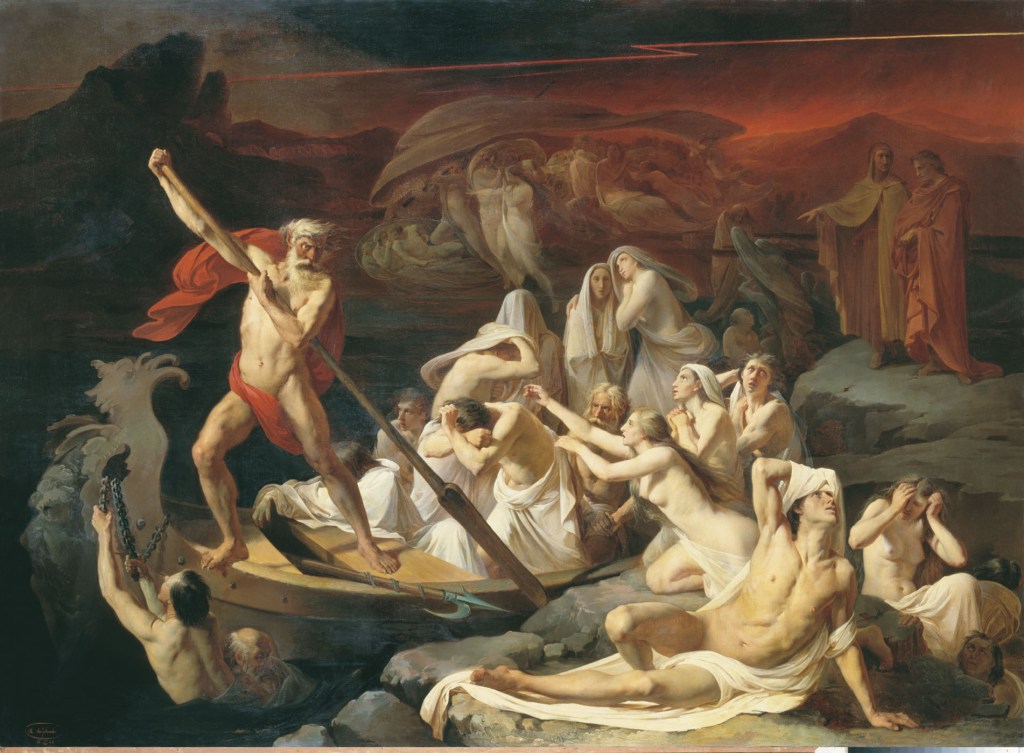
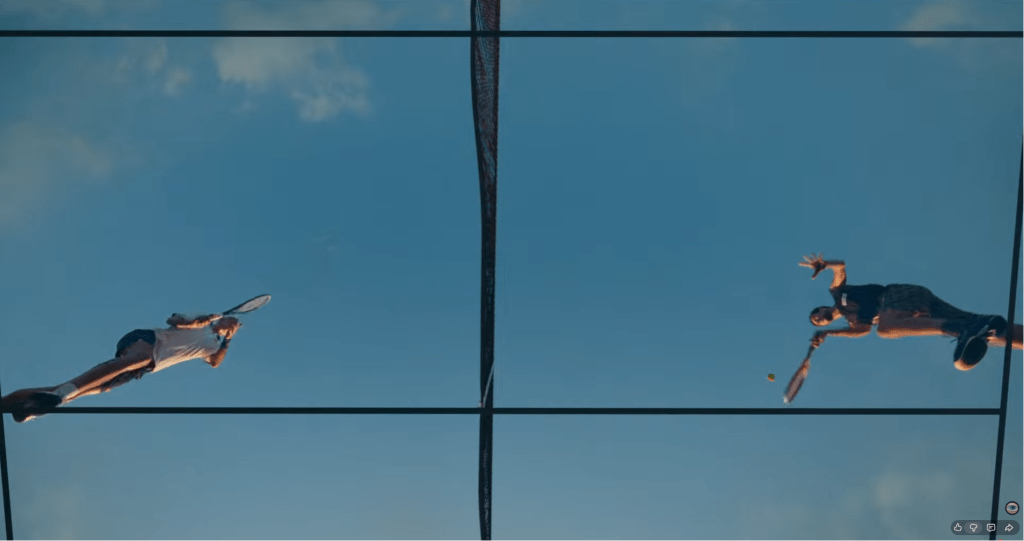


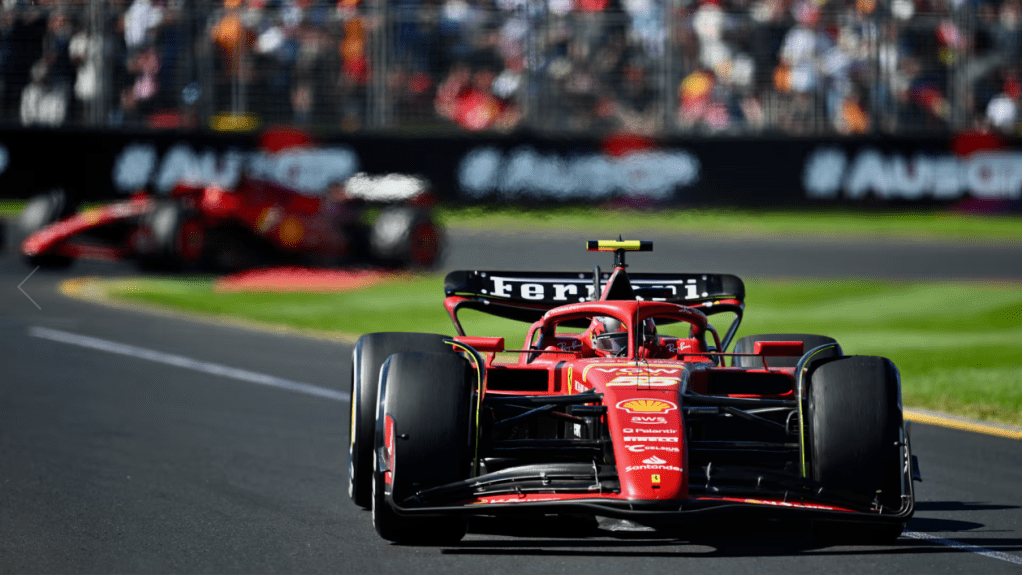

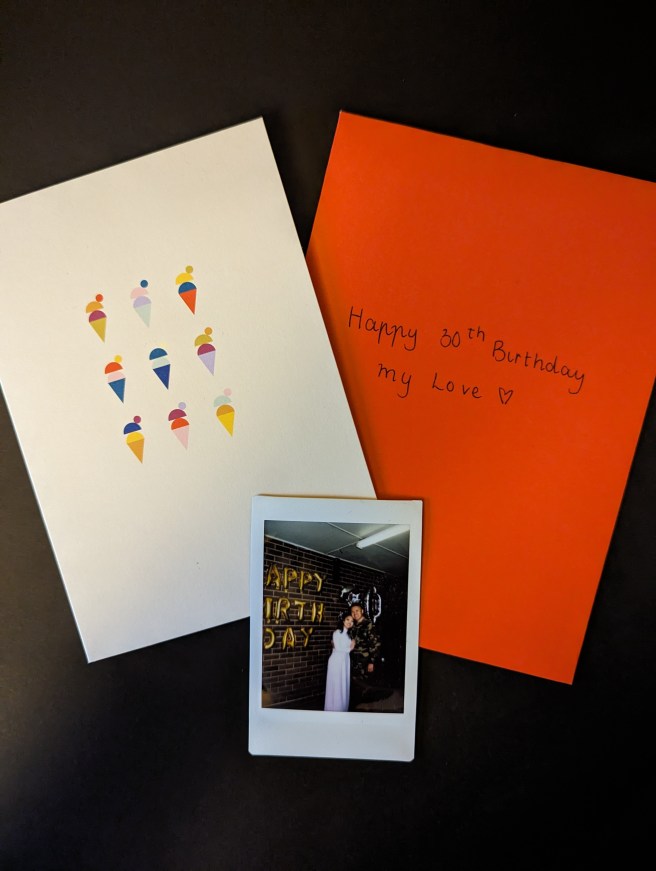
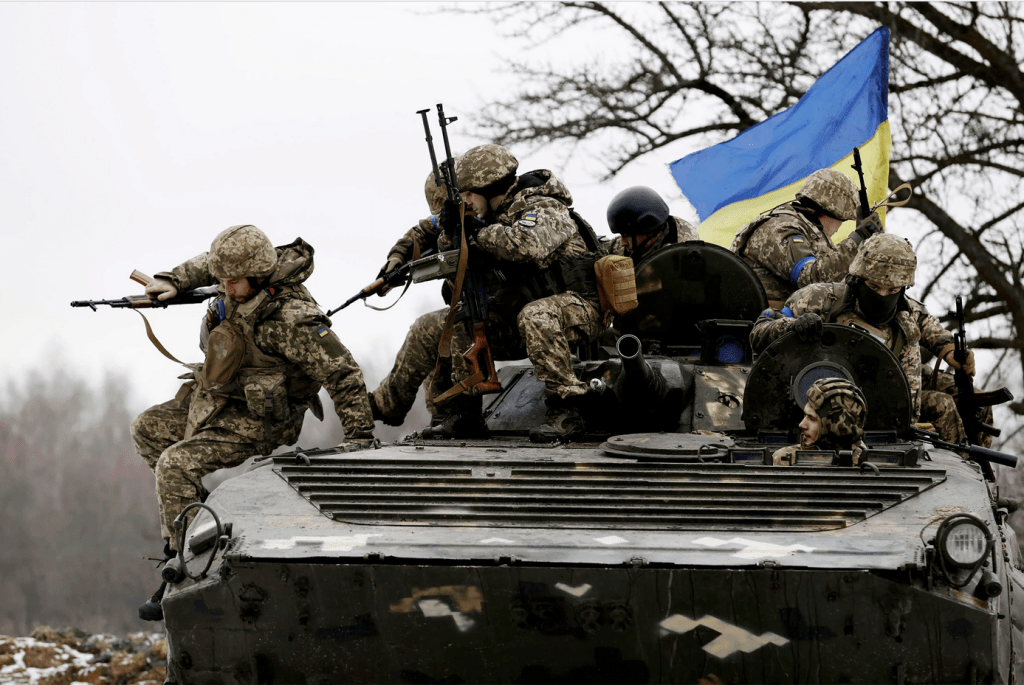

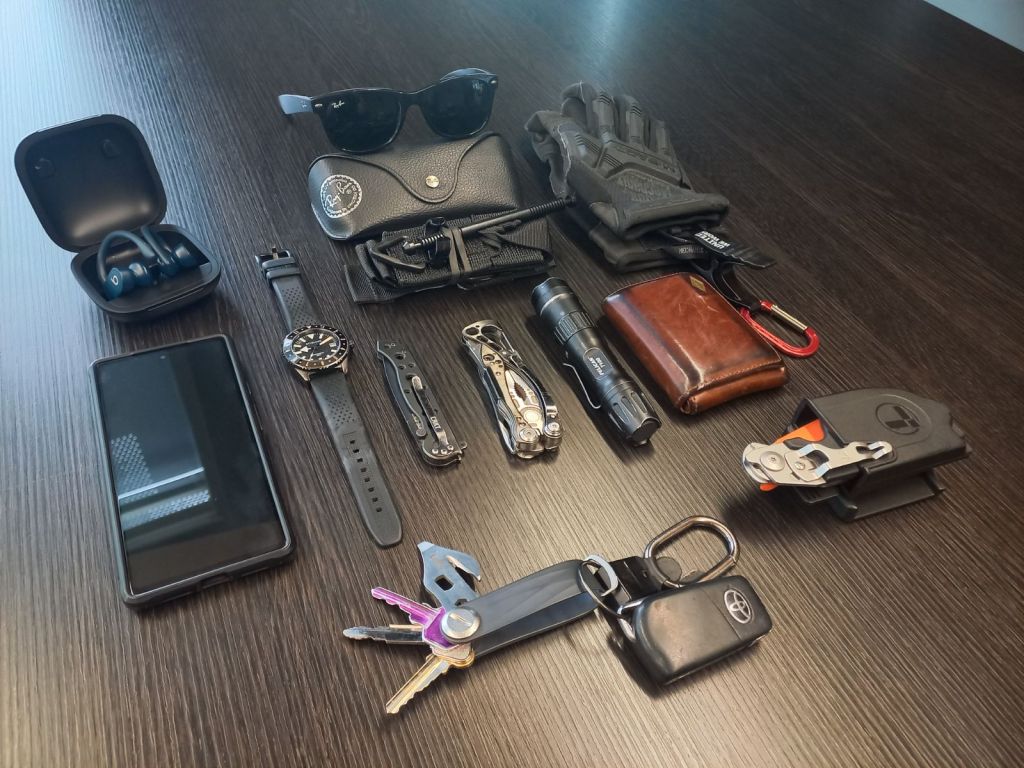
 Damocles' Journal