Dune: Part Two (2024) – Cinema Review

Y/N? Yes

Stars: Timothee Chalamet, Rebecca Ferguson, Austin Butler, Josh Brolin, Stellan Skarsgard, Dave Bautista, Zendaya, Javier Bardem and Florence Pugh.

Director: Denis Villeneuve

Review by Damocles.

It deserves to be watched in one sitting.

Denis Villeneuve continues to be one of the best directors working today with this conclusion to the Dune duology. There is a breathtaking confidence to the shots he emphasises, the crescendos in the plot he chooses and the character moments that are given plenty of time to shine. This is a filmmaker who has absolute faith in the project he is directing, and the film shines because of it.

As a film, Dune Part Two, is a masterpiece in how to make cinema. This is a rare film, able to balance high sci-fi concepts, make it palatable to audiences en masse and faithfully stay true to the source material whilst imparting a unique flair and vision to it all. The last great sci fi film that captured audiences so well, was probably Avatar, but that was never trying to adapt a beloved book series and lore.

The moment early in the film, when the camera widened out, to showcase the anti-grav technology of the Harkonnens floating in the air, in a strange, eerie manner was the moment I knew that I was witnessing something special.

This is the definitive version of Dune. The visuals, the costumes, the score, the actors, the story, the characters … they will forever be enshrined as how people read and visualise Frank Herbert’s novel. In many ways, this feeling of seeing how strong Denis’ visual interpretation of the novel has taken over the version in my brain when reading the novel, reminds me of the early Harry Potter novels.

The film crew simply nailed everything on the head. I will never not see Daniel Radcliffe as Harry Potter, nor imagine Hogwarts any different to how the films first showcased to me as a child.

Denis’ vision for Dune has proved that I will never see Paul Atreides as anyone else than Timothee Chamalet nor imagine the landscape of Dune as anything other than the clean, almost sterile aesthetics of these two movies.

In a lot of ways, Dune needed to be adapted by a filmmaker who was obsessed with the lore and had the budget to do so. It has remained infamously difficult to adapt, because of the numerous strange sci-fi concepts and the fact that it is such a strange, contradictory world for audiences to jump into.

The idea that space-travel is only possible through “spice” and that bladed weapons and feudal society exists in a galaxy that has mastered space flight runs counter-intuitive to how so many other sci-fi universes interpret their world. But that is the genius behind Villeneuve’s adaptation. He is able to take these highbrow concepts, distil them down to their essence and allow audiences to understand what is happening.

That is why I now understand the pace of the first Dune film. It had to be slow, methodical and less action-packed, because audiences had to slowly grasp everything that Dune was about. The importance of “spice”, the significance of Arrakis, the shadowy politics of the Great Houses and the Bene Gesserit … all of these elements had to be well established so that Dune Part Two could run.

And run it did. The film is much faster paced, with a bigger focus on action scenes and the romance between Paul and Chani. The action that I craved from the first movie, was immediately satisfied with the very opening sequence, as Paul and the Fremen escape from the Harkonnens and begin the journey of revenge.

The film has to be commended for its pace. Dune Part Two is an extremely measured film. It knows when exactly to speed up, when to slow down, and when to let scenes breathe, so that the audience become more engaged in the world that is being presented. Moments like the introduction of Feyd-Rautha on the Harkonnen home planet, the tender moments between Paul and Chani as their relationship grows, or the first time Paul rides a sandworm, are incredible story beats that are given as much time as they need in the film.

There is a deliberate slow-fast pace to the film, that makes it easy to watch. It moves at a jog rather than a sprint, and that is the perfect way to get hooked into the world of Dune.

The cast continue to do solid work, Timothee in particular, showcasing why his youthful looks, yet steely temperance is the perfect fit for Paul’s growth and character development. High praise must also be given to Florence Pugh’s small, but important role as the audience surrogate, Princess Irulan, into the mind of the Emperor. Her costume design is something I will touch on later, but is another reason why costuming is so important in film.

But the real fun highlight was Javier Bardem’s Stilgar. The once aloof Fremen leader, now transformed into a religious zealot and believer in the prophecy that Paul seemingly represents. He is the audience’s source of limited comic relief and a reflection of Paul’s dark journey. The growing obsession with Paul Muad’Dib is a beautiful religious allegory that is pulled off wonderfully by Bardem’s performance.

Now, onto the technical elements of the film that I love to explore.

From a cinematography perspective, Dune Part Two is an absolute marvel. The shots are immaculate and carefully chosen. There are some genuinely jaw-dropping shots that echo the general aesthetic of all Villeneuve films. The man, coupled with a master cinematographer in Grieg Fraser can literally do no wrong. Whether they are playing with colour, with reveals or simply setting the scene, the cinematography in Dune Part Two is incredible.

To complement such visual flair, the CGI in the film is equally impressive. Everything looks lived-in, believable and real, aided by things that look like they have actual physical weight and by impressive sound design. Dune never looked bad in any of the shots, a difficult feat to pull off in today’s crunch when it comes to VFX.

As for score, Zimmer continues to excel. His score had a stronger feel in this sequel than I expected, after hearing the first one. It’s thematically more folklore-like, with an emphasis on really punching in with the big moments. When listened together with the first film, it’s a fun, compelling audioscape.

But easily my favourite part of Dune is the costume design. Princess Irulan’s medieval, chain-mail aesthetic is incredibly cool when compared to the simpler robes and still-suits of the Fremen. There is an untouchable air to her, that is only visually enhanced by her cold, shiny, metallic mesh and veil. It’s perhaps the most unique take on a princess I have ever seen on film.

The same could be said for Emperor Shaddam Corrino IV, played by Christopher Walken. His simple white robes, lack of gaudy finery only enhances the frail nature of his rule and the fact that he is an ineffective ruler. But by far, my favourite element are all the armour sets featured in both films. From the Harkonnen’s all black suits, to the Atreides larger grey armour, and to my favourite Sardaukar’s white/grey combination, the interpretation of medieval armour into a near-future sci-fi, is just amazing.

Overall, it’s hard to not miss the phenomenon that is Dune. Whether you follow fashion, in which Zendaya showcased her perfect taste and range on the red carpet, or just enjoy cinema, Dune is easily one of the best films to come out in recent memory.

It’s enthralling, captivating cinema and I honestly cannot wait to see what Denis Villeneuve does next. I truly hope he continues to adapt sci-fi and explore more elements of the human experience, in the thoughtful, cinematic way, he is so uniquely suited for.

If you haven’t seen Dune yet … put it on the biggest screen you own.

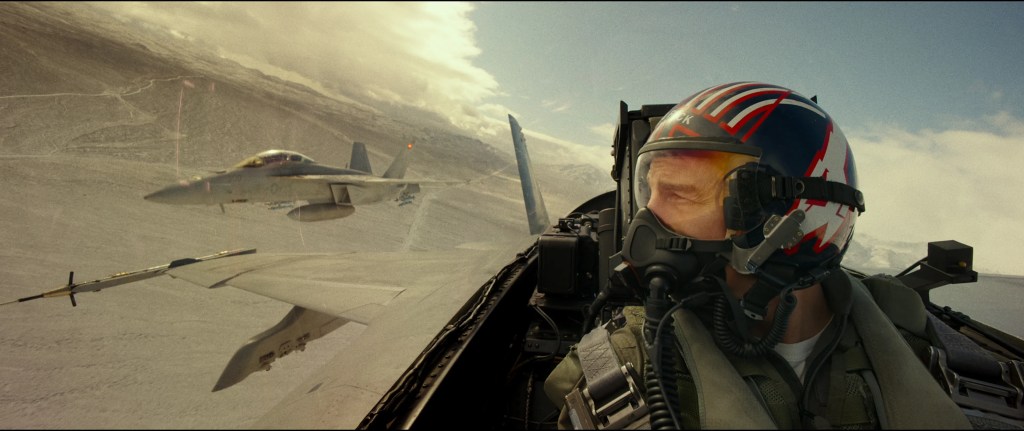
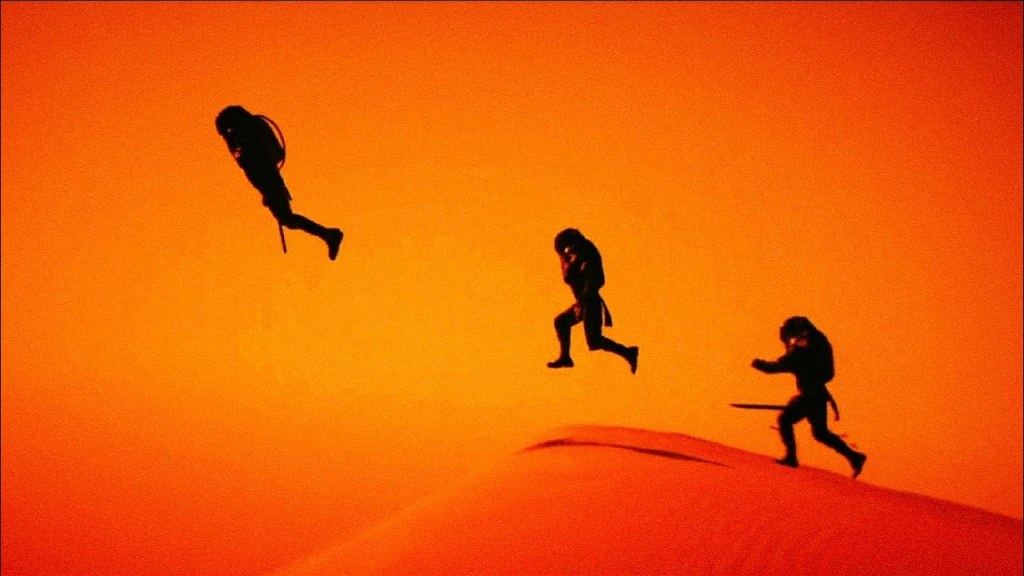
A scene to recall: The opening action scene where the Harkonnen are hunting Paul and the Fremen. The orange backdrop, that is contrasted by the black inhuman armour of the Harkonnen is just visually stunning. It’s also amazing to hear the Harkonnen language being used so gutturally and shows why the Fremen are a force to be reckoned with.
Sisu (2022) – Cinema Review

Y/N? Yes.

Director: Jalmari Helander

Stars: Jorma Tommila, Aksel Hennie, Jack Doolan, Mimosa Willamo & Onni Tommila

Review by Damocles

It’s lean, fun and pulpy. Everything a movie like this should be.

Jalmari Helander’s Sisu is unbridled fun. In many ways, it reminds me of the joy and fun I had whilst watching The Good, the Bad, the Weird (2008), another foreign take on the famous Western genre (something that I will review soon).

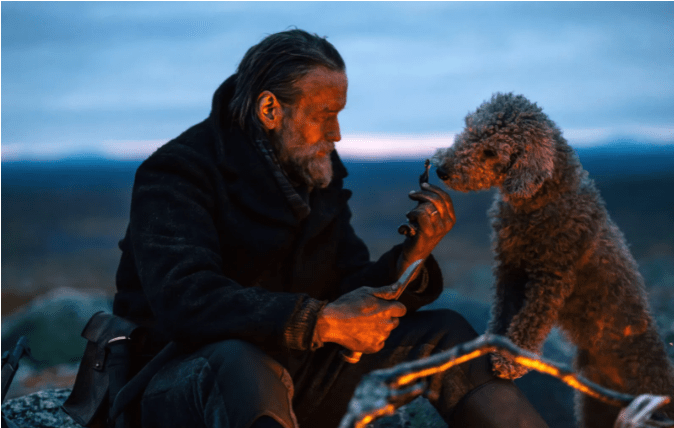
Sisu’s story is as lean as it gets. Set during WWII, a Finnish ex-commando, Aatami Korpi lives alone in the Lapland wilderness, prospecting for gold. Finally striking gold, he is then confronted by a retreating Nazi German armoured unit, that wants Aatami’s gold for their own reasons. What ensues, is chaotic, bloody and in some parts, genuinely hilarious and crazy.

Accompanied only by his dog and horse, Aatami is your classic, silent, gruff and stoic protagonist, although in Aatami’s case, it’s a uniquely Finnish characteristic instead of a trope. The villain, Bruno Helldorf, is your moustache twirling Nazi, but played with a desperate and slimy nuance, that makes him more compelling as a character. There is a cowardly element to his character, constantly hiding and sweating in his large tank, that makes him all the more despicable.

But it is Jorma Tommila’s Aatami that really steals every frame of the movie. His completely silent performance is belied only by his facial expressions that do a wonderful job of grounding the movie, even when it gets completely ridiculous. It is his sheer, angry determination that drives his character to do what he does even in the craziest scenarios, because Aatami is the embodiment of the Finnish concept of sisu, which roughly translate to “a man of focus, commitment and sheer will.”

And ridiculous is the entire point of the film. The action scenes, the premise, the kills, the gore … all of it is treated with a fun reverence that makes the run-time move quickly. In fact, the kills only get more and more creative as the film speeds along, with the action ramping up significantly as the director, Jalmari Helander, seeks to conquer all three spheres of Earth, land, water and air.

Having watched Helander’s more fun and ridiculous prior film, Big Game (2014), I can safely say this Helander’s perchance for the ridiculous, the fun and his love for Finland has not abated one bit in this film. This is a director who wants to put Finland on the map with his films and is determined to show that Finland isn’t just famous for its saunas, legendary F1 racers and rally courses.

Whilst I won’t spoil anything in regard to the action, this is a movie that glorifies in how Aatami kills Nazis and that alone is the reason why you chose to watch this film. It is a simple, direct film, about how this one-man army annihilates all the despicable Nazis in his way, so that he can continue to live his simple existence.

It is actually so simple and direct, that there is very little to discuss in terms of cinematography, music and costume design. The cinematography is almost functional, with nothing really standing out, bar a few scenes that invoke the horrors of war. In this aspect, the cinematographer did an incredible job creating a strong atmosphere for Aatami’s actions against the brutality of the Germans. There are some genuinely haunting scenes of burnt down buildings that invoke more horror elements, but these are far and few in-between. Overall, the film looks great, and the Lapland wilderness is truly well captured with the blending of green screen with the Finnish landscape done well-enough.

Credit also must be given to the score, which showcases the almost immortal nature of Aatami extremely well, with deep, dark, vocals that echoes old Viking music or something more ancient. Aatami’s constant ability to take hits, and push through pain, is almost mythical and the score reflects that, invoking sounds of a more ancient and dark time.

As for costume design, Aatami’s primary attire gets more and more worn over time. He never really changes out of his strong, dark, functional clothes that showcases the realities of living alone in the wilderness. Instead, this outfit gradually gets more and more stripped down, as he is forced to shed layers or in some cases, get completely wrecked as he rises from the proverbial dead.

To sum up Sisu, I would describe it as your perfect, throwaway action film, with some truly great kills and a simple, direct plot. It’s fun, fast-paced and there is a single wasted moment in this film.

And the pay-off at the end, is just hilarious. Sisu is worth your time, simply because …. it won’t waste it.

A scene to recall:  When Aatami throws a certain mine-shaped object and there is a glorious wide shot of the resulting bloody explosion.

Anyone But You (2023) – Cinema Review

Y/N? Yes

Director: Will Gluck

Stars: Sydney Sweeney, Glen Powell, Alexandra Shipp, GaTa, Hadley Robinson, Michelle Hurd, Bryan Brown, Rachel Griffiths & Dermot Mulroney.

Review by Damocles.

Short, Sharp, Slick & Sexy … Everything one could ask for in a romcom.

When was the last time a romcom did well? Recently it seems like there is a push from Sony to produce fun B-movies that will return decent profit on relatively cheap budgets. No Hard Feelings with Jennifer Lawrence, now Anyone But You are both raunchy, fun movies that are very clear about what they are.

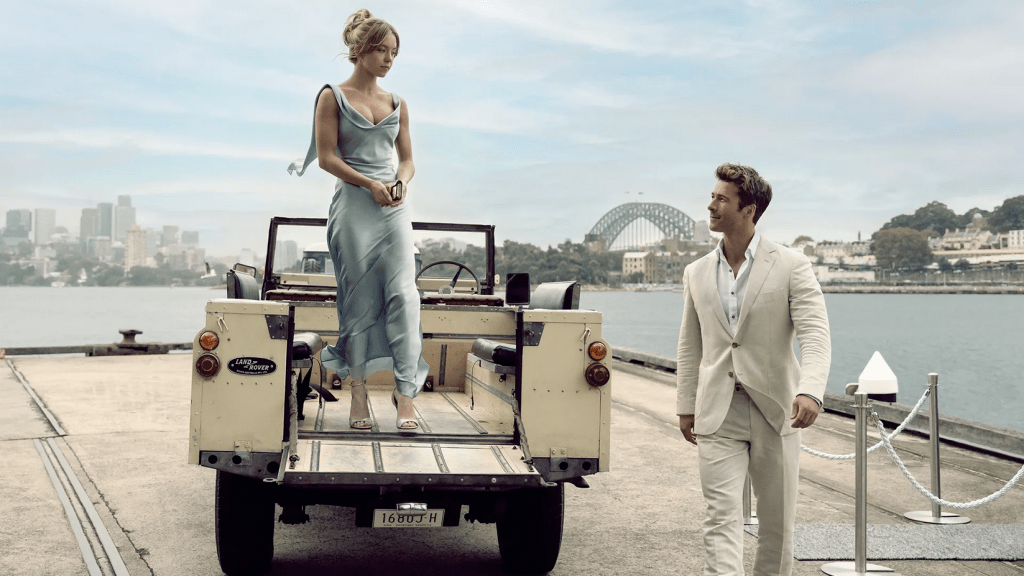
This isn’t a complicated, Oscar-defining art film that will challenge the way how people view cinema. If anything, Anyone But You is extremely simple, with a focus on setting a romantic, tourist backdrop in Sydney, Australia and the way how the chemistry between two extremely attractive leads sizzle in the foreground of that backdrop.

Sydney Sweeney and Glen Powell shine as the two leads. They are effortlessly charismatic, charming and fun together. It’s hard to not like the two actors who are clearly enjoying their working holiday in Australia. They are having fun, soaking up the gorgeous scenery and the light-hearted nature of the shoot and it’s infectious.

You can’t help but smile and laugh along with them, as they go through their will they, won’t they hijinks. After all, romantic comedies like this are a breath of fresh air. They aren’t pretentious, they just want to make you believe in love again, despite all the obstacles thrown in the characters’ way.

And the plot is exactly that … a series of obstacles, misunderstandings, complicated emotions and eventually the sweet endorphin rush of seeing our main leads share their final kiss on screen. Perhaps because I watched this film with my partner, I enjoyed it even more than I thought I would, but that aside, Anyone But You was genuinely a fun time, despite how predictable it was.

Cinematography wise, the film was essentially a tourism ad for Sydney. The shots throughout the film were showcasing the very best the town had to offer … gorgeous beaches, beautiful skylines, icons like the Opera House, the Harbour Bridge and even nature walks. It made you want to travel there and that is definitely something to commend. It’s obvious that they really wanted to showcase how romantic Sydney is as a location and whilst I am a proud, stubborn Melburnian who will always say Sydney is a shithole, I am still happy to see an Australian location whenever I can.

The shots didn’t really push any artistic limits, but I did appreciate a lot of framing.

Score wise, the film is dominated by one catchy song and at the very least it was used well, to define a character moment than to enforce any scene. It was largely forgettable, typical soap music that is the same across all romcoms.

Costume wise though, I have to commend the stylist, as I really enjoyed seeing all the summer styles that both leads were in. From flowing dresses that Sydney Sweeney wore, to Glen’s slick cream suit, they perfectly suited the hot weather Australia is known for, without sacrificing style.

Overall, this is a movie that is about the two leads. The rest of the characters purely exist to draw out character moments from the leads. They encourage, tease, bully, guilt-trip and grow the characters throughout the entire film constantly. In fact, the whole reason why the two leads even reconcile, is because the brides who invited them to their wedding, wanted them to.

Anyone But You isn’t trying to be something it isn’t. It’s a fun, movie with very attractive people and gorgeous scenery. It’s a rip on Shakespeare’s play, Much Ado About Nothing, and it isn’t trying to reinvent the wheel.

Nor does it have to, because sometimes, it’s not about trying to create something new, it’s about executing something to perfection.

And Anyone But You, nails ell the things we want in a romcom.

Sexy leads, fun side characters, beautiful backdrops, a safe and fun story and mostly importantly … a genuine expression from everyone involved in the film-making process to say to us, as the audience … love is not dead, love is crazy and love always wins.

So if you want a short time but a good time, go check out Anyone But You.

A scene to recall: When Glen Powell’s character, Ben was arguing with his friend along the famous Goerge St in Sydney CBD, right in front of the very pretty Queen Victoria Building. It reminded me of the last time I was there, and I couldn’t help but go in the cinema … “Hey I know that place!”

The Beekeeper (2024) – Cinema Review

Y/N? Yes.

Director: David Ayer

Stars: Jason Statham, Josh Hutcherson, Emmy Raver-Lampman, & Jeremy Irons

Review by Damocles

The escalation of the plot in this movie … is hilarious and brilliantly evocative of cocaine-fuelled script-writing that ruled the 90s action movies schlock.

To describe the Beekeeper in one word is easy.

Fun.

To describe it in two words is even easier.

Fun & Dumb.

The Beekeeper as a movie, is one of the most aggressive, relentless and stupid films I have ever watched. It is a throwback to the 90s where films just had the most insane scripts and treated it as seriously as possible. Because the only way to actually get the audience onboard is to commit to the joke, take it as seriously as possible and dare to try and pull it off.

And I’m happy to say that the Beekeeper does that extremely well. It never once tries to wink, or act like it is in on the joke that is the script. Instead, it commits in a way that can only be described as the David Ayer style.

To describe the style of David Ayer is a complicated task. On one hand, it’s clear that Ayer has real, genuine knowledge of the streets, due to personal experience. This street knowledge can been seen in every single film Ayer has ever been involved in. He showcases gang violence, corruption, and ordinary people in ways that not many other film directors are able to.

But he always struggle to piece together the overall story. His films are like vignettes, implausibly put together by a tiny plot that struggles with pacing and emotional investment. You catch glimpses of a violent, tragic world, but it’s not quite compelling enough to keep you in your head till the end of the movie.

Bright, End of Watch, Street Kings, Sabotage, Suicide Squad …. these are all gritty crime dramas that never quite breathe beyond the murky, dark lens that Ayer loves to shoot in.

In Ayer’s eyes … the whole world is dark, grimy with truly garish splashes of colour. Think the dark backdrop of Suicide Squad contrasting with Harley Quinn’s bizarre outfit, or in this film, the use of gold colours mixed in with random splashes of purple or red.

If I had to point out the signatures in an Ayer film, it would be bizarre costuming with garish colours, gritty, grimy urban landscapes, and loose characterisations that barely drive protagonists or antagonists forward.

However, in the Beekeeper, all of this actually works. Statham’s character is as simplistic and one dimensional as it gets. He can kick ass, he is on the side of good and he’s out for revenge for an elderly black woman who literally gets about 5 minutes of screen time.

For you see, this movie isn’t really concerned about character development. In fact, it speeds through that, just enough to justify the next insane plot point and why the characters are behaving like they are.

To illustrate that point, the dog which features in John Wick had more screen time and impact than the motivation for Statham’s character, Adam Clay, to go on his killing spree.

It’s that kind of movie and I absolutely adored it.

To continue the John Wick comparison, the world of “Beekeepers” is nowhere near as intriguing as the assassin world of John Wick, but it does serve a different function and that is to keep the insane plot developing even further.

As you are probably aware, it is the Beekeeper’s plot that truly sells the movie. The implausible leaps that this film takes is so ludicrous that it becomes fun. The action too, keeps escalating, with a bizarre escalation of threats that keep getting more zany.

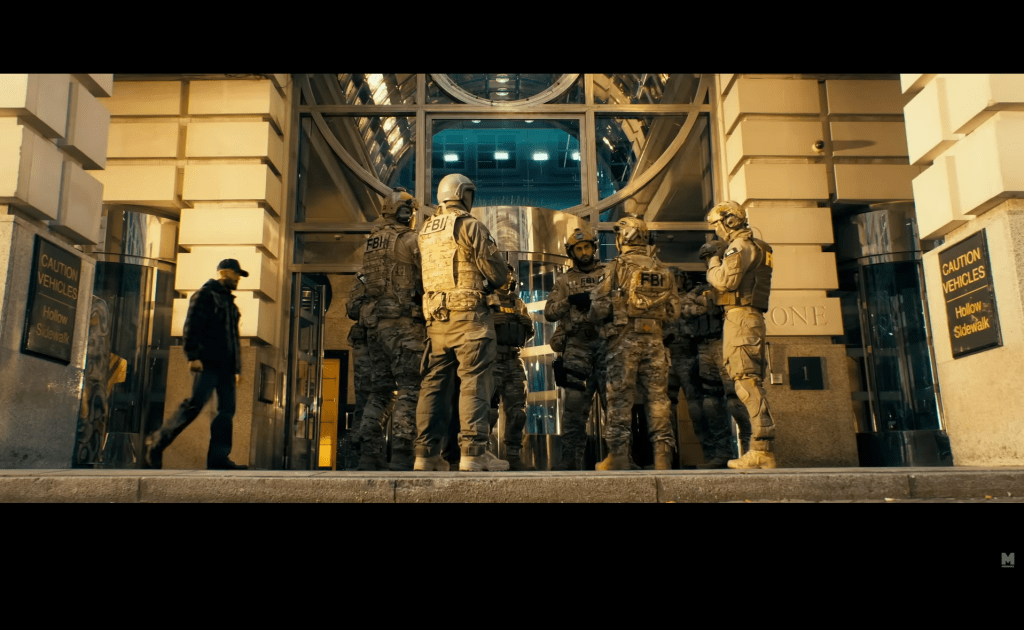
Fellow beekeepers, gangsters, FBI HRT, Tier One operators, Secret Service, crazy cowboy mercenaries …. never once does the movie stop to explain nor further charaterise these villains. They exist solely to up the stakes and be cannon fodder for Clay to beat down.

He is also ridiculously inconsistent with how he kills or incapacitate people. At first, it seems he is above using guns, but by the end of the movie, he’s has no issue with using them.

The rules in this movie are just tossed aside for whatever purpose the plot needs. Much like the side characters, who barely rate any mention. Even the villain, played by Josh Hutcherson, is too boring, bland and obviously a take on Gen Z tropes warrant any interest.

Even when it comes to the rules of film-making, there are several strange goofs that puzzle me. Such as a scene where the background of two characters talking is extremely distracting due to the actions of the extras in the back. Or the colour grading of the film, which veers from ugly dark colours to excessively bright locations with a very obvious yellow tint.

Nothing really stood out visually either. The framing of every shot was relatively bland, the action was serviceable but in a fun, iconic Statham way and the music definitely did not impress either.

While it may seems like I am saying that this film is very vanilla, it is not to the detriment of the film. It’s one of those perfectly serviceable action films with no illusions about what it is. And for that lack of pretension, I actually admire the fact that it knows it fits squarely in the B-action movie category and is unashamed of itself.

Much like those trashy, fun, silly action movies in the 80s, where a man goes on a killing spree, just because he happens to be the right man, in the wrong place and time, the Beekeeper is slotting itself right in that genre with aplomb. Things just keep escalating, and the stakes keep getting higher, and whilst it makes no sense as to how one solitary black woman who took her life due an online scam, led to the conclusion of the movie …. it sure was fun along the way.

Watch this movie with your friends and a couple of drinks, and it promises to be a good time.

A scene to recall: When Adam Clay decided that subtlety was out of the question, walked right up to a squad of FBI HRT operators and just incapacitated them singe-handed, whilst regular FBI agents nearby took no notice of this insane rumble literally metres away until one of these poor cops was slammed on a car.

Honestly …. how did they not notice multiple gunshots, yelling, screaming, punching and kicking …. but as I’ve clearly stated in the review above … these kind of questions are not the ones you should be asking in a movie as dumb as this.

Napoleon (2023) – Cinema Review

Y/N? No

Director: Ridley Scott

Stars: Joaquin Phoenix & Vanessa Kirby

Review by Damocles

Squandered potential … like most of Ridley’s films.

Before I get really stuck into this review, I’ll address my personal bias against Ridley Scott. Personally I do not like a lot of his filmography. Too many of them suffer from the same fatal flaws …. action scenes that are cut a million times and do not properly portray combat in a clear, visual manner, terribly paced plots that often drag scenes on for too long, stories that are rife with historical inaccuracies and perhaps most annoyingly of all, Ridley loves to insert very unnuanced political views into historical eras without really considering the context of the times.

I must also add that I am a huge fan of the Napoleonic era. It is my favourite period of human history and to say I have huge admiration for the man whose era it is named after, is an understatement. Every student of history has a megalomaniac that they admire and my choice is the Corsican who built an empire that has touched the lives of every single person in 18th century Europe ever since he proclaimed himself Emperor of France.

When I first watched the trailer, I could not think of a better casted man to portray the man. Joaquin Phoenix is completely believable as Napoleon. But my heart sank the moment the trailer started to cast the man in strong words: Emperor, Lover, Tyrant, Legend.

Out of all the words, associated with the myth and historical facts about the man, “lover” is not one I would have chosen. Tyrant is also a questionable choice, especially considering the political landscape of Europe at the time, where literal Russians and Austrians emperors ruled with absolute power and Napoleon was just one of many kings, emperors and princes fighting to consolidate control over Europe.

Then I saw the dreaded words that Ridley Scott would be directing the film and I basically wrote off the film.

Walking into the cinema, I expected something bad.

I got something worse.

Squandered opportunity.

To say that the British have always long hated and character assassinated the man who transformed Europe, is an understatement. Even during the Napoleonic era, they were propagating propaganda about the man, deriding his short stature (he was actually of average height for the time), his many affairs (Josephine was hardly the focus of Napoleon’s many romantic conquests) and his many eccentricities (not wrong there).

None of which I blame the British for. After all, they were mortal enemies locked in different spheres of war. Britain ruled the seas, but could never quite best Napoleon on land. The elephant and the whale locked in combat.

But my problem with the film, is that it was very clear that Ridley had a lot of British bias walking in. Both he and the writer of the film, chose to portray Napoleon in a very bizarre light.

They focus almost 80% of the runtime on Napoleon’s romance with Josephine.

When you have an era of history as epic as the Napoleonic era; the last real historical use of mass cavalry charges, the sole period of history where both guns and swords were used in equal measure, where men had to walk in orderly lines in the face of musket and cannon fire, and the romantic notion of officers leading men into battle were still prioritised … Ridley chose to focus all the film’s attention to a romance that is historically inaccurate and worse of all …. boring.

Audiences were promised gunpowder, muskets, cannons, horses, swords and old school European chivalric officers.

They got a love story between a chemistry-free Joaquin and Vanessa.

It is one of the most bizarre choices I have ever seen made about a historical figure as mythical as Napoleon. Beyond that it is a very strange choice for a filmmaker. To focus so much on Josephine, who is not a very well known in history beyond her obsession with roses, and patronage of the arts, is an exceedingly weird choice for a film with such a short and tight run-time to cram in so many important events.

It is not like the two leads have a simmering allure to them either. If anything, the two actors are attempting their best to showcase a romance, but it is so flat and dull and it goes on for so long that when the action scenes do come, it is like a breath of fresh air to get away from such a sluggish story. Perhaps my biggest issue is the fact that Ridley construes the entire film, and key events around the romance.

There is literally not a scene that goes by, without Napoleon professing his love for Josephine, but as a narrative theme, it lacks panache that really dives into his psyche and why he wants to control so much of Europe and establish an empire. It is not like the film specifically attributes so much of Napoleon’s conquest and victories to the desires of Josephine. The reason why the romance fails, is because Josephine is not a Lady Macbeth, pushing and urging Napoleon to conquer more and more. Without that somewhat unique angle, the romance and the overall thematic arch of the film falls.

What would have been a better angle is the idea that Napoleon truly believes in his own self-worth and is unflinching, stubborn and set in his ways to the whims of the world around him. After all, this is a man who proclaims to walk in the footsteps of Alexander, Caesar and Charlemagne. To see him win countless battles against insurmountable odds, and witness his ego grow and grow, only to finally have it checked by a Russian winter, a disastrous Spanish campaign and the exile would have been an excellent theme for the film.

The film should have charted the course of a young Napoleon, whose early ambition, military genius and rise to emperorship grant him an unbearable confidence and ego. Then in the second half of the film, showcase his military blunders, how being the Emperor of a vast empire beset by enemies takes a toll on his mental state and how his eventual exile ruins his ego.

And perhaps as a neat way to truly showcase Napoleon’s drive and ambition, the third act should have showcased how Bonaparte builds himself up again whilst in exile, creating an unshakeable belief in his ability, that culminates in him returning to France. This would lead to him taking over the country without a single shot, be shocked by just how dire straits France is in, and realise his return was a mistake, a mistake that is nailed finally by his defeat at Waterloo.

Such a turbulent emotional and mental journey into Napoleon’s psyche would have been much more compelling viewing, and display how his generals were brilliant aides to his genius, as well as showcasing why France and her Grande Armee, was so eager to follow Napoleon into the jaws of death.

Instead of this in-depth look into Napoleon, Ridley instead gave audiences a film that skims over history, focuses on an unromantic love story, doesn’t establish the titular character well and shortcuts its way through battle scenes. Napoleon by Ridley main problem is prevalent in many of his later works recently …. the films feel lazy. Like Ridley stole some of the best ideas but was too lazy to put in any real work, much like a much-derided video game company known as Ubisoft.

No scene sums it up better, than condensing Napoleon’s entire Egyptian campaign to a scene where Napoleon supposedly shoots a cannon at the Pyramids. WHICH NEVER BLOODY HAPPENED.

Ridley entirely skips over the fact that Napoleon lost a huge portion of the French Navy in the disastrous Battle of the Nile, that the Egyptians revolted against Napoleon’s rule and that he was stranded in Egypt with no way to get home for months.

In fact, I read that in an interview with The Times, Ridley defended his depiction of the attack on the pyramids as being “a fast way of saying Napoleon took Egypt” which infuriates me, because he is rewriting history for many of the audience out there, and that is an extremely dangerous action to take in a world so full of misinformation.

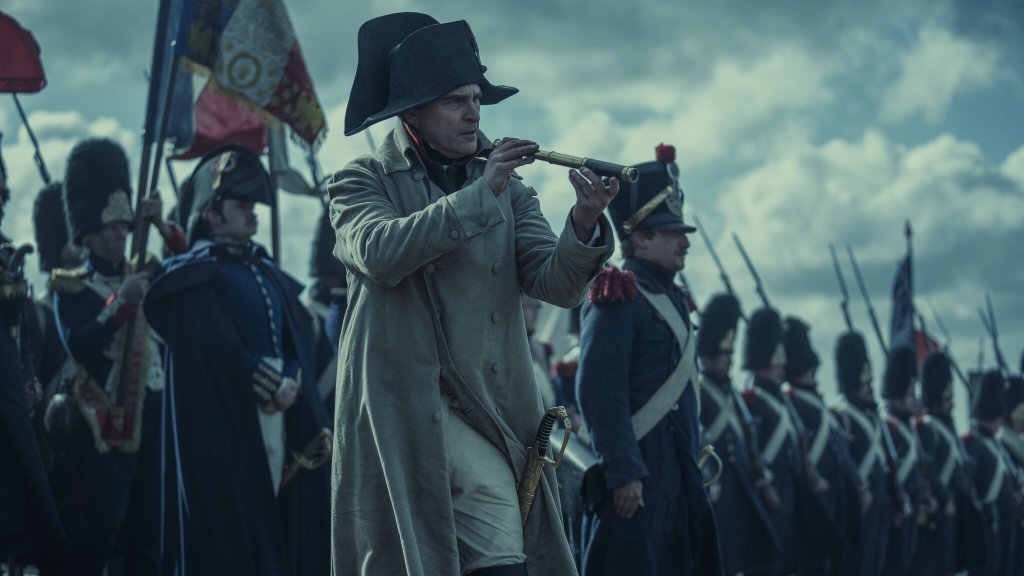
Plot aside, Ridley’s vision of Napoleon is undeniably attractive. The visuals of the film are remarkably immersive. There is incredibly strong work by Dariusz Wolsiki. So many scenes invoke a more romantic time of grand warfare, with uniforms glistening bright and the tricolour of France flying high above the heads of her men.

From a visual standpoint alone, the film is beautifully shot, the CGI barely noticeable and the overall viewing experience is excellent. So many scenes immerse you in the past, giving the audience an evocative look into the past. But the actions scenes themselves are horribly cut. They fare OK, right up the two armies clash into each other. Then it becomes a brutal mess, without any nod to how Napoleon actually won the famous battles he was involved in.

In addition, the film is remarkably absent of any tension when it comes to the action, because it never sets up the stakes, the key generals involved and how the terrain is established. Napoleon and his many generals are never acknowledged for their tactical and military genius, how they bested 4 huge European armies that had to band together to defeat France’s Grande Armee.

Aside from the cinematography, I also liked the score somewhat. Whilst lacking originality, it did a good job in staying true to the times and punching above its weight when it came to certain “epic” moments. In particular, I loved Napoleon’s piano theme and thought it really captured the era and personality of the Emperor.

Overall, Ridley Scott’s vision of Napoleon, is visually appealing, but lacks any of the drive, ambition, charisma or romance that the titular character is known for. It is such a shame the film turned out the way it did, because the cast, uniform and period setting would have made for an epic film that would have restored a lot of interest in the era of history. In all honestly, I truly wished this film was handled by a different director and writer with more respect given to the legendary French emperor.

To sum it up in a sentence? Ridley, please stop taking the best ideas and giving us lazy executions of them.

A scene to recall:  When Napoleon takes Toulon. It is both incredible and maddening, because it gives me hope the film can be epic, only to instantly let me down when the action scene is cut barbarically short.

John Wick: Chapter 4 (2023) – Cinema Review

Y/N? Yes

Stars: Keanu Reeves, Donnie Yen, Bill Skarsgard, Laurene Fishburne, Ian McShane, Hiroyuki Sanada, Rina Sawayama, Clancy Brown & Scott Adkins.

Director: Chad Stahelski

Review by Damocles.

This finale is too much of a good thing, which is why I left the cinema tired.

The John Wick franchise is arguably one of the greatest action series ever committed to film. It’s stylish, classy, beautifully shot and the action set pieces and stunt work is on a level that is technically difficult to beat.

But to me, the series has always been a technical showpiece for stunt work and excellent choreography. To me, the first film was the peak of the franchise, because it had the most emotional heart in its story. The subsequent sequels lack this emotional hook that made me invested in the actual protagonist.

The series relies a bit too heavily on Keanu’s inherent goodness, to make you care about the actual character. Yes, his expressions and sad eyes do a lot to convey hidden pain, but more is needed to justify a character who has seemingly deserved 4 movies made about him and his mythology.

The problem with John Wick is that he lacks meaningful dialogue, nor are there enough flashback scenes to Wick and his wife actually spending time together and his actions, beyond shooting, kicking, throwing and punching … do little else to describe his character.

Combine all of this and, whilst you get to witness an extremely deadly and competent assassin go to work over hundreds of killers, you really don’t get a sense of his motivations nor why he continues down his destructive path.

John Wick Chapter 4 doesn’t really address these problems. But the formula has worked for the past 3 films, so it makes little sense to change it now. That being said, it is a very unique film in its structure though, split across 3 diverse locations that emphasizes the long action sequences to follow. It is a film that let the action sequences shine, and for my own personal taste, shine a bit too long.

Chapter 4’s main strength and weaknesses are its action set pieces. They are undeniably cool, frantic, adrenaline inducing and cinematic. The backdrops that John kills his way through are some of the best set designs I’ve seen in a film, in a very long time. Osaka, Berlin and Paris. All these three locations are given huge amount of character.

Osaka features stunning designs that perfect encapsulates why Japan is a country that has both feet in the past and the future. Thematically, Osaka is perfectly represented in the Osaka Continental hotel. The use of reds, cherry blossoms, dark sleek materials and slick Japanese presentation was a feast on the eyes and highlights why the Japanese unique aesthetic is so arresting no matter the way it is shown.

Berlin, with its grimy, grunge aesthetic is another brilliant example of set design done right. The nightclub is a brilliant ode to Berlin’s rich history of indulging in dark, weird fetishes, and its birthplace for electronic music. The water effects, lighting, bizarre industrial design and overall atmosphere is brilliant touch, a necessity, as it injects some energy in the second act of the film.

The final location, Paris, is all class and all dirt. The way how the film plays with how romantic yet rundown Paris is, is also another credit to the location scout. The use of the radio DJ, along with the general look of all the killers trying to take down John Wick, shows how grimy Paris has always been, but it is undeniably propped up by its’ marketing potential as the City of Lights. The juxtaposition between the wealth of the villain, the Marquis Vincent de Gramont and the dirty grubbiness of the city is just a perfect way to highlight Paris as a city. Grubby yes, but still holding onto her old school romantic ways.

In many ways, Chad Stahelski’s most underrated aspect as a director, is his homage to old Bond films, in the context of location. He always let the city shine, whenever Wick visits a new location. He sets them up, to be glamorous and exotic locales, filmed in a way that actually makes you want to visit the cities. This was one of the best part about the old Bond films, allowing audiences to acquaint themselves with the location the character is in and feel a bit of wanderlust.

That was easily my favourite part about this film, seeing Wick traverse through the cities he found himself in and really getting a feel for the locations.

Moving on from the sets though, from an action standpoint, Chapter 4 easily has the most painful, extravagant and bombastic action sequences in the franchise. From nunchucks, Dragon’s Breath shotguns, Pit Vipers with 20 round magazines, classic samurai duels, and even the classic K9 unit dog, a Belgian Malinois, Chapter 4 brings every conceivable new and fun way to kill people that haven’t been seen in the franchise previously.

It also expands on the in-universe lore, about bulletproof suits, the fascinating criminal underworld with regards to the High Table and the families that move within those shadows.

Every single action set piece is filmed beautifully steadily. They are your classic Hong Kong wide shots that allow the actors and stunt performers to really sell every single hit, every single bullet and every single injury. Keanu, despite pushing 58, still moves admirably well throughout the film, and there were many moments, especially concerning cars and high falls, where I noticeably winced at some of the hard hits that Keanu or his stunt team took for the movie.

However, it is Donnie Yen, as the blind assassin, Caine, that truly steals the show with his incredible speed and performance. His presence in the film is a wonderful touch that adds some much-needed flair and charisma in a predominantly dark and serious world and Caine proves to be every bit as deadly, skilled and fun to watch on-screen as John Wick, no small feat, considering how quickly he is introduced and injected in the world of assassins.

Other standout points include Hiroyuki Sanada whose gravitas and old-school nature as a Samurai elevates the Osaka sequence, the scene stealing performance from Scott Adkins, in an almost unrecognisable state as Killa Harkan, whose card tricks are only matched by Adkins’ trademarked kicks, Marko Zaror as Chidi, the lead henchman whose screen presence was actually beautifully sinister and the villain himself, Bill Skarsgard whose wardrobe was enviable, attitude was questionable and whose comeuppance was richly deserved.

Visually, John Wick 4 stands even taller than the previous three entries. The use of light, camera sweeps and wide angles, means that from a cinematography perspective, it is rich, stylish and arresting. Every single city gets its highlight moment and the decision to marry Chad Stahleski’s already cool ideas for the John Wick universe with long time Del Toro collaborater, Dan Laustsen, means that the world is heightened even further on the lens. It seems that Laustsen really hit his groove with this final movie, as his work in the previous two films, 2 and 3 respectively whilst good, lacked the sheer visual panache of 4.

To add to this visual treat, long time composer duo for the franchise, Tyler Bates and Joel J. Richards, bring back the usual motifs and theme that have been with the series since the first film. Their work is as solid as ever, but I must praise Le Castle Vania for bringing new iconic EDM tracks. I missed his work in the third film, and was extremely happy to hear his compositions again, against the backdrop of John Wick’s gunfire ballet. His EP, Himmel und Holle, has four incredible tracks that really prove why John Wick is so addicting when it comes to action scenes. The thumping rhythms and pulsing beats are literally the perfect marriage for the gun-fu shenanigans.

Overall, John Wick Chapter 4 is a fitting end for the beloved Baba Yaga and an action spectacle. The cinematography is stellar, the fights and stunts intense and insane and hopefully the success of this franchise will put an end to the shaky-cam aesthetic (or lack thereof) in future action films. Keanu Reeves has set the new precedent for action heroes …. put in the work, do your best to replace the stunt-man where you can and the audience will reward you.

Go see this movie, but definitely expect to come out a little bit exhausted, because it does overstay its welcome.

A scene to recall: The cinematographer really loved Japan. The combination of set design, camera moves and aesthetics …. meant that Osaka stood out for its sheer visual arrestment and beauty.

The Super Mario Bros. Movie (2023) – Cinema Review

Y/N? Yes.

Director: Aaron Horvath, Michael Jelenic & Pierre Leduc

Stars: Chris Pratt, Anya Taylor-Joy, Charlie Day, Jack Black & Keegan-Michael Key

Review by Damocles.

Wa-hooo!

There is no denying that I have a particular bias towards Nintendo properties.

After all, my very first experience with video games, was the Nintendo 64 and the famous MarioKart 64. Ever since then, I’ve been obsessed with racing, winning and more contextually to this review, buying every single Nintendo console and playing MarioKart on all of them.

So, to see a Marios Bros movie, I was definitely eager to see whether they had done justice to what is one of the most iconic video game franchises and characters in history.

To put it simply, this is a children’s film that is light on the themes, quick on the action, faster on the plot and is almost too efficient at establishing plot beats, character motivations and set pieces.

Whilst this isn’t a bad thing, there were many moments where I wished they slowed down the movie’s pace just to dwell on some of the Easter Eggs or iconic worlds that have been bought to life. Perhaps that is my nostalgia talking though, but I felt the movie needed a tiny bit more in its runtime to really let the story breathe.

That being said, the plot of the film is as simple as it gets. Mario and Luigi end up discovering a portal to a whole new world and must stop the machinations of Bowser by aiding Princess Peach in her fight against a horrific wedding to said villain.

Yes, it’s basic, but it’s also fun to watch and sometimes, with these sort of movies, what else do you really need? It’s a classic story.

Along the way, Mario gets to explore all the diverse kingdoms that truly brings the sense of adventure that all Mario games capture so well. From the Mushroom Kingdom to the Jungle Kingdom, the movie’s animation style and dedication to the video game’s vibrant colour aesthetic and wacky design meant that at no point did the movie ever suffer from looking dull or ugly.

Praise must be given to the animation style of the film. Despite Illumination’s history with “Minions”, the studio truly captures the magic of the iconic video game aesthetic and animations. Mario’s movements are synonymous with how he plays in the game, as is Luigi, Peach, Donkey Kong, etc. It’s an incredibly pleasing movie to look at visually, for both non-gamers and gamers alike.

From an audio perspective, the early controversy over some of the casting choices were an non-issue. Every single actor bought a fun level of energy to their roles. Pratt’s voice as Mario is fine, as is Day and Taylor-Joy. However, as is evident by the amount of memes generated over his performance, it is Jack Black’s show.

He absolutely nails his performance as Bowser and the now iconic Peaches song is undeniably hilarious in the film. He brings an amazing amount of energy, menace and love-cringe into Bowser and it is stupid fun watching him steal every single scene he is in.

Credit must also be given to Brian Tyler for doing what he does best, adapting to any movie or task he is given. His versatility as a composer is always underrated and he did an amazing job in just adapting already iconic Nintendo music to the movie. I wished there were more of his compositions, as my only true gripe about the music was the bizarre use of licensed music, which I found incredibly distracting.

There is a huge library of iconic themes from the Mario franchise and I truly wished there were more of them in the movie.

In many ways, the Super Mario Bros movie is a celebration of the joy Nintendo has bought to so many gamers over the years. I kept smiling at all the references I understood and nothing could quite compare to the scene where I saw the characters make their kart. It is those little touches that made the film a joy to watch, and also makes complete sense in the context of the world.

Seamless integration of those references is a big part of why I think that video-game movies should be animated moving forward.

The success of this movie will definitely contribute to dispelling the myth surrounding the entire concept of “video-game” movies being awful, because in all honesty, this was a fun movie, it was good, it was visually appealing and there is nothing inherently wrong with it.

But back to my original point …. I cannot help but think that animation should be the standard for video-game movies moving forward, simply because cutscenes in the actual games themselves are already incredibly well made animated films. Motion capture, cinematography, acting cues, dynamic lighting, VFX use … all the essential tenets of film-making are visible in the video-game worlds, especially with their campaigns.

By creating more animated films that copy the original style, aesthetic and world of the video games, it creates a more cohesive franchise as a whole. A good example of this are the Resident Evil animated films, that still copy the games in their style.

It also allows the film-makers to not be constrained by reality, as video-games traditionally have always been a heightened version of reality. Physics, slow-motion, certain fighting moves …. all of these have always been tweaked for a gamer’s entertainment and the only place where all of those things can physically be translated well, is in animation.

This is why the Super Marios Bros. movie works, because all of the heightened reality elements, from the power-ups, to the costumes, to the movements … they all work within the world of Mario, not in a live-action sense.

But I am ranting on about something else here.

Long story short, this was a fun movie. It tickled all the right nostalgia beats for me as a life-long Nintendo fan and it didn’t overstay its welcome. So, thanks again Mario, for sparking joy in a cynic like me, because sometimes I just need to hear the iconic It’s a me! Mario! to smile after experiencing a lame day.

A scene to recall:  Every time the movie gave us the classic video-game view and we got to witness Mario doing what he does best … using Power-Ups, jumping on things and progressing his way through the level.

Creed III (2023) – Cinema Review

Y/N? No

Stars: Michael B. Jordan, Tessa Thompson, Jonathan Majors & Wood Harris

Director: Michael B. Jordan

Review by Damocles.

Sometimes, it’s hard to see past the star & director’s huge ego.

When the first Creed movie came out, continuing the legacy of the Rocky’s boxing franchise, I was pleasantly surprised by the heart and commitment of the new cast and generation to the DNA of the series.

After all, Rocky has always been a story about the underdog, the classic story of a man with a heart of gold who just never quits. The boxing choreography isn’t really there to sell an excellent fight scene, it’s to tell the story of a man who puts everything on the line to hopefully triumph at the very end.

If you want to see a good fight, boxing isn’t really the sport to sell it. There are plenty of better martial arts films, to gawk at the choreography.

Which means the onus of a good boxing film, like any good sports flick, is have a likeable main character who has to triumph in the end over something deep and personal, regardless of the result of the match itself.

After all, the first Rocky movie famously ends in a loss, but it doesn’t matter, because Rocky did the impossible … he stood toe to toe with the champion and survived all 15 rounds.

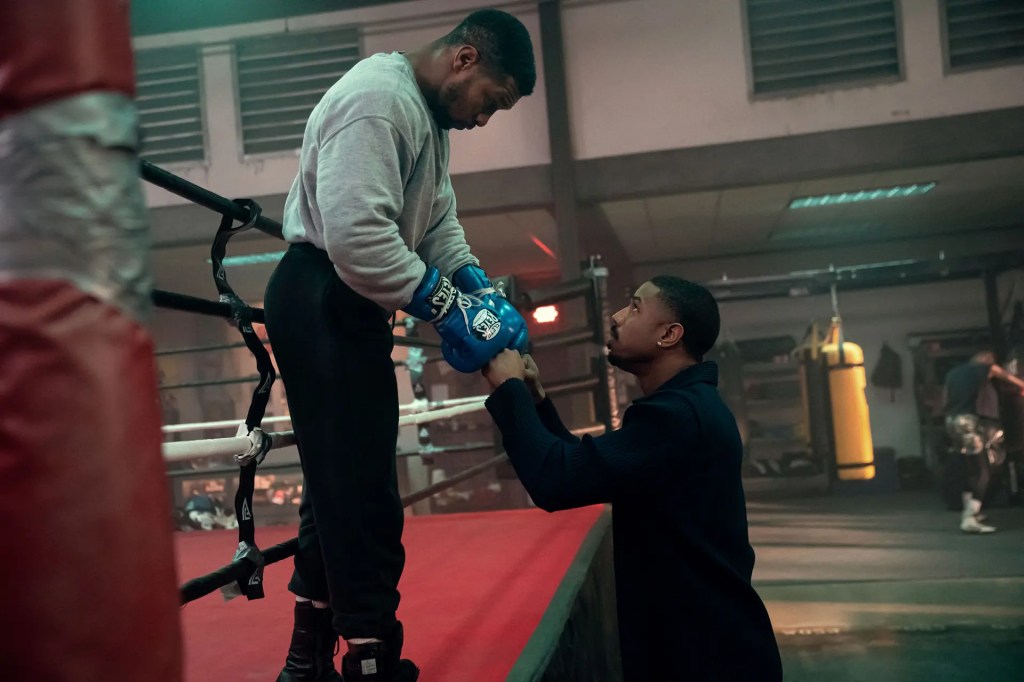
The issue with Creed III, is that at no point does Adonis truly feels like he is the underdog. Too much of the narrative around him is flimsy and the challenges appear and are resolved almost immediately.

The family drama is easily rectified, the tension between Adonis and Dame is compelling but it’s also not deep enough to truly make you root for Adonis and so many of his problems come from the standpoint that he has it all, but at no point is in any danger of losing it all.

Adonis Creed, as a character in this time of his life, isn’t interesting and therein lies the main problem I have with Creed III. A lot of this story feels superfluous, and in many ways, ruins the goodwill I had with this character after the ending of Creed II.

To follow someone who has everything, but for the entire runtime of the movie, doesn’t really risk his castle being torn down, makes for a very dull character.

There are so many alternatives that the writers could have played with his character, from potentially losing his home and family due to his shady past, to inverting the training montage, letting Dame enjoy the fruits of his success and Adonis searching the streets for strength.

Alas, the movie did not go deeper into the story, because I suspect that Jordan’s ego and protectiveness over his own alter ego/character meant that he refused to let Adonis sink to the depths that the story probably needed to make him more compelling. You can tell that Adonis means a lot to Jordan, to the point where I am not even sure if the male lead is even acting anymore.

Thankfully there is more separation with the rest of the cast, as limited as they are. Tessa Thompson continues to bring a warmth and sweetness to Bianca, her chemistry with Jordan still as strong as ever. Wood Harris has a greater role here, doing his best to fill the void that was left by Sylvester Stallone’s absence (which is quite noticeable).

But this film is all about Johnathan Majors’ acting ability. He is threatening, dangerous, coiled and ready to tango at any given time and it is a testament to his skill that he makes Dame half the compelling villain he is. Even though he definitely hams it up in the second half of the film.

From a sheer narrative perspective, Creed III just seems like an unnecessary story that was padded out for the sake of a sequel. The old tale of a ghost rising from the dead in the main character’s past is so contrived and is at odds with Adonis’ whole character arc, who has now entered the mentor phase. This is why, the story lacked any depth, because Jordan has dictated that his character gets to have his cake and eat it …. be a mentor and a returning champion.

Beyond the mishmash plot that tried to create more depth with Adonis, from a directing and cinematography standpoint, Creed III does tries for more ambitious story-telling techniques that are quite reminiscent of anime-style framing and emphasis, from the slow-motion to the close-ups. Most of it though, ended up being more immersion breaking than engaging and I found myself missing the more traditional style of shooting a boxing match.

There is a clear desire from Jordan to include more anime-like shots in his fight scenes, but they ultimately took the drama out of the fight, because it became too melodramatic and in a way, the fight choreography no longer told a story because it was superseded by the bizarre choices in the finale.

In addition to this, the score this time was much weaker, Jordan Shirley’s work nowhere near capturing the heights of Ludwig Goransson’s tribute to the previous Rocky films. This can be heard by the usage of more hip-hop in the score, which again proves to be more distracting than it is immersive.

In many ways, Creed III breaks away from the Rocky formula, from film techniques, score, character motivations and the classic use of contrasting the protagonist and antagonist, much to its detriment. Too much of the plot is unnecessary to the character of Adonis, that wasn’t already covered in the two previous films and the fights in the film aren’t noteworthy enough when compared to better martial arts films.

To sum up this “fight” … if you are a fan of Rocky, Creed III lets you down with how much it strays from the classic films, and if you are a fan of sports films, Creed III lets you down with how little you care about what makes this fight worth watching.

A scene to recall: The training montage, but in particular the scene where Adonis flashes back to when he ran and the shadows looked incredible on the streets and in the dark lighting.

Top Gun: Maverick (2022) – Cinema Review

Y/N? Yes.

Director: Joseph Kosinski

Stars: Tom Cruise, Val Kilmer, Miles Teller, Jennifer Connelly, Jon Hamm, Glen Powell, Lewis Pullman and Monica Barbaro.

Review by Damocles.

I feel the need … the need for speed.

Top Gun: Maverick is truly an unforgettable experience.

Easily one of the best action films to come out of 2022, Top Gun: Maverick is a master-class in proving that sometimes, just putting a camera in place for real scenes is enough to get your blood pumping.

But that has been the major selling point of Tom Cruise’s career. He is one of the truly last movie stars left on the planet in a world where characters are more iconic than the actor playing them.

The name Tom Cruise is alone to guarantee a certain number of seats in the cinema and the star knows it. Which is why he pushed for the delay of this movie to the big screen. He believes in his product, his star power and more importantly himself.

And the numbers follow that belief. Top Gun: Maverick is one of the highest grossing movies of all time, that doesn’t involve spandex or large universes. This is a sequel to a film that came out 36 years ago … and it doesn’t miss the landing at all.

This is a throwback to old-school film-making where all the action is happening for real. The high G-forces that stretch the skin of the actors, the speed in which the ground rushes by, the way how air rushes past the wingtips …. right from the get-go there is an authenticity to the film that makes it instantly gripping.

And it’s all captured right there for us the audience to marvel at. You can’t help but be engrossed in the action the moment you see those fighter jets do their aerial maneuvers.

Because this film is offering you an unprecedented look into what it is like to fly one of the most lethal and quickest birds in aviation history.

And in Joseph Kosinski, we have a seasoned director who is used to creating drama in the sky, with his more underrated films such as Oblivion (2013) and Tron Legacy (2010). Both featured incredible aerial sequences that served him well when crafting the action sequences in Top Gun Maverick.

His clean, measured and calculative style is on full display here, right from the opening montage which pays homage to the original, to his near beat perfect cutting between the pilots’ reaction and plane movement. His earlier work also featured highly realistic CGI work, that was almost seamless in how they blended with physical actors, Tron Legacy being a particular standout.

Top Gun Maverick is no exception. The rare moments that need to be augmented with CGI are seamless with the rest of the movie, a testament to the work of the visual effects artists and Kosinki’s eye.

The plot is simplistic and serviceable. It is almost elegant in how it hits every emotional story beat and the cast understands their role, to be memorable and fun, but not overshadow the true star of the film, Captain Pete “Maverick” Mitchell.

In many ways, this film is so reminscent of the original, only this time Maverick does not go through a typical character arc, instead proving his worth in a world that is modernising against him and his rebellious ways.

All the performances are solid, but props has to be raised for the clear analogy to Maverick’s early days, Glen Powell’s Hangman is a stand-out performance, as the supremely confident, all American pilot whose ability is never diminished throughout the film, a surprising twist on an old story-beat regarding arrogant people.

Cinematography wise, it goes without saying that this is a beautiful film to behold, with all the aerial footage being a thrill ride from start to finish. It somehow never gets old, seeing the actors twist and gasp their way through tight high-G turns and a part of me is excited to see how Kosiniki can bring this level of immersion and intensity to the cockpit of car-racing.

With the romance of seeing planes soaring into the sunset, and the vast horizons that beckon, the score needs to be equally fun. In many ways, the standalone songs that were made for the film are the true highlights of the score. Lady Gaga, Kenny Loggins and OneRepublic all bring back that fun Top Gun flavour that made the original so fun. The actual original score though, is more equally bland Zimmer music that never really rises to the occasion of being memorable.

It was disappointing to discover that, considering they brought back Harold Faltermeyer, but never used any of his iconic synth style for the film.

Overall, Top Gun: Maverick is the truest summer blockbuster movie that doesn’t rely on flashy CGI to tell its story. Instead, it grips you firmly in the reality of naval aviation and the crazy risks and skill these pilots wield when in the air.

Adrenaline pumping, realistic and fun, Top Gun: Maverick is one of those films you have to see, to understand just why movies can truly transport you elsewhere for a solid 2 hours and never leave you bored.

So, thank you Tom Cruise for being as committed to your craft as you are, because this film will definitely inspire a future generation of filmmakers to depend less on CGI and achieve the impossible in reality.

A scene to recall: The moment Maverick showed the brass and his class how and why he is the Top Gun. TOT: 2 Minutes and 15 Seconds.

Ambulance (2022) – Cinema Review

Y/N? Yes.

Director: Michael Bay

Stars: Jake Gyllenhaal, Yahya Abdul-Mateen II & Eiza Gonzalez.

Review by Damocles.

Street combat has never looked quite as good.

Michael Bay isn’t really known as a subtle director. He’s famous for a winning formula that genuinely makes his films some of the most watchable action fare a cinema-goer can get.

Some of them you can guess, like his iconic use of explosives and sweeping vistas with helicopters cutting across the screen. Others are just trademarked now, like extremely intense performances, crazy lines that could only pass in a Bay film, gratuitous lens flares and more recently, a very fun use of gore.

Growing up, I was addicted to scenes of Bad Boys 2, (which is still easily one of my favourite films of all time) and was a bit dismayed when the director chose to commit far too many years to the Transformers franchise.

But the release of 6 Underground, which is easily one of the most over-the-top Bay movie ever conceived, slowly bought him back into contention as one of the most energetic, frenetic and bombastic action directors working today.

I enjoyed Ambulance far more than 6 Underground though.

There was a certain restraint placed on Bay’s excess, due to the much smaller budget and the literal confines of an ambulance set.

I have always believed that the best work a director can make, is when they are passionate about a project, but are placed under certain restrictions. This forces them to work smarter and harder, instead of indulging too much in their creativity.

In Ambulance, you can still feel the presence of Bay’s signature style and taste, with prominent American flags still displayed in almost every scene, lens flares popping in to spice up the frame, and frenetic camera moves that enhances the chaos of the action, instead of the actual choreography.

Watching a Bay film isn’t so much an appreciation of finely tuned and carefully crafted choreography, but more a sequences of what is absolutely cool to look at and how these shots relate to the overall chaos that Bay creates for his action set-pieces.

For example, one of the earliest shoot-outs involve many incredible shots of SWAT Officers walking in tandem towards the chaos, exchanging fire with criminals who are scrabbling around, finding cover. This will then be interspersed with shots of police cars, drifting into position, particles flying across the screen, and the latest arsenal in Bayhem … drone shots that sweep the chaos.

The geography is confusing, the editing and cutting is fast and furious and the cacophony of sound is intense, but that is the point of the action sequence. It sells the chaos of the street combat in a visceral manner that can only be done by Bay’s sense of timing and direction.

In terms of direction towards actors, like most who end up in a Bay production, the actors give it their all. Cam, played by Eiza Gonzalez is clearly the heart of the film, her straight edged performance matching well with the earnest one from Yahya’s Will Sharp.

However, nothing can quite top the insane intensity that is Jake Gyllenhaal’s Danny. There is a sociopathic and manic unhinged energy to his performance that makes him arresting to watch, and creates much needed chaotic and unpredictable drama to even the quiet moments.

It is also a testament to Gyllenhaal and Abdul-Mateen II’s chemistry that they are able to effectively sell their formidable brotherhood, a bond that lasts all the way through the film.

It is that partnership that really sells the emotional element behind such a chaotic film, that is largely confined to the walls of the ambulance. The plot here is as thin as can be, effectively only used to sell audiences on the desperate moves of desperate people in desperate situations. It can be effectively summed up as “robbery gone wrong in LA” but such a simplistic summary doesn’t quite does justice to just how much Bay managed to wrangle out of such a simple premise.

Overall, the movie moves at a breakneck pace, slow only at the beginning to get you to care about the characters before shoving you head first into the wild chaos that Bay had in mind for his film. There are barely any moments to breathe, before the next insane action set-piece takes place.

From a cinematography perspective, Ambulance suffers or should I say, is enhanced by Bay’s classic use of advertising cinema. I use that word carefully, because watching Bay films is a lot like seeing a hyper intense version of a trailer. There is a clarity, colour and cool factor to his shot selections that makes them such visually interesting films. The use of lens flares, the dramatic close-ups, the quick cutting, the dramatic low angle shots … all of these create a reel that is never boring to look at.

As for the other parts of the production, I was struck by how authentic the weapons and extravagant the equipment used by the Law Enforcement was in the film. For a film that operated on a shoe-string budget, so much of the kit seen on screen had a real world authenticity to them and perfectly highlighted the differences between LE and the criminals they were fighting. This was in stark contrast to a film like the Gray Man, which had a much more hodge-podge aesthetic to the equipment used but with 4x the budget.

It should be said that Bay had a special relationship with LE throughout the production of Ambulance, and that many of the extras were active-duty police officers who wanted to be featured in the film, which explained why so many of the gear used looked so authentic.

Touching briefly on the score, Lorne Balfe returns to the world of Bayhem, by recycling a lot of his work in 13 Hours: The Secret Soldiers of Benghazi. There is a sense of almost plagiarism to some of his slower, heroic melodies that were also employed in 13 Hours, and a lot of the action music was reminiscent, however with a more strange, almost angry beat to them, to heighten the street chaos being displayed on screen.

However, it should be said that in most Bay films, especially the action set-pieces, music has never really played a strong part in defining itself outside of the film. It is there to serve a purpose and that is ratchet up the atmosphere of what you are seeing on screen.

To sum up, Ambulance is an intense rollercoaster ride of a film, with barely any time to breathe. It is shot in a gritty, street-level way, with furious action that is only further enhanced by Bay’s trademarked style.

For a movie with a budget that is meant to temper Bay’s excess, this is definitely one of his better ones.

A scene to recall: Literally whenever Jake Gyllenhaal says something crazy. There are some lines that only he could deliver, the unhinged madman he is.