He was trying to buy more sand for his hourglass. I wasn’t selling any.
Recently, it’s been difficult to sleep. I’ve always had atrocious sleeping patterns, but they were usually resolved by staying busy. I had a theory, and a successful method that the more I worked my body in a day, the easier it was to sleep.
I could avoid my usual nightmares and just slip straight into Non-REM.
I don’t like dreaming any more than I do wasting time in a revolving door. Both don’t really serve a particular function to me, and I would rather be conscious, creating actively, than filming something imaginary in my sleep.
The fact that they are always fleeting memories, irritate me to no end, and I can’t help but think that the residue of feeling left behind by a dream is more frustrating than anything meaningful.
I will say though, that the longer I stay up, the more troubled I am, the more internal conflict I seem to generate.
That is my conduit into writing well. The closer night is edged away by sunlight, the faster and more sharply I write. I’ve always considered the hours between 2am to 4am the best time for me to genuinely feel inspired to craft long personal soliloquies about my struggles.
The night is silent, my thoughts are loud, and there is only the sensation of typing to accompany both.
Beyond recent lockdowns affecting my mental health and moods, I’ve noticed that I’m a lot quieter and louder at the same time. I don’t seem to have the same grip on myself as I normally do.
I’m reticent in the sense that I don’t talk as much, yet vociferous at the same time, because when I do, all I hear is rubbish spewing out of my mouth.
Somehow I’ve reach a level where my mind is simultaneously silent inside, devoid of interesting thoughts, yet brash because it prattles on too much, about nothing.
Much Ado About Nothing is very much the name of the game for my own development nowadays.
2 years of lockdowns have worn me, as a person, down to such a boring state of mind. I find myself letting go of things, giving up easier and struggling to find motivation to do simple tasks like exercising or eating.
Hell, there was a moment where for an entire hour, I sat on my bed deliberating whether I could actually taste food properly. Everything seemed to taste flat and I was puzzled by the lack of flavour in my palette.
It was then, I realised that I had sunk into such a funk, fallen from such a height, that my body was now reflecting how I felt mentally.
I’m not a person that can be cooped up inside for very long. I’ve realised that about myself a long time ago, when I strived to achieve a better work-life balance. It is only ever self-destructive for a person of my attitude and fortitude.
I need to be active, treat every day like I am about to collapse from exhaustion. Ensure that every 24 hours is spent maximising myself to the limits. Whether it is reading a chapter of a book, working hard for 8 hours, writing difficult prose, slamming a racquet against a ball towards a wall, pounding my feet on the pavement with a plate carrier … I need to be doing multiple things a day and kept busy every waking moment.
Before the lockdowns, that was my routine. I did all of those things in a day. I was determined to make the most of my life. I felt alive knowing that I was pushing my own personal limits and that my routine was contributing to a greater goal of mine.
But this latest lockdown has caused a strange deterioration inside of me. I can see myself becoming more nihilistic, a bit more despondent, troubled by strange things and unsure of what to say to people. My mind, once empty and reactive, is now full and insecure.
I can sense my mind overthinking too much nowadays, a definitive weakness that I never had to deal with before.
Overthinking leads to insecurities, and an increase in my insomnia. It makes me less charismatic.
I’m scoffing to myself now. It’s funny how when I write these things, I discover more about myself. I’ve always known that I express myself best through words than any other means. Writing will forever be my therapeutic self-discovery tool of choice.
Less charismatic.
That is the perfect way to describe how I feel about myself nowadays. Whereupon once I could easily draw upon my bountiful self-esteem and ego, both metaphorical wells have been depleted by my lack of engagement in life.
I’m frustrated that so much of my life is out of my control. I take my use of time so seriously, that to lose 2 years of my life to some disease beyond my supremacy is difficult to console in my mind.
2 years of potential growth, progress and dreams, vanquished by some disease.
Even now, I am furious about that loss. But that anger does not mean that I should give up on everything else. Just because I lost a lot of time, does not equate to me giving in to nihilism, which is exactly what has been happening to me for the past 2 weeks.
I need to pull myself together again. I need to take charge of myself and recuperate, recharge and re-energize.
There is no pleasure in pity.
I’ve been pitiful and allowed the sands of my hourglass to slip through my hands for long enough now.
It is time that I’ve flipped the damn thing and let time reset itself again.
I need to look after myself more and start getting busy. All this mulling about, napping unnecessarily and eating extravagantly has to stop.
I’ve always considered my ability to analyse myself, become aware of my self-destructive nature and put a stop to it all, one of my greatest strengths.
I will never let myself stray too far from my own lofty goals with such savage self-analysis.
Because at the end of the day, there is no one to look after me, but my id, ego and superego.
I can’t be charismatic if I feel like crap.
I can’t be fit if I continue to balloon up.
I can’t be deadly if I don’t get serious.
The way I see it there’s two types of people, those who spend their lives trying to build a future and those who spend their lives trying to rebuild the past – Max Payne 3 (2012).
And I’m done trying to rebuild a past where I’m some loser.
Pandemic or no pandemic, this isn’t the time for me to lose the plot
This was actually the time for me to cup the sands of time and wrestle back my damn destiny and luck.
Luck is never luck, if you are in control of your life.
Stars: Matt Damon, Christian Bale, Jon Bernthal, Caitriona Balfe, Noah Jupe, Josh Lucas & Tracy Letts.
Review by Damocles.
A movie that finally captures what racing is all about.
As a fanatic gearhead and a fan of James Mangold’s work, I have only heard positive things from both the car and film community.
So my expectations were high going in.
It is safe to say that this might be my favourite car movie of all time.
The racing, the story and all the elements of the film coalesced perfectly together in harmony.
There is an old-school vibe to the film, in particular with how little CGI there is and the simplicity of the story.
The footage captured has a particular focus to detail that rewards re-watches. The sound design in particular is excellent, really emphasizing every shift, and roar of these beautiful machines that continue to inspire petrol-heads everywhere.
But it is the masculinity that runs through this film that really sold me. James Mangold is one of those directors who seem to know how to inject the right amount of masculinity into all of his films. The characters that he brings to life in all of his films are always nuanced, flawed yet brilliantly realised.
In a film about motor-racing, it is hard to deny that this is a very male film. After all, it is said that petrol runs in every man’s blood. There is something about the combination of smell, touch, machinery, and untapped potential in any man’s car that lights you up from the inside when you steer or put the pedal down.
Even the most evasive non-motoring man cannot deny the thrill one gets, when you put the pedal down.
This film captures that adrenaline rush perfectly, as well as the strange floating sensation when you soar above “7000rpm.” It is a feeling that can only be described as man and machine, fused as one.
I wanted to highlight this element, because Mangold has made a career out of depicting male characters on screen, from his earliest hits like 3:10 to Yuma (2007) to his latest critical hit Logan (2017). In so many of his films, he explores the meaning of what it means to be a man, and the many different battles a man need to tackle in his life.
In Ford v Ferrari, the story isn’t as focused on the actual battle between the two motoring giants waging war on the racetrack of the 24hrs Le Mans.
The story is more keenly focused on the relationship between Caroll Shelby and Ken Miles, and their battle against corporate interference and each other. Their fun dynamic is what truly sells the film, and much like the relationship depicted between Charles Xavier and Logan, it is the heart of the film. The emotional scenes are gripping, because you are invested in the characters and their struggles within and outside of themselves.
This emotional resonance then carries over to the racing, and only serves to heighten the win and the exhilaration as you feel that to these men, racing isn’t just a matter of turning a wheel, it is truly about pushing yourself to the absolute limit and triumphing beyond those very limits.
While there is plenty of depth to the story, (corporate America, family sacrifices, a new era of American motoring, etc) the simplicity of it all boils down to the underdogs beating the odds, is what makes the film so much fun to watch.
That the film is an original IP, and is shot in a way that utilises natural lighting, and real cars speeding across roads only serves to enhance the viewing experience. In a world where there is clearly too much superhero and computer graphic imagery, watching Ford v Ferrari is like a breath of fresh air.
There isn’t a world at stake here. There isn’t some moustache-twirling villain who summons a blue sky beam. There aren’t scenes where the actors aren’t sure how to behave before a man in a green suit with a tennis ball above his head.
James Mangold took the time to run the actual cars at break-neck speed just so that his actors and extras can follow the cars and experience the thrill, whilst replicating period-accurate clothing, hair-styles and sensibilities.
There is a scene I remember, where you see all these iconic blue COBRA shirts worn by the pit crew bumping into each other, just to get a closer look at the cars, racing across the finish straight and you can clearly see that those are real cars being driven across the track, just to get that shot right.
You won’t see that anywhere in a large-scale Marvel or DC film. The cars would be CG’ed in, the actors would have dots on their bodies and there would be a sense of disbelief in what you are seeing.
It is those small details and efforts that make the film such a fun experience and really sells you the racing.
I would also like to compliment the maverick attitude that both Damon and Bale encapsulate about racers. Their performances perfectly match the outlooks that all racers possess regardless of which era they are born in. The competitiveness, the obsession with chasing perfect laps, the courage to push limits beyond safety … these are all traits that all racers are born with, no matter what car they race.
I’ve mentioned the period-accurate clothing, and would like to give praise to the costume designers for ensuring that every man at the race track is equipped with the coolest sunglasses available. Racers, Engineers, Team Principals … it is a necessity to possess a pair of sunglasses whilst racing. Something of an unspoken rule.
Moving onto the more technical elements of the film, I was struck by the continual collaboration between James Mangold and his cinematographer Phedon Papamichael with their use of natural lighting and seamless blending of thrilling moments in-race. There is 60-40 balance of Bale’s performance behind the wheel, as there is on-track action and for a race-car film, that is the perfect mix.
After all, if I wanted to see racing, I would go watch my precious Formula 1 or World RX.
This is, first and foremost, a film, where character is the key component why I am watching. I am also here to see shots of the cars that would not be possible in normal racing live coverage. To my immense satisfaction, the stunts and the shots are all beautifully non CG’ed and there are so many moments in the film that had me smiling as I could see where Papamichael could convey speed and emotion in one frame perfectly, whilst highlighting the beauty of the scenery and machine.
The cinematography never arrests you in the film and tries to convey some epic vista. Instead it seamlessly blends into the story, with emotional moments being enhanced by the excellent visuals, such as Ken Miles’ talk with his son about the perfect lap. It creates a seamless viewing experience that doesn’t outshine the rest of the film.
Equally understated but coming in strong at key moments was the score by Marco Beltrami & Buck Sanders. Beltrami is another long-time collaborator for James Mangold, with Ford v Ferrari marking their 4th time working together. It is the theme song, Le Mans 66 that really sells the beauty, drama and thrill of racing. I really appreciate having a theme song that is purely about the sensation of racing, instead of the “cool” elements of racing as seen in other car franchises like Fast & Furious.
Beltrami’s work throughout the film is consistently soulful and quiet, coming in strong when it needs to, before taking a softer note to the roar of an engine. Again, this is precisely what petrolheads like myself love and Mangold’s direction must be credited for the sound design of this film.
Ford v Ferrari is a film that struck me as fun at first, but upon re-viewings, I’ve come to appreciate more just how rare it is to get a film like this. This is a film, that isn’t trying to be a franchise, depicting real characters, a real race, real cars, real drama and is all based upon strong acting performances and the idea that you want to root for the underdog.
This is so rare in today’s world of Hollywood productions. In a lot of ways, Ford v Ferrari is definitive of the story it represents … a maverick, trying to beat an increasingly corporate approach to a creative industry.
So even for non gearheads, this is a film that you can enjoy.
I hope there are more films like these in the works. Less CGI, more real characters and real props please. I think the world needs more films like these than the cookie-cutter stuff that has saturated the market so much recently.
On a side-note, I may be a diehard tifosi but even in this race, I was cheering for Ford to win over my beloved Scuderia.
Because at the end of the day, no matter what team you go for, you just want to see a damn good race and for a good race to happen, it got to be close.
And Ford V Ferrari delivered exactly that.
A good race.
A scene to recall: Whenever Mangold allows the actors to deliver their lines in natural light. Whenever the cars get those glory shots through a corner. Whenever the LeMans race heats up. Whenever …. the movie is good … you get the idea. It’s a racer’s wet dream.
Casino Royale (2006) – James Bond stepping into the Bahamas with style.
Time hasn’t stopped for you in your home town, yet you feel indelibly foreign to what should be comforting surroundings.
I’ve always considered myself somewhat immune to a lot of holiday side-effects. Jet-lag, homesickness, holiday nostalgia … it’s a soldier’s mentality that I tend to adopt, as with a lot of other things in my life. Just move on and enjoy the moment is what I think to myself. Jet-lag can be defeated with enough Red Bull and the eagerness to explore. Homesickness is for the melancholic and the sentimental. Nothing is ever rose-tinted, nor is it an ugly black. Most holidays I’ve experienced had the shit come with the good and that’s perfectly natural.
What I am discussing though is the flow of time, when you first come back from a holiday.
I’ve recently had this experience when I left my hometown of Melbourne, for the sunnier climes of the Gold Coast for 5 days. In my absence the weather changed drastically, the city entered another lockdown and my family struggled to heal after the events that had transpired against them.
I was up there to visit my girlfriend, having missed her presence keenly and eager to leave a lot of the stress behind. The holiday ended up being the perfect tonic to mend parts of me that were broken and to really regroup and rally my own energy.
The weather was perfect, never too hot nor too cold. The food was excellent. The luxury of the hotel was unmatched and the ability to just reach out and touch my girlfriend is something I don’t take for granted any more.
Which is why upon arriving back, I was struck by how alien everything felt.
The weather was ridiculously cold and wet. The car I was picked up in, felt stuffy and foreign. Seeing my father almost back to his normal self was puzzling. My bed felt strange when I first slept in it, after being absent from it for 5 days.
It is a strange ego exercise that everyone has to do when they return home. Readjusting to the idea that time did not freeze the moment you went on your holiday.
For a few days after, I felt like I was in a surreal state of mind. I was trying to get back into my old habits again but things weren’t clicking as well.
Play tennis, enjoy football (soccer), check social media on my PC, learn to play games again, adjust to having a plethora of clothes, taste more mundane food …
All my normal decisions, my actions that I would have done without a second thought before my holiday, I was now questioning why I did them.
Perhaps the most surrealist experience was driving my car again. I felt like I had lost a certain joy behind the wheel because for much of my entire trip, and the week prior, I did not drive my car very much. Sidling into my driver seat and actually driving again, I felt like something was off. I didn’t know how to describe it.
But the mental state was not there to drive, nor was the usual passion for the act.
Then it dawned on me, why this whole situation felt so strange. I had gone from the heights of luxury to the depths of mediocrity. Laziness was no longer a fun leisurely option. I had to work again.
Driving is an act of work, in comparison to the laziness of tram rides. Going to bed felt like a chore again, instead of a pleasure. Slipping on the work uniform stifled me versus the freedom I felt with jandals (NZ slang for flip-flops) and a pair of sunnies.
Not being able to laugh, hug and kiss my girlfriend was a stark contrast to the quiet, empty loneliness I felt back home.
I call this surrealist state of mind, the post holiday continuum because it disrupts your personal continuum, of space and time.
For a decent interval, you’ve managed to escape the hum-drum of ordinary life and enter a state of true freedom.
Holidays are so addicting because you get attached to that freedom.
Free from monetary constraints. Free from work stress. Free from daily sacrifices. Free from oppressive atmospheres. Free from everything that life has managed to pin onto your shoulders.
Imagine that … finally being able to throw off all the weight on your shoulders and literally have the options to consider choices you normally wouldn’t.
Should I just lie in bed for another hour today?
Should I go down and get the breakfast buffet or just order room service?
I feel like having a massage, should I book one now or tomorrow?
I could use an ice-cream right now …. let’s go out and find one.
Make that 2 scoops instead of one.
Should I buy this? Oh hell, why not.
Holidays are special because you carved out a literal time and space for you to be free of any expectations, environment or existentialism. They truly allow you to be in control of choices that are normally made for you. They grant you the ability to be lazy without guilt or pressure.
For once, you are truly in control of who you want to be.
Hence, when you create such a time and space for yourself where everything is so different mentally, the trip back to “normal” is going to be bizarre. I managed to convince myself that in 5 days, I could live like that forever. It was fun pretending to be wealthy and carefree.
In many ways, that Gold Coast trip was one of the first holidays that felt like an actual vacation and for once I felt bereft leaving the sunny climes behind for dreary Melbourne.
It takes days for people to come back mentally after a holiday. You find yourself resisting habits, questioning routines and eager to experience freedom once more.
That is what is so surreal about it all. The familiar turned unfamiliar. The normal unrecognisable as the norm. You feel like a stranger living another person’s life. Like you are unable to merge the two experiences you’ve just had.
You are presently unpacking everything in your room, yet literally hours in the past you were relaxing at a beach, sipping on a mojito. The dissolution of your holiday continuum is a hard one to accept sometimes. That is what lends the home a surreal atmosphere.
There is almost a robotic sensation to how your life pans out after a holiday. Like your body is on autopilot, whilst your mind refuses to let go of the strong holiday memories. After all, for days after, this sensation is only reinforced as people question you about your holiday. You reminisce on that fleeting moment in time and space where you were free, and indulge in it as people ask you more questions about your trip.
Strange isn’t it? How perhaps once before, you wanted to be left alone, but now every question about your holiday brings a smile and a touching memory. But as time continues, those memories start to fade slightly, until one day you find your reminiscing cut-off by a strange question: did that really happen?
That is what makes the post-holiday continuum so interesting, because of how surreal everything becomes with hindsight, time and juxtaposition. You find yourself so embroiled in your own daily life, that now it is the holiday that seems surreal and bizarre. Like how one earth did you manage to save up so much money to earn such freedom?
My own experience was only made doubly difficult by the nature of long-distance relationships. I left behind my girlfriend, and that act is strange in of itself. Emotionally, I wasn’t ready to leave and that explains why I am currently exploring that feeling of abandonment and adjustment in a post holiday context.
There is a cyclical nature to holidays, I’ve realised now.
Sampling that freedom, makes you crave it more.
So you go back into the grind, putting aside money, time, wealth, just so that you can taste that privilege again.
This post-holiday continuum is something that, I suspect, never really fades away.
It is what drives people to abandon all financial caution and chase that dream of living like a holiday forever.
It makes people want to travel, to explore, to journey out into the unknown, because they want to be free of societal chains.
As much as I empathise with that, I can’t truly embrace it. Holidays are meant to feel earnt. They need to be deserved and with such high personal standards, I need to be in drastic situations before I feel like I deserve a holiday.
The sad fact of the matter is, after 2 days of suffering from that post-holiday continuum any desire to go back to a holiday faded away quickly.
I am still too eager to find work in a job I can embrace wholeheartedly. Perhaps once I’ve found that, carved my own niche, will the call of a holiday tempt me once more.
But right now, it isn’t for me.
Still, if you ever feel like there is something surreal about coming home, after a relaxing holiday, now you got a term for it.
Too Old to Die Young (2019) – a series directed by Nicolas Winding Refn. If you love red and blues … this is it for you.
Ever since I was young, upon reading the first Alex Rider book: Stormbreaker, there has been a quote in it, that I think about often … You’re Never Too Young to Die.
As I approach my 30s, I don’t see myself as young any more, than I do consider myself old.
Isn’t it strange that the moment you hit a certain age, the term “young man” or “youth” fits you as well as water in your lungs?
What determines whether you are young any more?
Is it your age? Your experience? Your attitude? The way how older people treat you? Is it a generational thing?
Whatever it is, I know that I haven’t felt “young” since I decided to be a man at the age of 17. I didn’t understand the appeal of people wanting to be young forever. For me, life has always had its greatest appeal in your 30s.
30s is the peak of your physical age, mental state and confidence.
I couldn’t wait to be in my 30s. I wanted to own the self-made man image of Don Draper. I craved the arrogant coldness of James Bond. The cocky swagger of Dirk Pitt. The devastating wit of Oscar Wilde. The deductive genius of Sherlock Holmes.
All these desirable traits … stemming from men in their 30s. I couldn’t understand my compatriots. Nor, admittedly, did I want to. While they wanted to chase girls, I was keen to wine and dine confident women. While they fumbled for ID at entries into Casino, I could get away with a serious scowl and a nod at the bouncer.
So now, as I approach my own summit of the 30s, I’ve realised that I was metaphysically 30 a long time ago.
I chased and craved and cajoled for those enviable characteristics for so long, since I was 17 that I subconsciously made them my own. I’ve been 30 for a long time. There is no other way to describe my own arrogant confidence and plentiful self-esteem. Whilst my peers feared the idea of a job, a house, a car and stability, I was desperate to earn those the hard way, my way.
I wanted to be a man. I wanted to enter a room, confident and assured.
I truly faked it until I made it my own.
Which is why it rankles when people view me as a young man.
A boy.
Like they have difficulty in seeing the child they once saw quietly playing in the corner, blossom into the taller man who stared them down intently, unafraid of their wrath and unwillingly to give them any respect lest they earned it through his ire.
If I had to define age, it would most likely boil down to a combination of attitude and experience. How your life’s experiences have shaped your attitude towards the world is the perfect way to determine your age.
If you’ve had a sheltered life, and you view people as friends and the world as a joyful place, chances are … you’re a bit too naive and that is the biggest indication of youth.
If you’ve had a rougher upbringing, viewing people as foes or tools and you categorically label the world as “indifferent” … odds are you’ve a lot older than you appear to be.
Cynicism isn’t perfectly related to old, but it’s linked.
And I’ve been cynical for a very long time. It made the world an easier concept to understand … if I saw everyone as devils, then it was a lot simpler to accept people’s failings.
The old adage of “keeping expectations low, so reality meets bare minimum” has kept me from riding roller-coasters of emotions.
All these things I’ve discovered by the age of 22. I’ve lived the last 6 years slowly being a bit more optimistic, but realistic. I’ve matured beyond that nihilistic, cynical and depressive way of thinking.
Which is why I consider myself at 28, too old to die young.
I could be struck down tomorrow and I would think to myself that I got enough to die without regrets. I can face death on my own terms not its’.
To die young is to experience the world that has not changed you in a single meaningful way. That is tragic. There is no justice in that. To be taken away before you truly grown up, is a tragedy. What person could they have been?
But to be struck down at an age where you know what consequences there are for your actions and you live despite them … then you are old.
Old enough to know better.
Old enough to make your own choices.
Old enough to live with your mistakes and learn from them.
For the longest time, I’ve always known that I’m old. Even my peers see me that way. There is an old-fashioned mindset about the way how I approach things.
You need not look further than this blog. Who keeps a blog nowadays? Who write their thoughts and feelings out for people to read like some Anne Frank Diary?
Why isn’t Damocles adapting to the times and creating a vlog? Starting some lame podcast? At the very least he should consider making an audiobook.
The answer is, I’m a bit of a romantic. It comes from reading too many damn books that fill my head with idealistic nonsense. I am writing a blog, because one of my favourite edgiest teenage superhero from a YA novel made one and it got thousand of followers. Ever since then, I have stuck to my guns and kept writing in an online journal of some sort.
I would also like to point out that if you have ever been obstinately stubborn about something, simply because you disagree with it … that makes you old.
A young person is rarely ever stubborn. They are far too malleable and easily manipulated. Only old people get intractable and drive up their stress levels simply because it is some bizarre sadomasochistic kink.
Young = Impressionable, Insecure & Insouciant.
Old = Stubborn, Self-Righteous & Steady.
So what made me think about all this? I hear you ask.
The recent family troubles naturally. I felt strange that people lumped me in the “young” category, simply because I am of a generation younger than them. Yet my actions, my attitude and my insight proved far more intelligent and rational than their childish squabbling and inaction.
They labelled me hot-headed, emotional and rebellious. I saw nothing of the sort in my actions. Every action has been measured, calculated and stubbornly recalcitrant. Everything I’ve done, is not something a young person would do.
Hence I find it insulting that the older generation continue to treat me as a “young” person, an annoying fly that needs to be swatted away.
I punished such arrogance accordingly. Age has nothing to do with being young, and I made sure that the older generation saw me as something more than some symbolic figurehead for youth. I became an adult just like them, demanded their respect accordingly and suddenly, they realised that my respect had to be earned, not just given due to age.
I have always scorned the Asiatic attitude when it came to respect. I see no reason to be polite, respectful or subservient to anyone who have lived beyond 40. My outlook has always been to be a mirror to what I am receiving.
Be an arsehole to me and you best believe I’m going to be an even bigger arsehole to you.
Work hard and invest in me and I’ll give you my all.
That to me, has always been the appeal behind adulthood. The playing field is level and it doesn’t matter what background, experience or age you are.
Be a good person and receive goodness. Be an dick and suffer the consequences.
Fair. Just. Equilibrium.
I truly am too old to die young and for a long time, this guiding statement has stuck with me ever since reading it in a book.
You are never too young to die, but you can be too old to die young, because you’ve matured beyond youth.
That is a good thing.
It means that you’ve haven’t wasted your life.
Embracing the feeling that you are too old to die young. It means that you’ve living life right and you’ve got nothing to fear.
As I sit here, at 0400HRS, listening to Vangelis’ Blade Runner score, with only the light of my PC screen to display what I am writing, I realise that a dystopia has arrived.
It wasn’t in some far away future of 2049, distant on some screen directed by a film-maker … it was present and I, unwittingly and subconsciously, willed it into existence.
WAR IS PEACE. FREEDOM IS SLAVERY. IGNORANCE IS STRENGTH.
Let us wage war against the pandemic. Let us confine ourselves to be free. Let us believe what we are told.
How did this happen? Why did I allow it happen?
What happened to my anarchist spirit?
Why did I not pick this up sooner?
But that is the thing about dystopias … they have a way of not being real. They can’t happen in reality … humanity has too much goodness in it. Someone would stop it … a hero like William Shatner’s James T. Kirk would make a impassioned speech about how wrong the way of the world was going.
That speech would inspire others.
Change would occur for the better.
The world could continue on its axis, spinning in its’ way into a brighter future.
But what if that hero was twisted with fear. Scared for his life. Afraid of the air itself … Everything he touched and saw was now infected.
Where will this speech come from now? The Hero is choking, coughing and muzzling himself with the crook of his arm. He can no longer serve the people any more. He’s a sickness, a virus, a disease … a plague.
Who will inspire us to be better? To be more free than we were before?
This is the 6th Lockdown that my beautiful home-town of Melbourne is undergoing.
There are empty promises of it ending soon.
Reassurances that the government has our best interest at heart.
People encourage each other to obey, be strong, and suffer together.
Staying Apart Keeps Us Together.
Catchy isn’t it?
But so is Strength Through Unity, Unity Through Faith.
I need not recount the plot of V for Vendetta (2005) for you all to understand the allegory I am making between film and reality. Naturally it is all eerily similar, but then so is the plot for a lot of stories. Nothing is original these days …
What is fascinating to me though, is the sudden realisation I had about the dystopian world I am currently living in and the immediate comparison I’ve made to this film, with the St. Mary’s Virus paving the way for the dystopian society created in Britain.
From curfews, to harsh edicts and penalties, the dystopian elements of my own reality consumed me so much, that I am here now, writing it all out, despite the lateness of the hour.
The idea of a “COVID-Normal” is such a bizarre concept to me. Further lockdowns can be triggered at a moment’s notice … further tracking and surveillance of your movements is now actively encouraged and mandatory. Only being able to leave your house for 5 approved reasons. You are now confined to a 5km/h radius of your home.
What part of that, does not sound like a dystopia?
When did we, the iconic stubborn, free-loving people of Australia, suddenly agree to submit to whatever the government says?
Fear of one another turned all of us into meek sheep or perhaps our infamously laid-back attitude offered an opportunity ripe for zealous policing.
You could no longer trust the people that brushed past you at a crowded party. Ordinary surfaces like the PB/5 tactile button for crosswalks were now tainted with something. Alcohol was now consumed in larger quantities than ever before, to clean hands, tables, hand-rails … anything that transmitted the disease was now scrubbed vigorously.
You can’t even breathe within 1.5m of another person, without a mask on your face.
The media did what it did best in today’s society …. stoke terror further in everyone’s heart.
Numbers are suddenly determination for your mood for the day. You read about how bad other countries or states have it and silently thank everyone else in your home for cooperating. Then minutes later, your heart sinks as you look on enviously at other countries that have opened up again, their carefree attitudes mocking your own stressed state.
Much like Trump’s presidency, the media is fixated on this crisis, unwilling to report on anything else, holding a perpetual gun to everyone’s head to hear their despairing news, because they need to make revenue through fear.
Isn’t it amazing how where once we only used to hear from our illustrious leaders when it was important, we now have daily “reassurances” from politicians who claim to have our best interest at heart.
We all want to tune in to the state news and hear what is their plan, what is their road-map to keeping us safe from each other.
Staying Apart Keeps Us Together.
Repeat that, until you believe in its’ strange juxtaposition.
Repeat that, until you accept the new “normal”, where we are all now monitored.
Repeat that, until you hear the cries of protests, as unlawful and unpatriotic.
Repeat that, until you forget what freedoms you had, because you’ve known no other reality for 2 years.
Repeat that, until you know that the jail you’ve populated with junk is now your home and you are confined to it.
Repeat that, until you walk outside, and are seemingly grateful for the 2 hours of exercise you’ve been granted.
Staying Apart Keeps Us Together.
There is no denying in history that police states have arisen thanks to terrifying crises. To name a few ….
Russia (1921) – Famine // United Kingdom (1939) – WWII Blackout // Germany (1930) – Nazi Party // South Africa (1948) – Apartheid // Egypt (2013) – Economic Crisis // Australia (1964) – Vietnam National Service Scheme
Yet despite these warning signs in history, we are all too easily swayed into accepting draconian measures for our safety. Often it is too late when we realise something is wrong, because naturally our fear has been stoked to such a degree that it takes a while to calm ourselves down.
Yet, here I am, sleepless, restless, anxious and paranoid. It isn’t the pandemic that I fear any more, it’s the dystopian world that I have seemingly allowed to manifest itself from film into reality.
The numbers have lost all meaning to me. The cases will always be around, regardless of vaccination. That is just the nature of the virus, just like how you can be vaccinated against the flu and still get the flu.
The endless debates on the pandemic is not of any particular concern to me. Humanity as a whole is far too resilient to be taken down by this one.
The real horror lies in how humanity has turned against itself.
Corporations turning the pandemic to their advantage and making huge profits at the cost of people’s health.
Work at home says the company man, to the initial joy of the drones. The drones content with the idea of operating at home at later hours and in the comfort of their home, suddenly find themselves unable to switch off, because now the work is home.
Their work-life balance is horrible, their health slowly decay at home and what was once a sanctuary is now another soulless room with 4 walls. All identity has sucked away by endless zoom calls and procrastination.
You’ll be subsidised by the government says the manager to the retail staff. The retail worker heads home, happy to take a break. Serving customers all day is a pain in the arse and they can take a holiday of sorts. But when they apply for pandemic aid, they realise that they’re missing 500 dollars that they normally need to make ends meet.
Suddenly they crave going back to work. Home isn’t as exciting. The food is blander than their normal lunches, the lack of social interaction is driving them mad. The 8 hours in a shift, bored at work, is now even more boring at home. Self-destruction awaits.
I’ll take you, but I have to let the rest of you go.says the chef to his casual staff. The once tight-knit group of workers, bonding over the universal suffering of hospitality are now split asunder by the favouritism. Why does that girl get the shift? asks a disgruntled waiter as he heads home, where he throws his towel in the wash.
How the hell am I going to pay rent? wonders a sous-chef as the restaurant that he bled, toiled and slaved away in for years shut down, due to a lack of customers. I can’t enjoy a drink there anymore? queries a long time patron as she stares inside the desolate window of her favourite wine bar, the LEASE sign mocking her nostalgic sadness.
Everywhere, the pandemic and by extension, the government has slowly laid waste to the creative and fun industries.
You can no longer attend events, eat at a fancy restaurant, appreciate the coffee of your favourite barista, pop in to see a movie or even engage in a fun activity with your friends.
We’ve turned against each other now … all the things that used to bind us together, maintain relationships and foster trust in a community has been stripped away from us.
Hugs …. Handshakes … Fist Bumps … Kisses ….
Illegal. Disapproved. Illicit. Disgusting even.
Welcome to the dystopia of 2021, where humanity has sacrificed emotional bonds for complete subjugation.
Enjoy your new prison, continue to make the economy strong with useless purchases that will never satiate you.
Enjoy your new restrictions, continue to exercise with caution and fear, please maintain a safe distance between you and everyone else.
Enjoy your new normal, please check in everywhere so we can track your movements. Failure to do so will result in heavy fines.
Enjoy your new interactions, if you miss your friends, do not visit them in person, just call them via a screen.
Enjoy your new reality. We are a dystopia masquerading as a utopia.
This is London ≠ This is Melbourne.
Good evening,London Melbourne..
Allow me first to apologize for this interruption.
I do, like many of you, appreciate the comforts of every day routine- the security of the familiar, the tranquillity of repetition.
I enjoy them as much as any bloke.
But in the spirit of commemoration, whereby those important events of the past, usually associated with someone’s death or the end of some awful bloody struggle, a celebration of a nice holiday, I thought we could mark this November the 5th, a day that is sadly no longer remembered, by taking some time out of our daily lives to sit down and have a little chat.
There are of course those who do not want us to speak.
I suspect even now, orders are being shouted into telephones, and men with guns will soon be on their way.
Why?
Because while the truncheon may be used in lieu of conversation, words will always retain their power.
Words offer the means to meaning, and for those who will listen, the enunciation of truth.
And the truth is, thereis something terribly wrong with this country, isn’t there?
Cruelty and injustice, intolerance and oppression.
And where once you had the freedom to object, to think and speak as you saw fit, you now have censors and systems of surveillance coercing your conformity and soliciting your submission.
How did this happen?
Who’s to blame?
Well certainly there are those more responsible than others, and they will be held accountable.
But again truth be told, if you’re looking for the guilty, you need only look into a mirror.
I know why you did it.
I know you were afraid.
Who wouldn’t be?
War, terror, disease.
There were a myriad of problems which conspired to corrupt your reason and rob you of your common sense.
Fear got the best of you, and in your panic you turned to the now high chancellor, Adam Sutler premier.
He promised you order, he promised you peace, and all he demanded in return was your silent, obedient consent.
(Alan Moore – V for Vendetta (1982) )
Staying Apart Keeps Us Together.
Staying Apart is the Best Way to Stay United.
Stay Home, Save Lives.
Obey the Rules and Stay Home.
OUR UTOPIA IS ONLY THREATENED BY YOU.
V for Vendetta (2005). Strength Through Unity, Unity Through Faith ≠ Staying Apart Keeps Us Together.
Stars: Margot Robbie, Idris Elba, John Cena, Joel Kinnaman, David Dastmalchian, Daniela Melchior, Viola Davis, Peter Capaldi & Sylvester Stallone.
Review by Damocles.
This is pure unadulterated James Gunnand it’s damn cool that he gets to do the film he wants to, on a big budget, without any restrictions.
Can James Gunn do no wrong?
The Suicide Squad is very much a reaction to the original Suicide Squad (2016). It possesses many of the same elements, from an eclectic mix of pop songs, an army of disposable minions, gratuitous violence and CG and a colourful palette of colours for the film’s visuals.
The irony of it all, is that the Suicide Squad in 2016 was a reaction to Gunn’s work on The Guardians of the Galaxy (2014).
And now, the director has come to showcase what he is capable of with no studio interference.
The result is a fun, touching, violent and zany film that takes full advantage of its premise.
It is genuinely surprising how much Gunn studied the original film and decided to put things right, with his signature style and bombast.
The songs were no longer random and a dime-a-dozen-cuts but instead seamlessly suited the scenes. The villain at the end of the film, had a strange depth to it, and there is a legitimate reason why there is an army of disposable henchmen for our heroes to fight.
The film is bright, colourful and well-lit, in contrast to the original dark, gritty palette. Characters are only introduced once, but with the same style of seeing them twice, as happened in the first film. In addition, the roster of heroes actually have depth and soul, with surprisingly touching scenes of drama for their backstory.
Then there are the actual selection of heroes, who actually perish often enough to warrant the word Suicide in Suicide Squad. Their costumes are a source of visual delight, unlike the first film and all their abilities complement each other, with the team actually working together well.
I mean, there is even the equivalent of the bar scene from the first film, that is echoed here, but fleshed out properly …
In many ways, I managed to draw a strange parallel to Star Wars: Rise of Skywalker because it felt like the director was reacting to a lot of the problems seen in the previous film, only here, it was done much better and with a film-maker who knows how to have fun with the material given to him.
How else would you explain the choices of D-List super-villains like the completely unknown Bloodsport or Polka Dot Man?
This is what James Gunn excels at, making the bottom-of-the-barrel characters become house-hold names. He instinctively understand their tragic back-story and doesn’t cheapen them, but humanise them where he can and poke fun at them when he can’t.
The pacing in the film is excellent, with much of the plot moving along at a cracking pace, emphasized beautifully with creative and extravagant chapter titles. Not once in the film did I feel the length of the film, with a lot of the characters getting their moment to shine both from an action and emotional standpoint.
The film was also aided by humour that land well and never distract from the characters or plot. In particular, I loved the way how Gunn knew how to twist his humour and violence together that made for excellent comedic moments during heavy action sequences.
From a cinematography perspective, this film might be the most James Gunn experience that has ever been given a 100 million budget. The mise-en-scene is graphic, colourful and has standout comic book moments that make you marvel at how beautifully Gunn frames this film.
During action sequences, the film has an energy behind the camera that emphasizes the gruesome kills as well as how ludicrous they can be. Harley Quinn’s solo fight in particular, have a certain pizazz to them that makes for both visually pleasing and psychologically insightful viewing.
In so many scenes, Gunn loved being creative with his shots, even with simpler flashback sequences. Bus windows became mirrors to the past, toilet seats being scrubbed down with soap was an opportunity for amusing text and 360 pans became punchlines for jokes. There are so many fun tweaks that Gunn put in the film and only showcases his talent as a film-maker and interpreter for these characters.
I particularly loved how they interpreted Bloodshot’s comic ability to teleport weapons to his person, as modular nanotechnology that makes a bigger stick to go boom. The costume of Bloodsport, has one of the coolest masks I’ve seen on film.
But of equal noteworthiness was John Cena’s Peacemaker, whose goofy costume only served to enhance the sheer size of the man himself. There is a hilarious comic-book strong-man vibe to Peacemaker that always made me smile when I saw him on screen. John Cena is finally allowed to be the huge, muscular goof-ball on screen and it is refreshing to see a director acknowledge his talent and natural comic timing.
I must also give a mention to Polka Dot Man, whose worn, lame and affectionate suit will always bring out a smile. He is such a bedraggled character, but he is perfectly portrayed in this film and played with aplomb.
As with many Gunn films, the mixtape used to punctuate key moments in this film is excellent. It ranges from old school rock’n’roll to modern pop-synth and it blends seamlessly with the visuals. Even thought John Murphy’s score is taking a back-seat to Gunn’s soundtrack, it is there enough to accompany the scene well and ramps up appropriately enough to steal moments like Harley & Javelin or the big fight at the end.
Perhaps where the score worked best though, were the scenes between Ratcatcher 2 and her father, with both actors putting in excellent performances to flesh out the emotional heart of the film. At the end of the day, it is Ratcatcher’s story that reflects the theme of the Suicide Squad and how they can all be greater, despite their lowly status.
Overall, The Suicide Squad is a fun, creative romp that shows that the DCEU is on an upward trend. Film-makers are allowed to make their chosen IP their own, like James Wan’s Aquaman, Todd Phillips’ Joker and David F. Sandberg’s Shazam!
This is such a refreshing attitude of trust granted to these talented directors and I think that these films now have the power to rival Marvel’s output.
It will be interesting to see how much DC’s growth can continue after the reception to The Suicide Squad.
Fun, ridiculous, subversive and a little bit grind-house, The Suicide Squad is James Gunn at his best and is a fiendishly good film to while away lockdown hours.
A scene to recall: When the squad infiltrates the camp in the forest and they’re showcasing their powers … that was old-fashioned jungle camp massacre, and I thoroughly enjoyed it for the throwback it was.
One of the big things you should be aware about me, as a film reviewer, is that I am a Fast & Furious apologist.
Having grown up with the series, F&F to me, hold the same level of reverence in my heart, as Star Wars, Star Trek, the Sam Raimi’s Spiderman trilogy, Drew/Lucy/Cameron’s Charlie’s Angels and Michael Bay’s Bad Boys.
If that isn’t a clue, as to what a 90s poster-child I am, I don’t know what is.
Thus, it is difficult for my mind to wrap around watching a bad F&F installment.
Granted, this film is still more fun than most, but when compared to previous entries in this huge franchise, it is probably one of the weakest, if not the weakest.
How is that the case though? They have the zaniest car chase through the jungle … there are magnets flipping cars, zip-lining assassins and they go to space.
The question, that I have always asked my action films, is so what? If I don’t care about the characters, then none of this means shit.
And much like the franchise, a lot of the characters are a little washed out.
The core issue plaguing this film, are the retcons.
From the introduction of Dom’s mystery brother, Jakob to the resurrection of Han, there are just too many revisions to the existing lore, that don’t really get the proper explanation as to why they occur or how they happen.
As such, a lot of the big emotional moments end up feeling hollow and unearned.
John Cena’s Jakob was wasted, considering his massive presence and normally excellent charisma. As Dom’s brother, there were many ramifications to his actual appearance, but none of them were truly touched upon in a meaningful way. The flashbacks that set up the divide between Dom and Jakob lack proper emotional nuance and his eventual turn to family is becoming a far too predictable trope in this franchise.
In addition, there wasn’t enough oomph to his actual abilities, as normally seen with the previous antagonists. Deckard Shaw (Jason Statham) was a consistent menace to the team, throughout the entirety of Furious 7. His younger brother, Owen Shaw (Luke Evans) had the incredible flip car and Cipher’s (Charlize Theron) hacking wizardry and atrocious hair-style really sold her character as someone to despise for the big bad of the entire franchise.
But what is there to Jakob? There simply weren’t enough scenes where he and Dom went head to head, much like we were promised in Fast Five, between Luke Hobbs (Dwayne Johnson) and Dom. Not seeing enough fight scenes between them, meant that there was little to care about when it came to Jakob.
In addition, his lackey, Otto, was merely there as a plot convenience to explain Jakob’s eventual turn and to insert bizarre Star Wars dialogue, which was so incredibly left-field that it warranted a lot of questions towards the script-writers.
The strange wordplay was a consistent issue throughout the entire film, from Roman’s observation about his supposed invincibility, which was an immersion breaker, rather than an amusing joke, to Ramsey’s literal techno-babble that reduced her character rather than add any dimension.
F9 might also be responsible for creating another buzzword, heart, with its’ consistently non-subtle father-son moments that were more preachy than touching.
So much of the film lacked the heartfelt dialogue between characters that solidified their connections as seen in previous films, which I suppose is an apt analogy considering how corporate these films have become, with their departure from humble modded import/muscle cars to only displaying exotics on screen.
It should also be noted that the usual F&F cinematography has also been toned down massively, with less glory shots of the cars set to the bass of throbbing electronic rap and the iconic tight dresses and arses shots removed.
These changes make F9 seem like it is a bit ashamed of its’ own history and I found myself missing what made this franchise memorable, and wincing at the CG mess I was witnessing on screen. It did not help that the songs chosen for this film, did not quite seem the usual fun rap/street mix-tape, which normally suit the visuals perfectly, but for some odd reason, lack a je ne sais quoi.
F9’s score also shows how much Brian Tyler is struggling to reinvent his work for the franchise, with a lot of the soundtrack going unnoticed throughout the film, which is a shame, as I believe his best work was in Furious 7, a bombastic score that really emphasised the action well. Here in F9, beyond the common motifs heard in the previous films, there is very little in way of original songs.
Overall, F9 suffers from a lot of stop-starts, with a lot of flashbacks that could have been condensed into one scene and a weak antagonist that doesn’t really contribute heavily to the lore. Having swapped the laws of physics for metahuman abilities inspired by family, I do not have any real issue with the bombastic action set pieces, but I do miss the touching emotional moments to anchor these crazier moments.
Much like other franchises that have gone on for too long, I wish companies would learn when is a natural ending point for these beloved characters and this one, should have concluded with the passing of Paul Walker, in Furious 7.
A scene to recall: When they actually raced cars. Somehow it got me nostalgic ….just seeing 2 muscle cars go head to head on the actual streets of LA, to the beat of Prodigy’s techno made me miss the old F&F.
It’s not good enough as a romance, nor as an action film.
The last hurrah for the cinematic adaptation of Rurouni Kenshin is ultimately a drama, not an action film.
Centered around Himura Kenshin’s tragic past and the story of how he received his iconic cross shaped scar, The Beginning is a bloody deep dive into the character, before he became a wanderer.
And it is … decidedly average.
This is a difficult review for me to write, because I inherently love the characters and the world it is set in. But unlike The Final, which has incredible choreography to make-up for thin characters and motivations, in The Beginning, I felt a lot of the drama lacked chemistry and proper nuance.
It is difficult to recall last, when a romance left me feeling so empty, but for some reason I was reminded of Spectre’s James Bond and Madeline Swann’s relationship, where the film is telling you that they are in love, but your mind is arguing with the images portrayed on screen.
Chemistry isn’t just the wordplay between characters, it is also present in body language, gestures and meaningful looks.
There just seemed to be a real lack of chemistry between Tomoe and Kenshin. Regardless of the circumstances in which they found themselves in, I couldn’t really discern a noticeable shift in behaviour between the two leads.
Granted, I was not sure if they are going for a realistic, cultural approach to their relationship. In early Japan, the cultural norm did not allow for much physical contact, which I will also note happened with Kenshin and Kaoru’s romance.
But unlike Kaoru, who expressed more, Tomoe’s demeanour came across as stiff and unconvincing, and I was unable to properly chart her character development from beginning to end.
Perhaps I am overlooking something in the performance, but Kasumi Arimura’s portrayal never truly sold to me a woman who went from grieving to in love over the span of the film.
It also did not help much, that Kenshin’s character was an archetype of a moody emo, with Satoh being forced to resort to hunching his shoulders a lot, throughout the film and never truly exploring the actual impacts that Tomoe had on him.
Pacing wise, the film meanders a bit too long, with unnecessary flashbacks, something that The Final also suffered from, and I felt like a lot of the script was underdeveloped, with too many scenes repeating the same stage that the characters have been stuck in for the past couple of scenes.
In regards to the iconic action, that the film series is renowned for, there is too little devoted to Satoh’s impressive physicality, with only a few standout scenes at the beginning of the film.
These are note-worthy, simply because of how bloody they are, which is a definite departure from the more bloodless violence seen in the franchise before.
However the climatic battle sequence is a let-down, because Otomo continues to slavishly repeat his mistakes, of introducing a character who had little development and connection to the main lead, with a long monologue justifying his actions.
Thus, when the, (random I might add) antagonist appears at the end, there are no real stakes involved between the two and again, the fight is more dramatic than choreography-based.
I don’t have an big issue with that approach per se, but when the previous 4 films have had such epic showdowns and satisfying fights for their conclusions, this one stands out as a bit of a weak link.
To be honest, this film proved frustrating to me, because I felt so much of it could be excised out, and reconfigured to be tighter, leaner and more detailed oriented on other elements that I considered important to the lore.
As much as I appreciated the film’s attempts to stay true to the iconic OVA anime, (a lot of the best imagery seen in this film reference the OVAs heavily i.e. the shot of Tomoe and Kenshin in robes together), I felt like a lot more tweaking should have been done from a plot and pacing perspective.
Too much of the dialogue is exposition heavy and clunk. The chemistry and romance is underdeveloped for such an important chapter in Kenshin’s life. Too many random characters have no real bearing on the plot and are introduced without any real fanfare or importance, then dismissed entirely out of the film.
And … far too many emotional scenes only carry weight, because of the excellent score by Naoki Sato, whose work is much more distinctive and unique for this film than the others in the series.
A lot of my dissatisfaction with this film, mainly stems from the endless in and out characters, whose presence never obey the simple film rule of Chekhov’s Gun. If you are in the film, you, as a plot device, should be expected to be tied up at some point down the line.
However there are some small positives. I thought that the cinematography was good in this film, with a lot of attention paying homage to the attractiveness of Japanese natural landscapes. Care was clearly taken in regards to the bloody splatter effects, so that they melded with the environments well and added extra emphasis on Kenshin’s bloodthirsty work.
Tomoe’s constantly evolving kimonos as well as some of the combat uniforms that Kenshin wears were of particular interest to me, another hold-over I am glad they retained from The Final. For much of the film, I spent time marvelling at some of the costumes and colours and wishing I could try something similar on as a fashion statement.
To cap off, Rurouni Kenshin – The Beginning suffers from a lot of the franchise’s issues but without the redeeming quality of beautifully intricate choreographed sword fights.
The drama felt weak, for such an important moment in Kenshin’s life and overall motivations and whilst I appreciated how neatly this film tied into the first instalment back in 2014, I left the film bereft of the sadness I was expecting from this tragic chapter.
I honestly, do wish, this film was a lot more tragic than it ended up being. What a pity tears never ran my cheeks.
A scene to recall: Basically any shot that is set in the countryside. Watching these slower sequences make me realise that cinematographers have the easiest job in the world, when operating in Japan. The absolute picturesque nature of Japanese natural scenery is so easy to capture on film and can make moods tragic and melancholy just …like …that.
Stars: Steve Buscemi, Simon Russell Beale, Jeffrey Tambor, Andrew Riseborough, Michael Palin, Olga Kurylenko & Adrian McLoughlin.
Review by Damocles
Ensemble Cast, Dark Comedy & Modern Historical Setting? This film never puts a single foot wrong.
A rather avid student of history, particularly the modern era, the moment I saw the trailer for this film, I knew I was going to like it.
The Death of Stalin, is a darkly comedic film, that centres around the actions of Stalin’s Committee directly in the aftermath of his death. What ensues is a scathing political dissection of the power struggle that opens after Stalin’s death and an insight into the anxiety that all Russian citizens felt under Stalin’s thumb in the 1950s.
What I particularly liked about this film, was its’ ability to balance something as horrific as Stalinism with darkly comedic dialogue that relies heavily on the strength of the actors’ skills and delivery.
This is a film that doesn’t rely on strong cinematography, nor score, nor costume design, but instead is a pure actor’s film. The Death of Stalin created an environment where the stars are truly allowed to perform and outshine every other element of a film.
None of the cast bothered to try to do a Russian accent, a fact that is now lauded for adding extra comedic value to the film, especially when the dialogue is contrasted with the extremely Soviet sets and accurate uniforms. None of the cast even really look that Russian. But they are all having immense fun on-screen and it is a joy to watch them perform and bring some type of bizarre humanity to these inhuman monsters that history remember them as.
Every single member of the cast, from Jeffrey Tambor’s snivelling and indecisive take on Georgy Malenkov, to Jason Isaacs’ scene stealing turn as the brash and supremely confident Georgy Zhukov, brought their A-game.
But it is the interplay between the unscrupulous and despicable Simon Russell Beale as Laventiy Beria and the more reasonable but still sinister Steve Buscemi’s Nikita Khrushchev that really creates the film.
Watching these two great actors scheme, plot and slowly develop their characters more and more, as the situation deteriorated was one of the best parts of this film. Much of the film is a showcase about how both men crave the top seat and will do anything to appear genuine and kind-hearted to those who will support them, only to turn on them viciously, moments later when the time is right.
It is this irony that supplies so much of the humour in the film, with both men desperate for power and control over the lesser minds of the committee, resorting to schemes and moves that mirror each other’s low tactics amidst this power vacuum.
I found myself laughing uproariously at some of the ridiculousness of the dialogue that is laden with profanities. So much of it, was bickering and humorous situational observations that seem ridiculous and ludicrous given the extreme nature of the scenario.
Then, moments later, I would be aghast how the cruel nature of the Soviet machine at work, and the depravity showcases by these men in power, and their tone-deaf approach to the situation.
It is this delicate balancing act, of humour and horror that really creates the unique tone of the film.
From a cinematography perspective, the film is shot in a primarily documentary format, with a lot of wonderful fly on the wall attributes that add to the hilarity and shock of what is happening on screen. There is nothing particularly note-worthy though, beyond glory shots of set dressing and surprisingly faithful recreations of Soviet era buildings.
As for the score, there is again, little to really discuss there, with appropriately styled Soviet-esque music playing in the background and always just there to emphasis certain dramatic points. Christopher Willis’ work never soared by the scenes enough to distract, which I personally believe to be a wise move, considering the documentary style that Armando Iannucci chose.
Overall, I had a great time watching an ensemble cast act, plot, connive and bring some humourous humanity to some of history’s greatest evil apparatchik. The film moves along at a great pace, and never overstays it welcome.
As fictional retelling of historical events go … this one is as fun as it gets.
A scene to recall: The glorious slow-motion entrance of Jason Isaac’s Field Marshal Zhukov, as befitting this war hero. What a man.
Apparently, the director had to tone down the sheer number of medals on Zhukov’s chest, because in reality he fielded a lot more on his chest. Reading the career of Field Marshal Zhukov is like realising this man is essentially a Russian Caesar, without the political ambitions.
A shot from Banlieue 13: Ultimatum (2009), a decent French action film with a focus on parkour sequences.
Detective Alex Dujardin was finding it difficult to breathe.
The typical thrills of hunter-prey dynamics were starting to get to him, accelerating his anticipation and excitement.
It did not help a single bit that he was sitting in a truck beset by armoured men with intimidating rifles. The infamous Special Operation Group (SOG) of the Victorian Police were the Australian equivalent of the famous American SWAT Teams, called in regularly to deal with armed offenders and other sensitive, high risk crime.
The 6 men that sandwiched Dujardin in the armoured truck were dressed head to toe in extremely dark blue uniforms, with balaclavas masking their faces and the word: POLICE emblazoned in bright white letters across their chest and back. The atmosphere inside was deathly quiet, nerves and steely resolution mixing and fighting together in each man’s mind.
As for Dujardin, he was dressed like the casual Sunday version of the SOG men, with jeans, a polo shirt underneath his armour and radio, with his pistol and baton on a thigh rig across his right leg. Attached to his left hip was a taser gun and CS spray. As the lead case officer, his job was merely to observe the take-down and allow the bigger men with their rifles, shotguns and other paraphernalia do the heavy lifting.
Routine thought Dujardin, even though he knew that anything involving the SOG was quite far from normal.
At a modest height of 175cm, with soft hazel eyes, Alex Dujardin was not the most intimidating of police officers in the Metro area. What he lacked in brawn however, was aptly filled in by speed. His body was hardened and lean after years of competitive athletics, excelling in the 400m and 600m sprint.
His acceleration, in spite of the standard police equipment, was immense, often out-sprinting criminals and rugby-tackling them before they were even aware of what was happening. In his patrol days, Dujardin’s prowess was so highly respected, any officer that had to run to catch their collar made the joke that they performed a ‘Jardin that shift.
It also helped that Dujardin was a practitioner of parkour, the French phenomenon that was borne out of a desire to conquer a obstacle course as efficiently as possible. His weekends were often spent with the Melbourne Parkour community on the CBD’s Southbank, leaping from wall to wall, vaulting benches and answering kids’ questions about his job.
Simply put, there wasn’t an officer on the force more suited for chasing down criminals than Alex Dujardin.
Feeling a rumbling beneath his feet, Dujardin looked up as the truck began to slow, approaching its’ destination carefully and quietly. As it halted a few hundred metres later, the point man of the SOG team cranked the door open and the men filed out quickly.
Looking around, Dujardin noted their location with a familiarity that only a locally born native could. They were near the Carlton Gardens which hosted the Royal Exhibition Building, and the Melbourne Museum.
The contrasts between the two buildings could not be any more dissimilar, with the Royal Exhibition Building a testament to old-school architectural styles, the entire structure Italianate in looks, complete with a Florence Cathedral inspired dome, whilst the Melbourne Museum, showcased the contemporary post-modernism styles, with sharp angles and abstract colours, a more complex mess of glass, metal and concrete.
However such historical architectural footnotes, were of no relevance to Dujardin, who had visited both many times as a child, and was more eager to prevent the criminal residing in an abandoned building across the street from escaping to said Museum and Exhibition Building.
At the corner of Rathdowne St and Victoria St, the abandoned building in question, was a former Cancer Council Victoria office building, the charity organisation having moved to greener pastures in South Melbourne, leaving behind a dilapidated, and ugly squat building. With its brown styling, dark tinted glass windows that was prone to dust and dirt collection, and dull interior, it was slated for demolition, the ugly style of the building only worsened by incessant amount of graffiti and poor maintenance.
The place had already been stripped clean, with nothing of value inside, however, for the brazen thief known as the Spectre, it had proved the perfect staging grounds for some daring B&E (Breaking & Entering) raids into affluent people’s homes and a particularly messy robbery at a restaurant that had escalated to murder.
Little was known about the Spectre beyond his physical description which was caught on camera, after the gunning down of a restaurateur as she was closing her business. At a lean 180 centimetres tall, and possessing dark hair with blue eyes, the Spectre was surprisingly attractive, in a rugged mid-30s way.
However, his panic over the restaurateur’s death had lead to many uncharacteristic mistakes and proved to be the break Alex Dujardin needed to track his target down. Now, only hours after the murder, Dujardin stood outside the lair of the Spectre, eager to see his target in cuffs.
Handing the warrant over to the SOG pointman, Dujardin watched as the elite team began their approach towards the building’s walls, each man scanning in all directions.
Due to the proximity of the civilians, a safety boundary had been established 200 metres out, with patrol cars blocking streets and people from moving around. Since the operation was being conducted late at night, at 10pm, traffic was mercifully quiet and the Museum was already shut down.
Dujardin heard, rather than saw, the teams making entry into the building, with flash-bangs creating lights inside a building that had not seen them for years. Loud yells of POLICE, COME OUT WITH YOUR HANDS UP! came billowing through shattered glass.
Waiting impatiently, with his right foot tapping the ground nervously, Dujardin was waiting to hear the sounds of an arrest being made over his radio, when he felt a strange prickling sensation across his neck, causing him to look up.
Just in time to see a man bolt onto the roof of the abandoned building and without hesitation, aim a zip-line launcher that shot across the street and pinned the line into a Greenco Carpark.
Dujardin scowled, as he watched the SOG team burst onto the roof, only to fall back into each other as the Spectre unleashed a torrent of gunfire from a pistol. By the time the point man could bring his rifle to bear, the Spectre had already dropped the pistol, attached a T-bar to the line and begun his swing, 50 metres across the street.
Within seconds, the Spectre had cleared the police cordon and was now sprinting through the carpark that would allow him to disappear into the city populace as it connected onto Latrobe Street.
However, even before the final shot from the Spectre’s pistol had finished echoing across the urban jungle, Alex Dujardin was vaulting over police cars, leaving his fellow officers behind as he ran underneath the Spectre’s feet.
Bursting through the doors of the Greenco garage, Dujardin sprinted furiously past rows and rows of cars, as he made for the opposite side. As he was halfway through, a banging noise could be heard up ahead and Dujardin made his way over, sliding over a shocked BMW driver’s hood, as he braked furiously to avoid a collision.
Noting that the fire escape door was still swinging on its hinges, Alex put his shoulder through and immediately scanned left, then right.
Remembering that the Spectre was wearing a dark blue jumper and green cargo pants, Alex felt fear when he couldn’t see any traces of the man on either side of the street, until he saw the alleyway to his 1 o’clock.
Dashing across, and nearly getting hit by another car, Dujardin swore when he saw the Spectre halfway down the alleyway, his boots clattering on old cobblestones.
Pushing himself into a more comfortable rhythm, Dujardin blasted down the short 40 metres of the alleyway, gaining every so slightly, as he noted the Spectre turn the corner and nearly collide with a businessman on a call. The two men stared at each other, the businessman yelling angrily at the Spectre, only to go down in a heap as the criminal pushed him hard into the wall and ran in the direction of Melbourne Central.
The busiest shopping centre in the entire CBD, replete with multiple entryways, dozens upon dozens of restaurants and shops, and more crucially a train station.
Dujardin blasted out of the alleyway, only checking his speed a tiny bit, as he took a wider line onto the opposing footpath to the Spectre and pressed a button on his radio.
Suspect is moving down Little Lonsdale St, in the direction of the State Library! Get the MC PSOs up here now! half yelled Dujardin as he watched as the Spectre nearly collide with a couple walking out of a Uyghur restaurant.
His hazel eyes widened with opportunity as he noted the Spectre recklessly running across traffic, cars screeching horribly to a halt, and the man desperately trying not to get hit.
Seeing a tiny metal fence obstructing him, Dujardin smoothly gripped it with his weak hand and vaulted over with ease, before taking 2 steps and performing a kong vault over a silver Mercedes, a move where he placed both hands on the hood and then hopped his legs through in a smooth motion.
The elderly couple in the Mercedes could only stare in astonishment, as they saw the casually dressed police officer in tactical gear, smoothly slide over the bonnet of a stray Uber Toyota before exchanging incredulous looks with the Uber driver and his passenger.
As the Spectre glanced behind him, he was shocked to see a police officer keeping pace with him. Not only was he keeping pace, it seemed he was only getting closer.
In desperation, the Spectre crossed from the Library side of the small street and into QV, another one of Melbourne’s famous shopping malls. Nearly crashing through the glass doors, the Spectre made a beeline for the staircase with an escalator beside it, shoving and pushing people aside, yells and screams erupting behind him.
As he reached the bottom of the escalator, he could hear the policeman yell about the PSOs from MC, making their way down Swanston St, which was adjacent to the direction he was heading.
Swearing, the Spectre ran across the small food court and out onto a small alleyway, where he could see another shortcut through a car-park which lead into Melbourne’s Chinatown district.
As the Spectre waited for a break in the traffic to allow him to cross, he heard a loud thud behind him.
Turning slowly around, the Spectre’s blue eyes widened in shock, as he beheld the dogged policeman, recover from his 3m drop to the ground, in a smooth recovery roll.
Aware of the Spectre’s intention to lose him in QV, Dujardin made a calculated gamble, and had bluffed a call about the Protective Services Officers (PSOs) that normally patrolled and guarded Melbourne’s busy train stations making their way down Swanston St.
Instead of following in the Spectre’s descent to a lower level, Dujardin had simply sprinted across the upper square to the surprise of the many young people who were resting on the artificial turf, and without pause jumped the 3 metre difference in height down, behind the Spectre.
The Spectre, now properly spooked by the sheer determination of this police officer, sprinted across the traffic once more, his panicked expression now beset by flashing red/blue lights, as Dujardin’s fellow officers, tracking him on the GPS, were now joining the chase and were pouring down Lonsdale St in their patrol cars and sirens.
The Spectre ducked under the car-park gate.
Alex Dujardin leapt over it.
The Spectre shot through the car-park, before putting his shoulder into a fire-escape door and knocking back a sleepy bouncer who was pacing the length of the street, outside the door of the Shanghai Club Pokies.
As the bouncer fell on the floor, dazed by a door slamming into his face, the Spectre stepped over him and looked up and down the red-lantern lit street of Melbourne’s Chinatown.
Seeing the Target entrance that would take him to Bourke St, via a quiet strip of Chinese food and boba shops, the Spectre hauled ass, just in time to look behind him and see the dark expression on Dujardin’s face.
By now, both men had slowed down considerably, their initial furious pace, unsustainable over such long distances. The Spectre was especially breathing hard, his feet now lumbering a bit more as they pounded their way through the arcade, in vain hopes of keeping ahead of Dujardin to Bourke St.
Dujardin, whilst feeling fresher, was struggling as well, his exertions compounded by the gear he was wearing and the explosive energy he needed for parkour moves wearing him down.
The chase was nearly at an end.
It was now, just a matter of time.
As the Spectre burst out onto Bourke St, he swore even louder, when he realised that he had just put himself into police custody, as less than 25 metres away, the Melbourne’s Police HQ was right there.
Before he had time to run away again, Dujardin had caught up and launched himself at the Spectre’s legs.
The Spectre, moving quickly, was not fast enough and tumbled to the ground. But he was able to roll away from Dujardin’s grasp and lurch to his feet, only this time facing the policeman with a switchblade in his right hand.
Dujardin’s strong hand went for his baton and flicked it open.
Don’t do this. cautioned Dujardin as the two men eyed each other.
Just give it up man. There’s no need for extra violence mate. Just put the weapon down and get down on your knees.
The Spectre said nothing and continued to warily circle Dujardin.
Don’t be stupid man. PUT THE WEAPON DOWN AND GET ON YOUR KNEES. shouted Dujardin. The words were barely out of his mouth, before he was swatting the Spectre’s knife hand out of the way with his baton. The blow was enough to push the Spectre off-balance and Dujardin took the opportunity to go for his taser with his left hand.
However, before he could properly draw, the Spectre moved in again.
With his hand on the grip of the taser, Dujardin could not effectively block the incoming knife due to his awkward body position.
Without hesitating, Dujardin did the only move he could.
He tucked down small and rolled himself at the Spectre’s legs.
The knife thrust sailed over his head by the smallest of margin, and the Spectre buckled as his leading leg took the full weight of Dujardin’s body. Yelling in anger and pain, the Spectre whirled around, only to receive 50,000 volts to his system.
Convulsing, the Spectre went down hard, his face smashing directly into the hard smooth stone floor of Bourke St.
Alex Dujardin exhaled heavily, as he held onto the trigger of the taser, before letting go in an explosive effort.
As one of the most iconic and busiest streets in Melbourne slowly began to light up in red and blue flashes, and the murmur of the crowds, began to get replaced with siren wails, Alex Dujardin stepped over the twitching body of the Spectre and wrenched the man’s hands behind him, slipping on the cuffs.
As Dujardin did a rough check for any other weapons, he did his best to ignore the dozens of phone cameras that were recording his every move. It wasn’t long before the crowd dispersed before the onslaught of officers who had finally caught up. As cars formed a barricade and officers piled around Dujardin, Alex could barely stop shaking under the weight of congratulatory back slaps and handshakes that poured in.
Dujardin smiled wearily at the point-man of the SOG unit, who gave him a thumbs-up in approval, before walking the Spectre over to the police station only metres away.
The chase was now over, now … the real work began with the paperwork that awaited such a public and messy foot-chase through the city.
Dujardin’s self self-congratulatory mood soon disappeared as he realised that every single person affected by the chase today, would have to have a statement taken off them and that there was going to be a very long review process, especially after the spectacular body-cam footage that he had unwittingly taken.
Can’t outrun everything … thought Dujardin wearily, as he took off his body vest and sat down at his desk for a long night ahead.
Author’s Note.
Short, sweet and sharp, I wanted to make this smaller and leaner, a bit more of a quick read than my usual entries. Inspired by every single foot chase ever, with cops and robbers involved. But mostly financed by my dreams to film a foot chase in my home town one day.
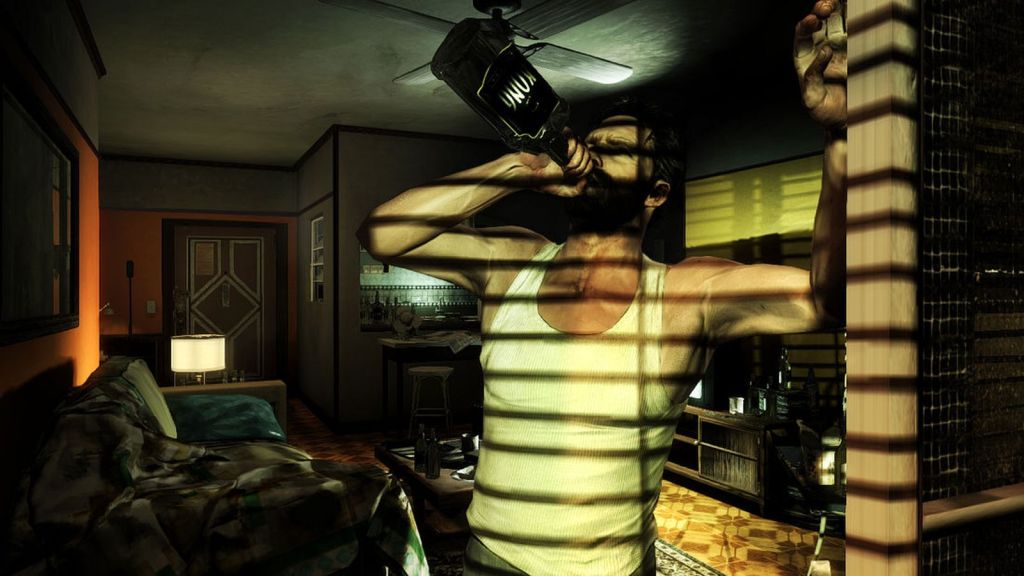
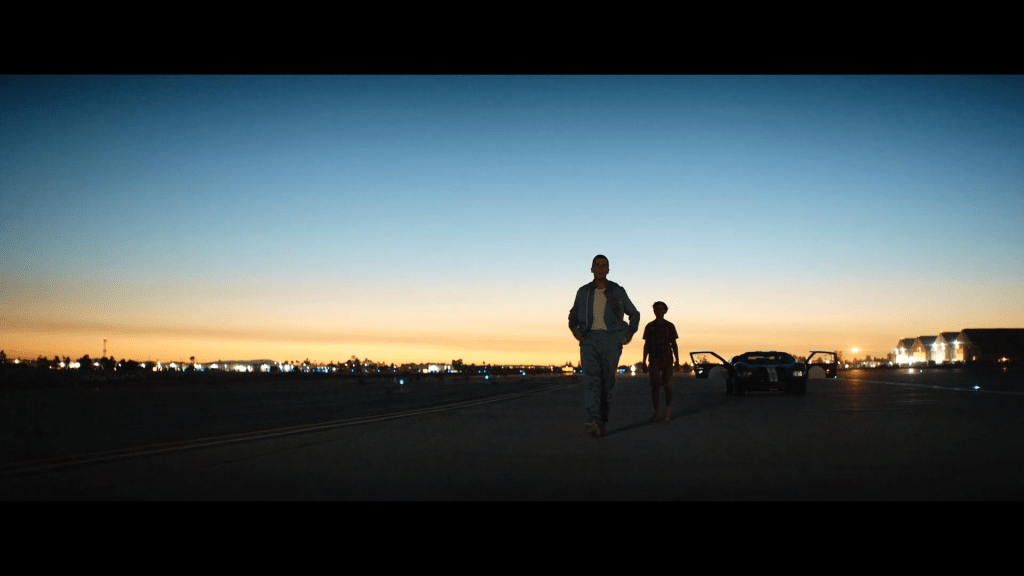
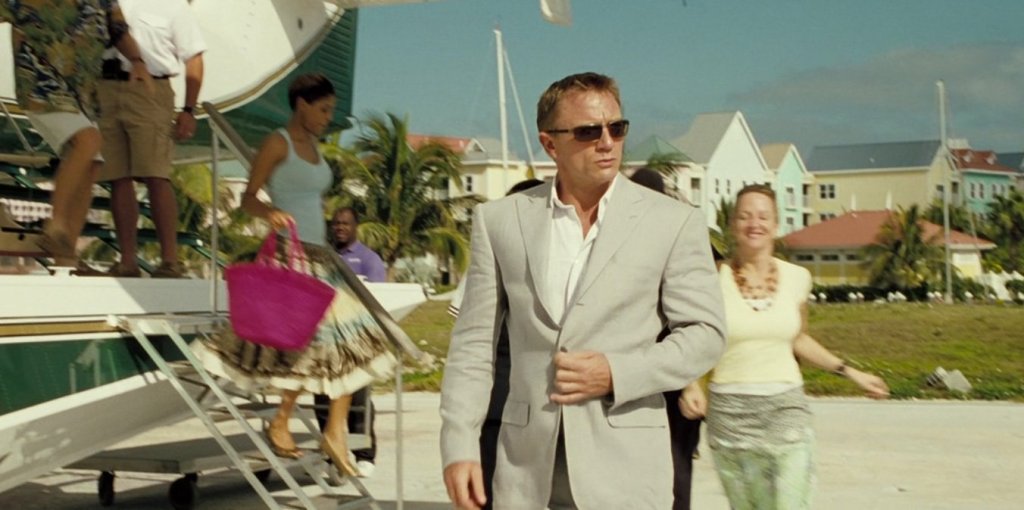
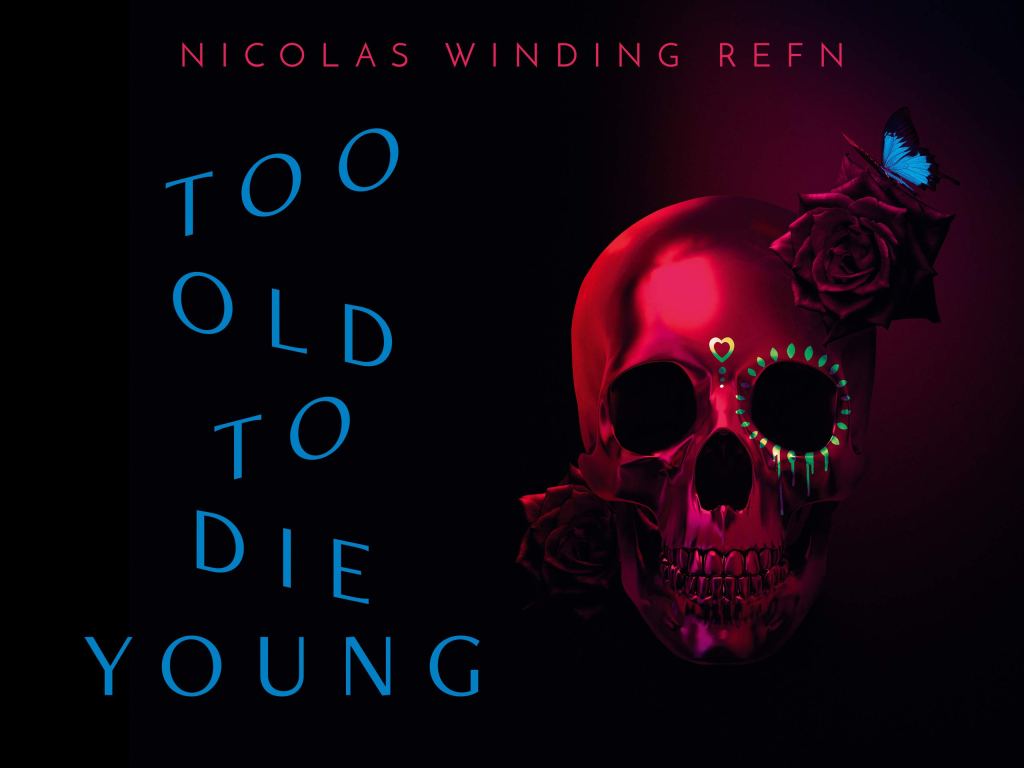

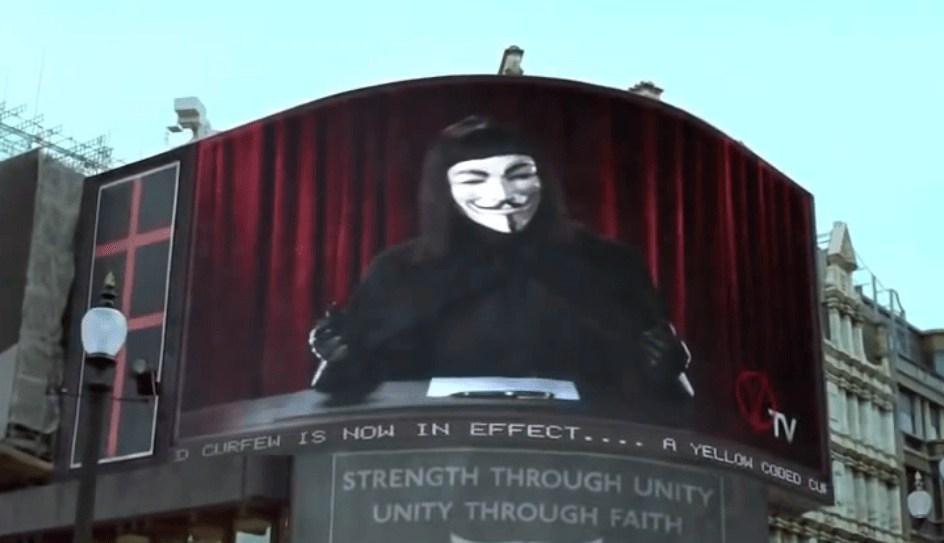

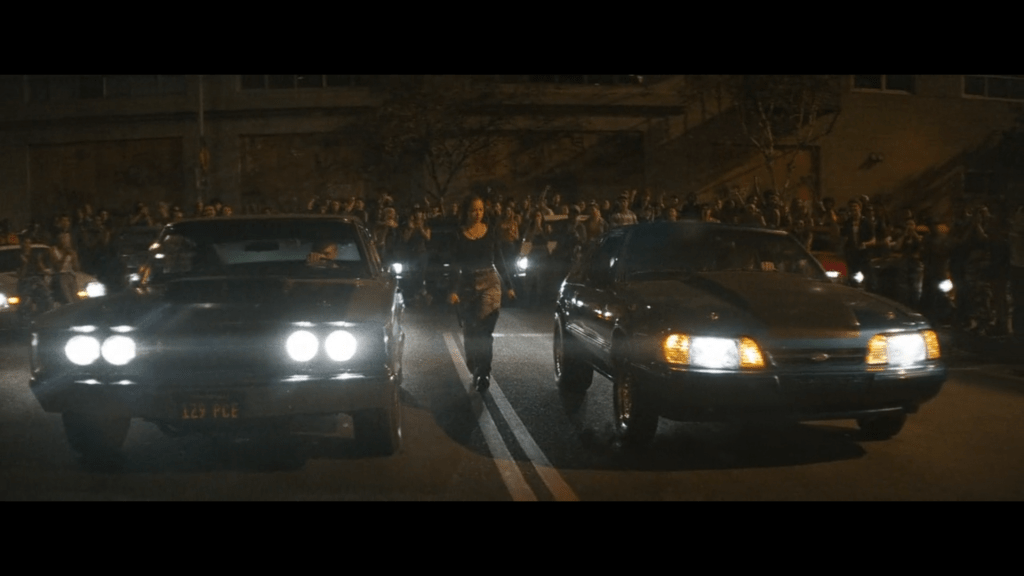
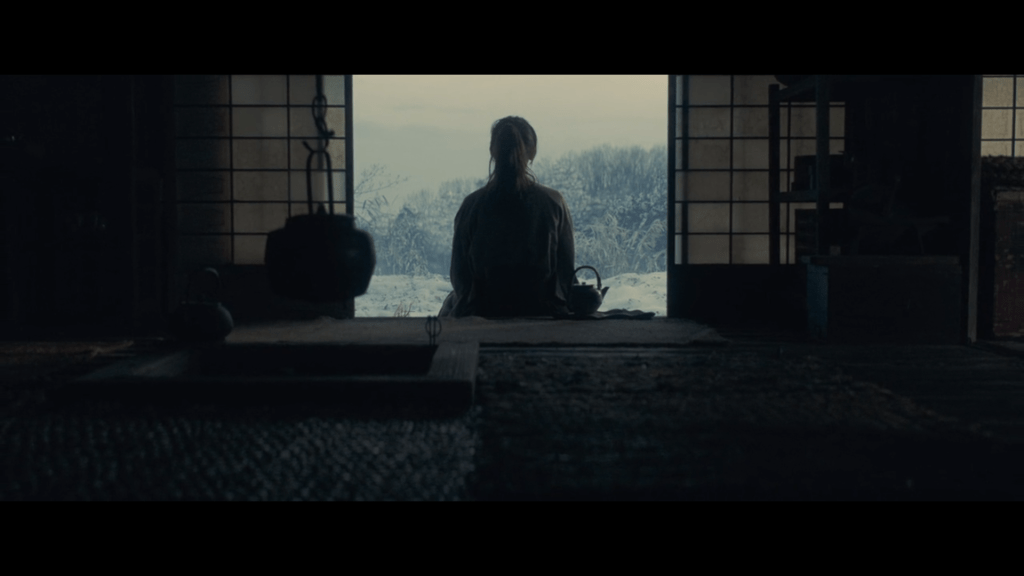
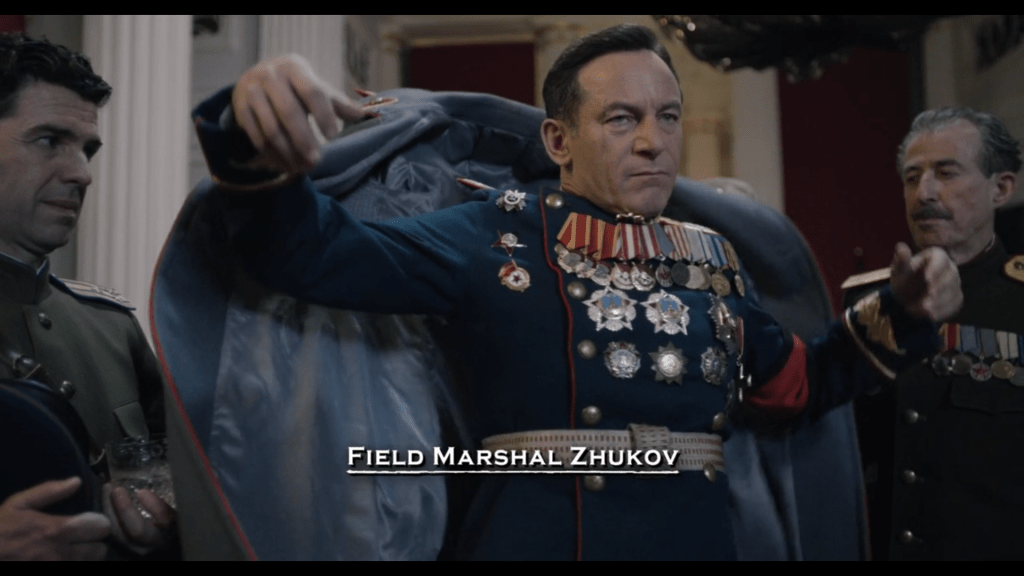
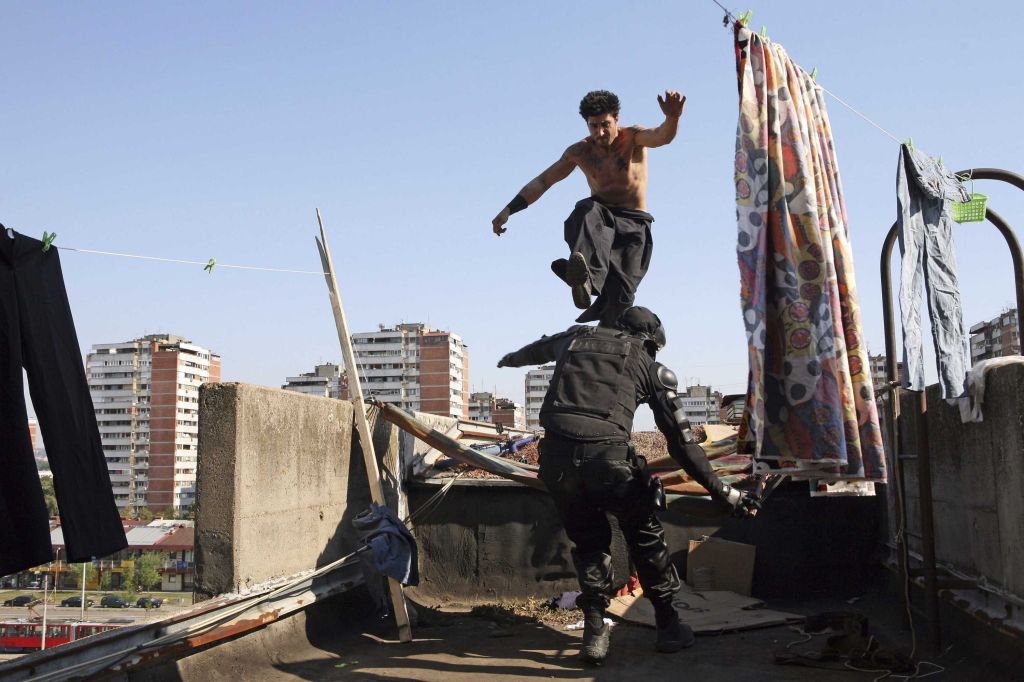
 Damocles' Journal